


Two Endangered Amur Leopard Cubs Born At Saint Louis Zoo
The births are an important addition to the population of this critically endangered species.
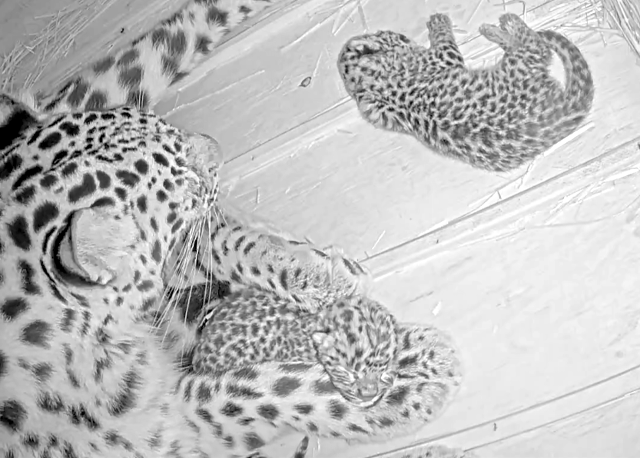 ST. LOUIS — Two critically endangered Amur leopard cubs were born on Aug. 13, 2025, at the Saint Louis Zoo. The births mark an important contribution to the population of one of the most endangered big cats in the world with only about 100 remaining in the wild.
This is the second litter for 7-year-old parents Dot and Samson. Dot and the cubs are doing well and bonding in their private, indoor maternity den. It will be several months before the leopard family makes a public debut at the age when cubs would naturally leave the den with their mother. Samson can be seen by Zoo guests in his habitat at Big Cat Country.
Get The Latest News!
Don't miss our top stories and need-to-know news everyday in your inbox.
“As a second-time mom, Dot knows exactly what to do,” said Julie Hartell-DeNardo, Saint Louis Zoo Kevin Beckmann Curator of Carnivores. “Every Amur leopard birth is critical for the survival of this rare species. Our team is incredibly grateful to see mom and cubs doing so well so quickly."
The first few months of life are critical for newborn leopards. The Animal Care team is monitoring the family via camera allowing them to watch their behavior and observe Dot nursing and caring for her cubs. In the coming weeks, the cubs will receive their first well-baby check by the Zoo’s Veterinary Care team. Since the mother is keeping the litter close for the time being, that will be the first chance for the care team to determine the sex of each cub. The Zoo will wait until after the exam to name the cubs.
Species Survival Plan
Dot and Samson moved to the Saint Louis Zoo in 2020 and 2021 from other Association of Zoos and Aquariums (AZA) zoos. The two were paired on a breeding recommendation by the Association of Zoos and Aquariums Amur Leopard Species Survival Plan (SSP), a cooperative program responsible for maintaining a genetically healthy population of Amur leopards in North American zoos.
The SSP works closely with global conservation partners to safeguard this species from extinction, making each successful birth a step forward for the future of the Amur leopard. There have been six other cubs in four litters born at Saint Louis Zoo since 1991: Anya and Irina (f, 2022), Anastasia (f, 2010), Sofiya (f, 2008) and Sergi and Dimitri (m, 1991).
Fewer Than 100 Left in the Wild
Amur leopards (Panthera pardus orientalis) are the most endangered big cats in the world, with only about 100 wild individuals remaining in the Russian Far East and northeastern China.
“The birth of these cubs is not just a celebration for Saint Louis, but a victory for the future of one of the world’s rarest and most remarkable animals,” said Hartell-DeNardo. “Amur leopards’ survival depends on the conservation efforts of zoos like ours. Without this work, we might lose these cats altogether.”
Amur leopard cubs are born after a gestation period of approximately 100 days. In the wild, cubs stay with their mother for about 1½ years. Young females may continue to share the mother’s territory as they mature, but young males must establish their own territories elsewhere.
About Saint Louis Zoo
Home to 12,000 animals, representing nearly 450 species, the Saint Louis Zoo is recognized worldwide for its innovative approaches to animal care and management, wildlife conservation, research and education. One of the few free zoos in the nation, the Saint Louis Zoo is the most visited attraction in the region. Accredited by the Association of Zoos and Aquariums (AZA), the Saint Louis Zoo is part of an elite group of institutions that meet the highest standards in animal care as well as provide fun, safe and educational family experiences. The Saint Louis Zoo and other AZA-accredited institutions collectively dedicate millions of dollars annually to support scientific research, conservation and education programs. For more information, visitstlzoo.org.
More like this:
- Most Popular


- Top Stories

- Most Recent

- Sign In
- Home
- Video
- News
-
Weather
 Sponsored by Michael Ryan Exteriors - Roofing Professionals
 - Sports
- Obits
- Events
- Radio
- AP News
- Shop Local
- Classifieds
- Autos
- Real Estate
- Directory
Follow Us
Copyright © 2026 RiverBender.com All rights reserved.
primary