


Lewis and Clark Community College Students Get Hands-On Training in Early Childhood Water Education
Workshop helps students plan water-focused lessons meeting state learning standards.
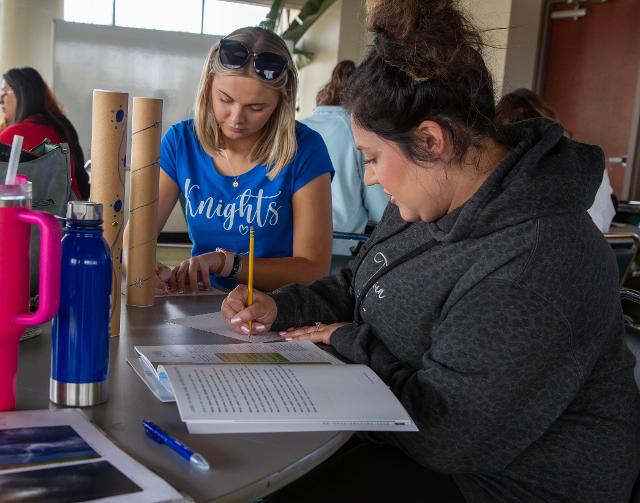
EAST ALTON – Students in Lewis and Clark Community College’s Child Development program will take part in a hands-on workshop about curriculum design and lesson planning through water education.
Get The Latest News!
Don't miss our top stories and need-to-know news everyday in your inbox.
The workshop is a collaboration between John Phillips, Associate Professor and Program Coordinator of Child Development & Education at Lewis and Clark, and Jolena Pang, Waterschool USA Program Manager at the National Great Rivers Research and Education Center (NGRRECsm), a division of the college.
Pang—who also serves as Project WET (Water Education Today) Illinois State Coordinator— will lead activity demonstrations, while Phillips will facilitate debrief discussions and a curriculum design exercise. The session will introduce students to Getting Little Feet Wet, Project WET’s early childhood curriculum, which emphasizes a creative, play-based approach to teaching young learners about water, sustainability and environmental stewardship.
Collaboration roots
The partnership began when Phillips attended a Project WET educator training hosted by Pang in November 2024 on the newly updated Foundations of Water Education guidebook. After learning about Getting Little Feet Wet, which is tailored for early childhood educators, he saw an opportunity to integrate the resource into his curriculum design course.
“Young children are naturally curious and always asking why,” Phillips said. “The Getting Little Feet Wet lessons are a terrific way to teach inquiry and observation skills. I have also observed that early childhood teachers are reluctant to teach science lessons, so this seemed like a useful resource for my curriculum planning course.”
Enhancing teacher preparation
Students from the Curriculum for Young Children course learn to plan developmentally appropriate lessons that meet the Illinois Early Learning Guidelines and the Illinois Early Learning and Development Standards. Phillips thought it would be helpful to explore lesson development through these hands-on water activities. During the training, the students will participate in several science activities. After each activity, the class will analyze what standards are being met, how to outline a procedure, and ways to accommodate different learners. Students can then practice planning their own lessons using the Getting Little Feet Wet resource as a guide.
Aside from learning about planning developmentally appropriate activities, another goal of the session is to encourage future teachers to incorporate science lessons in their early childhood classrooms by modeling activities that they can implement in their classrooms and giving them resources to use.
The workshop is supported by the Swarovski Foundation Waterschool USA grant, hosted at NGRREC, which supports water-literacy education and reduces educational inequities across the Mississippi River watershed. By integrating Project WET resources with Waterschool’s mission, the training demonstrated how global sustainability goals can be translated into practical, early-learning classroom experiences.
Planning for the future
Phillips and Pang hosted a previous session in the Spring of 2025. Those participants responded enthusiastically and highlighted the rain stick activity as one they planned to adapt for their classrooms. Based on the positive feedback from the spring session, Phillips and Pang are eager to collaborate again this fall with the hope that the Getting Little Feet Wet workshops will be a regular offering to LC curriculum design students.
“Early childhood is where long-term stewardship habits begin,” Pang said. “By equipping future teachers with engaging Project WET activities, we’re laying the groundwork for a more water-literate, sustainable community.”
National Great Rivers Research and Education Center (NGRREC?)
Founded in 2002 as a collaborative partnership between the University of Illinois at Urbana-Champaign and Lewis and Clark Community College, NGRREC is dedicated to the study of great river systems and the communities that use them. The center aspires to be a leader in scholarly research, education, and outreach related to the interconnectedness of large rivers, their floodplains, watersheds, and their associated communities. To learn more about NGRREC, visit www.ngrrec.org.
More like this:
- Most Popular


- Top Stories


- Most Recent

- Sign In
- Home
- Video
- News
-
Weather
 Sponsored by Michael Ryan Exteriors - Roofing Professionals
 - Sports
- Obits
- Events
- Radio
- AP News
- Shop Local
- Classifieds
- Autos
- Real Estate
- Directory
Get the RiverBender App


Follow Us
Copyright © 2026 RiverBender.com All rights reserved.
primary