


Fall Back: Why We Change the Clocks — and Why Some States Don’t
Daylight Saving Time ends at 2 a.m. Sunday, granting an extra hour of sleep and signaling the return to standard time nationwide.
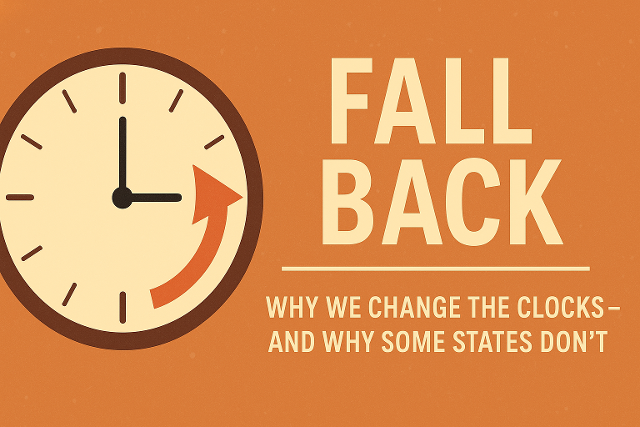
This weekend, most Americans will turn their clocks back one hour as Daylight Saving Time (DST) ends. The change officially takes place at 2 a.m. on Sunday, giving everyone an extra hour of sleep — and marking the return to standard time.
But why do we keep doing it? And is it still worth it?
The Purpose of Daylight Saving Time
Daylight Saving Time was designed to make better use of daylight during the longer days of spring and summer. By moving clocks forward one hour in March, people could enjoy more sunlight in the evening, saving on electricity and encouraging outdoor activity.
When fall arrives and the days grow shorter, clocks are set back again so mornings aren’t as dark. The idea dates back to the early 1900s, when energy savings were a big concern.
A Brief History
The concept of shifting time to match daylight isn’t new. Benjamin Franklin mentioned it in 1784 as a joke about saving candles. The first official use came during World War I, when Germany and later the United States adopted DST to save fuel for the war effort.
DST returned during World War II, then became a regular national practice with the Uniform Time Act of 1966. The modern schedule was set in 2007, when Congress extended DST from March to November.
States That Skip the Time Change
Not everyone takes part. Hawaii and most of Arizona stay on standard time year-round. Both are closer to the equator, where daylight hours don’t change much seasonally. Several U.S. territories, including Puerto Rico and Guam, also skip the change.
In recent years, more than 20 states have passed or proposed laws to stay on one time permanently — either standard or daylight time — but federal law still requires Congress to approve that change.
The Pros and Cons
Supporters of DST say the longer daylight in the evening:
- Encourages outdoor activity and boosts local economies.
- Makes evening commutes and recreation safer by keeping them in daylight.
- Saves a small amount of energy.
Opponents point to the downsides:
- The clock changes can disrupt sleep, increase stress, and even cause temporary health risks.
- Energy savings today are minimal since people use more air conditioning and electronics.
- The switch causes confusion, especially for travel and scheduling.
The Debate Continues
A proposal called the Sunshine Protection Act would make Daylight Saving Time permanent nationwide, ending the twice-yearly clock changes. It passed the U.S. Senate in 2022 but stalled in the House of Representatives.
For now, the semiannual ritual continues — meaning it’s once again time to “fall back.”
What to Remember
Before going to bed Saturday night, set your clocks back one hour. It’s also a good time to check smoke detectors, replace batteries, and update any devices that don’t change automatically.
Whether you love or hate the time change, one thing’s for sure: Sunday morning will come with an extra hour of rest — and a little less daylight in the evening.
More like this:


- Most Popular



- Top Stories



- Most Recent


- Sign In
- Home
- Video
- News
-
Weather
 Sponsored by Michael Ryan Exteriors - Roofing Professionals
 - Sports
- Obits
- Events
- Radio
- AP News
- Shop Local
- Classifieds
- Autos
- Real Estate
- Directory
Get the RiverBender App


Follow Us
Copyright © 2026 RiverBender.com All rights reserved.
primary