


Choosing an Asset Allocation: Getting Risk Right Matters More Than You Think
Investors often overlook how balancing stocks, bonds, and cash before market shifts defines their portfolio's future performance and stability.
When investors talk about performance, the conversation often skips ahead to returns. But the decision that most shapes your long-term results is made before markets move: your asset allocation—the balance among equities (stocks), fixed income (bonds), cash, and potentially other assets.
The critical question is not “How much can I make?” but “How much risk should I take to reach my goals without losing sleep or derailing my plan?”
First, What Do We Mean by “Risk”?
Get The Latest News!
Don't miss our top stories and need-to-know news everyday in your inbox.
Volatility (prices bouncing around) is one kind of risk, but it’s not the only kind that matters—especially for investors near or in retirement. Think of risk in several dimensions:
Drawdown & shortfall risk: The chance your portfolio falls enough to jeopardize goals.
Sequence-of-returns risk: Poor early returns right before or after retirement can hurt even if long-run averages look fine.
Inflation risk: Rising costs quietly erode purchasing power over time.
Longevity risk: Living longer than expected requires your money to last longer, too.
Interest-rate & credit risk: Bond prices move with rates; lower-quality bonds can default.
Liquidity risk: Needing cash when assets are down.
Concentration risk: Too much in a single stock, sector, or country.
Behavioral risk: The human tendency to buy high, sell low, or abandon the plan under stress.
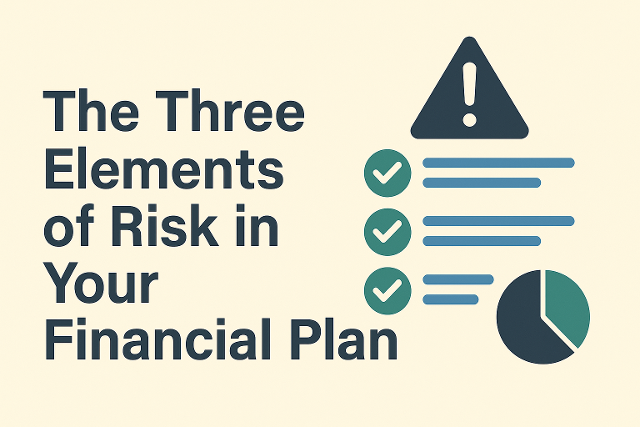
The Risk Profile Triad: Tolerance, Capacity, and Need
Risk tolerance (behavioral loss tolerance): Your comfort with seeing account values drop without panic-selling. Tolerance is psychological and can shift with life events and market experience.
Risk capacity (ability to take risk): The objective ability to endure losses without compromising required spending or obligations. Income stability, time horizon, cash reserves, pensions, and insurance coverage all influence capacity.
Need to take risk: The return your plan requires to meet goals after accounting for savings rate, timeline, and spending. If your goals are fully funded with modest returns, your need to take risk may be lower—even if tolerance is high.
Your asset allocation works best where these three overlap.
Translating Risk Profile into Allocation
Equities for growth: Broad, diversified exposure (U.S. and international) drives long-term growth but comes with volatility and drawdowns.
Bonds for stability & spending: Investment-grade, duration-aware fixed income helps fund near-term needs and dampen portfolio swings; consider blending nominal bonds with TIPS for inflation protection.
- Article continues after sponsor message
Cash reserves: A spending “runway” (often 6–24 months depending on life stage) reduces pressure to sell assets during downturns.
Other building blocks (as appropriate): Depending on the plan and constraints, this can include high-quality short-duration bonds, structured “buffer” assets with defined outcomes, or alternatives used prudently for diversification—not complexity’s sake.
Why Retirees and Pre-Retirees Must Respect Sequence Risk
The five years bracketing retirement are crucial. Losses early on, combined with withdrawals, can permanently dent outcomes.
Practical mitigations include setting aside a near-term cash/bond bucket for planned withdrawals, flexing withdrawals (e.g., using guardrails) during bear markets, and keeping equity risk sized to your true capacity—not the market mood.
Learn more about building a retirement income strategy that’s designed to withstand market cycles.
Process Over Prediction: How to Choose and Keep Your Mix
Discovery: Clarify goals, essential vs. discretionary spending, time horizons, and constraints (taxes, legacy, liquidity).
Measure the triad: Use a behavioral questionnaire plus a conversation; then quantify capacity with cash-flow mapping, reserves, insurance, and contingency funding.
Model & stress-test: Evaluate probabilities of success and funded ratio under different allocations, withdrawals, inflation paths, and bear-market sequences.
Set rules: Define rebalancing bands, withdrawal guardrails, and when to replenish the cash bucket. Write them down.
Coordinate taxes: Locate assets tax-smart and plan for Roth conversions, RMDs, and IRMAA implications.
Review rhythm: Life events, big market moves, or legislative changes can shift your tolerance, capacity, or need. Revisit at least annually.
A Quick Litmus Test — Take the 11-Question Risk Tolerance Assessment
Risk Tolerance Assessment
Your results can help guide your next conversation with an advisor. Pairing behavioral insight with financial analysis leads to a plan that reflects both your comfort and your capacity.
Bottom Line
A good allocation isn’t the “most aggressive you can tolerate.” It’s the one that aligns your tolerance, capacity, and need to take risk—so you can stay invested through full market cycles and fund the life you actually want.
About Genesis Wealth Management Group
I partner with a team of CFP® professionals to help clients—especially those 50+ approaching or in retirement—clarify their risk profile, build resilient allocations, and stick with a plan through changing markets.
If you’d like a second opinion on your current mix or a stress test of your retirement plan, schedule a 30-minute conversation.
Website:www.billkinkel.com
Phone: (618) 368-6800
Email:bill@genesisfg.com
Disclosures
All content is for information purposes only. Opinions expressed herein are solely those of Genesis Wealth Management Group, LLC and our editorial staff. It is not intended to provide any tax or legal advice or provide the basis for any financial decisions. Investment advisory services offered through Genesis Wealth Management Group, LLC.
More like this:




- Most Popular



- Top Stories

- Most Recent


- Sign In
- Home
- Video
- News
-
Weather
 Sponsored by Michael Ryan Exteriors - Roofing Professionals
 - Sports
- Obits
- Events
- Radio
- AP News
- Shop Local
- Classifieds
- Autos
- Real Estate
- Directory
Get the RiverBender App


Follow Us
Copyright © 2026 RiverBender.com All rights reserved.
primary