


100 Years Ago: Alton Agrees to Appoint Students to School Traffic Force
Older students trained as traffic officers to keep younger kids safe in Alton schools in 1925.

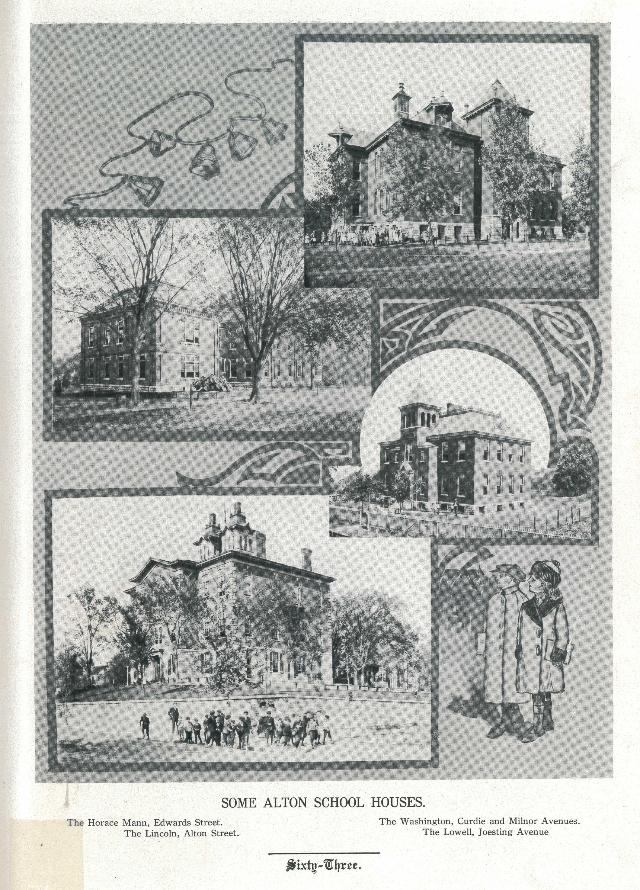
A December 10, 1925 article in the Alton Evening Telegraph announced that a “school traffic force” composed of older students at each city school would be created to handle automobile traffic near school buildings (and attempt to keep the younger students out of the street) under the terms of a resolution adopted the day before by the City Council. Alderman S.L. Moore of the Seventh Ward presented the resolution and stated that many cities have a similar system. For example, in Highland, the Boy Scouts handled traffic around the schools. Mayor Davis “expressed hearty approval of the plan,” and the City Council unanimously adopted it without debate.
Get The Latest News!
Don't miss our top stories and need-to-know news everyday in your inbox.
Following is the resolution providing for the formation of the School Traffic Force:
"Whereas the matter of proper regulation of traffic in so far as it affects the safety of our school children is of genuine concern to every citizen of Alton, and
Whereas, a more stringent regulation of traffic is necessary in order to secure a greater degree of safety for school children, and
Whereas, with our regularly constituted policy department doing its utmost, it is impossible to prevent accidents.
Therefore, be it resolved that there is now created a “School Traffic Force” which shall consist of as many of the older students, either male or female, from the several schools affected as may be deemed necessary; said students to be selected by the principals of the several schools. The names of such selected shall be filed with the police department of the city of Alton. The police department shall, when possible, instruct those designated to the best methods of handling traffic and protecting their fellow students.
The “School Traffic Force” shall be designated by an arm band furnished by the City of Alton.
It shall be the duty of the “School Traffic Force” to protect their fellow students and generally regulate traffic in and about their several schools at opening and closing times, as directed by the principal of the school.
It shall be the duty of all school principals to take immediate steps upon the passage of this resolution, to designate the students who shall serve. And when a student is appointed he shall serve until his successor is appointed.
Passed by the Alton City Council on this 9th day of December, A.D. 1925."
The issue had originally come up several weeks before, when Principal Raymond Ready, of Horace Mann school, asked Mayor Davis if streets adjacent to the school grounds could be roped off at school dismissal each day. Mayor Davis found that roping off the streets would be illegal, but discussed the problem with Alderman Moore. Moore suggested a school traffic force. “The Traffic Service might help solve the problem of safety for the school children and also develop the responsibility of the boys who will seek places on the traffic squads for the various buildings.”
An article on December 21, 1925 stated that school principals were considering which students to appoint to the traffic forces, and that it would likely start in the new year. However, it wasn’t until March 31, 1926 that the student traffic officers began their duties. An April 1, 1926 article announced that the program had successfully started the day before, and that “there is every indication the plan is going to work splendidly.” Chief Gustave Rotsch of the Alton Police Department trained the students (all boys), and after receiving instructions, “the boys were quite efficient traffic cops after a small amount of experience.”
Special thanks to George Fuller for research help with this week’s article.
Sources
“Principals to Choose Boys of Traffic Squads.” Alton Evening Telegraph (Alton, IL), December 21, 1925.
Reid, James Allan. 1912. Alton, Illinois; a Graphic Sketch of a Picturesque and Busy City. Its Leading Points of Interest and Some Characteristic Phases of Its Life. Saint Louis, Mo.: J.A. Reid.
“School Traffic Squad Provided by Resolution.” Alton Evening Telegraph (Alton, IL), December 10, 1925.
“Traffic Squads in School Zones Proposed Here.” Alton Evening Telegraph (Alton, IL), November 28, 1925.
More like this:

- Most Popular



- Top Stories



- Most Recent

- Sign In
- Home
- Video
- News
-
Weather
 Sponsored by Michael Ryan Exteriors - Roofing Professionals
 - Sports
- Obits
- Events
- Radio
- AP News
- Shop Local
- Classifieds
- Autos
- Real Estate
- Directory
Follow Us
Copyright © 2026 RiverBender.com All rights reserved.
primary