

The History of Our Calendar
The choice of January as the start of the year is not a law of nature. It’s the result of politics, religion, and practical needs colliding over thousands of years.

January wasn’t always the first month of the year—and in some places, it still isn’t.
Get The Latest News!
Don't miss our top stories and need-to-know news everyday in your inbox.
That simple fact explains why calendars can feel both obvious and oddly arbitrary at the same time. We treat January 1 as a clean reset: new goals, new budgets, new planners. But the choice of January is not a law of nature. It’s the result of politics, religion, and practical needs colliding over thousands of years. Understanding how calendars evolved also explains why we still carry around “leftovers” like leap years, uneven month lengths, and names that don’t match their numbers (looking at you, September).
The first problem: the sky doesn’t divide neatly
A calendar tries to match three things that don’t line up perfectly:
- A day (Earth’s rotation)
- A month (roughly the Moon’s cycle)
- A year (Earth’s orbit around the Sun)
Twelve lunar months add up to about 354 days, which is around 11 days short of a solar year. That gap creates a headache: if you follow the Moon, your seasons drift. If you follow the Sun, the months stop matching the Moon.
Different cultures solved this in different ways. Some used mostly lunar calendars and added extra months now and then. Others used solar calendars with months that were simply human-made blocks. What we use today—the Gregorian calendar—is a solar calendar with months that don’t try to match the Moon exactly.
Early Roman calendars: March made more sense than January
The roots of our modern month names are Roman, and early Rome did not start the year in January. The old Roman calendar began in March, which fits many things that mattered to Romans: military campaigns, farming cycles, and political terms.
That history still shows in the month names:
- September comes from septem (seven)
- October from octo (eight)
- November from novem (nine)
- December from decem (ten)
If March is month 1, those names make perfect sense. If January is month 1, they’re “off by two,” which is exactly what happened later.
The early Roman calendar also had problems with length and consistency. It was adjusted by rulers and priests, sometimes for practical reasons and sometimes for political advantage. Imagine if a government could extend a year to keep officials in power longer. That kind of thing happened.
Why January entered the picture: Janus and Roman politics
January is named after Janus, the Roman god of doorways, gates, and transitions. He is often shown with two faces, looking both backward and forward. Symbolically, that makes January a great “threshold” month.
But symbolism wasn’t the main reason January became important. Politics was.
In 153 BCE, Rome moved the start of the consular year (the term of newly elected officials) to January 1. One practical reason: Rome needed leaders in place earlier to respond to military conflicts, especially in Spain. Starting the political year in January helped get the government moving sooner.
So even before later reforms, January 1 already had weight as an official starting point. Over time, that political habit influenced the broader idea of when the year “began.”
Julius Caesar fixes the mess: the Julian calendar
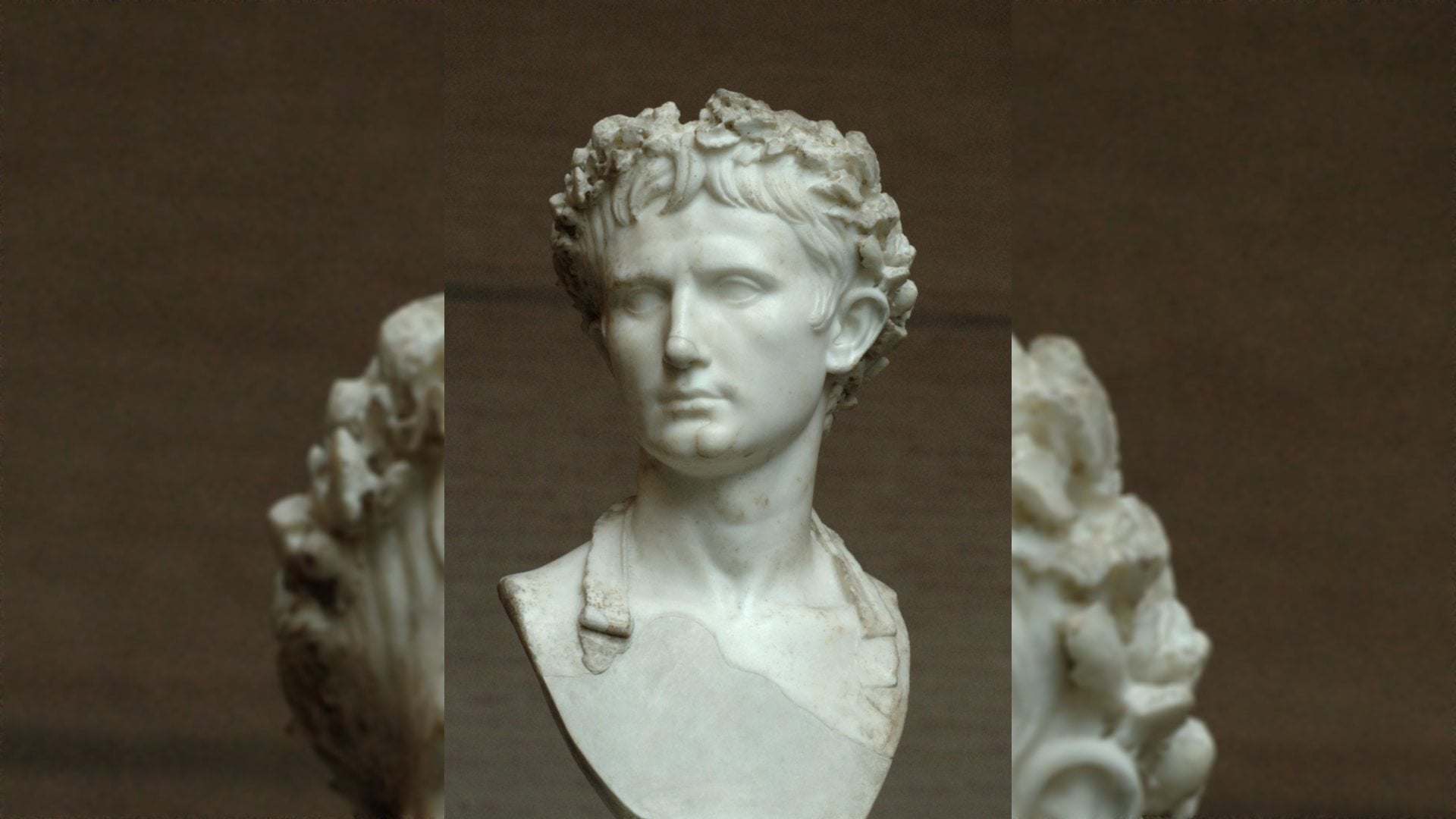
By the first century BCE, Rome’s calendar was so out of sync that seasons and months no longer lined up well. Julius Caesar introduced a major reform in 46 BCE, creating the Julian calendar.
Key features:
- A solar year of 365 days
- An extra day every four years (leap year)
- Months arranged in a way that resembles what we know now
The Julian calendar was a huge improvement. It made the year predictable. It also reinforced January’s role as the start of the year in Roman civic life.
Still, the Julian calendar wasn’t perfect. It assumed the solar year was exactly 365.25 days. The real value is slightly shorter, which meant the calendar drifted by about one day every 128 years.
That drift mattered most to the Christian church, because it affected the calculation of Easter, which was tied to the spring equinox.
The Gregorian calendar: why we “lost” days
By the 1500s, the drift had become noticeable. In 1582, Pope Gregory XIII introduced the Gregorian calendar, which is the one most of the world uses today.
Two big changes:
A leap-year rule tweak:
- Leap year every 4 years
- Except years divisible by 100 are not leap years
- Unless divisible by 400, then they are leap years
This keeps the calendar aligned with the solar year much more accurately.
A one-time correction:
To fix the accumulated drift, several dates were skipped. In parts of Europe, October 4 was followed by October 15 in 1582.
That’s why you sometimes hear the claim that people “lost 10 days.” It’s true in the sense that the calendar jumped forward. It’s also why historical dates can get confusing when comparing records from countries that adopted the Gregorian calendar at different times.
So why does January start the year now?
January starts the year because of a long chain of decisions that became tradition:
- Roman officials began their term on January 1 (153 BCE).
- Julius Caesar’s reform stabilized the calendar and kept January prominent.
- Christian Europe gradually treated January 1 as a practical civil starting point.
- The Gregorian reform spread worldwide through colonization, trade, and international coordination.
It’s less a cosmic truth and more a shared agreement—one that became useful for contracts, taxes, school terms, and global scheduling.
Not everyone agrees: New Year dates around the world
Even with global business norms, different cultures still mark the “new year” at different times:
- Lunar New Year (often called Chinese New Year) follows a lunisolar system and falls between late January and mid-February.
- Nowruz, the Persian New Year, is tied to the spring equinox.
- Rosh Hashanah, the Jewish New Year, falls in early autumn and is set by a lunisolar calendar.
- In parts of medieval Europe, the new year was sometimes counted from March 25 (Annunciation style), which is why older documents can list dates that seem “off” by a year.
This helps explain a common misunderstanding: “New Year’s Day” can mean a cultural celebration, a religious marker, or a civil accounting reset. Those don’t always match.
Idioms and habits the calendar created
Calendars shape language and behavior in ways we barely notice:
- “New year, new me” depends on the idea that the year has a clean edge. That edge is social, not natural.
- Fiscal years often start in July, October, or April. Many governments and companies do this to match budgeting cycles, not the calendar year.
- The phrase “the ides of March” comes from the Roman way of counting days within a month, another reminder that our system is not the only one that ever existed.
- Month lengths (30 vs. 31 days) feel like “how time works,” but they’re mostly the result of historical tweaks and compromises.
If you’ve ever had to remember which months have 30 days, you’ve felt the human fingerprints on the calendar.
Practical ways to notice calendar history in daily life
You can spot the past hiding in plain sight:
- Check month names: September–December still carry their original number-based names from when March was first.
- Look at leap-year rules: If you know the “divisible by 400” exception, you’re using a fix created to correct centuries of drift.
- Compare New Year celebrations: If your community celebrates Lunar New Year, Nowruz, or another new year, you’re seeing a different solution to the same sky-math problem.
- Watch how institutions treat time: Schools, taxes, sports seasons, and business quarters often run on calendars that serve people, not planets.
These small details show that timekeeping is as much about coordination as it is about astronomy.
A year’s “beginning” is a choice—and that’s the point
January 1 feels inevitable because almost everyone around us treats it that way. But calendars are tools, and tools reflect the needs of the people who build them. Rome wanted orderly politics. The church wanted consistent holy days. Modern life wants shared schedules across borders and time zones.
January starts the year not because the universe says so, but because history handed us a system that proved convenient—and then the world agreed to keep using it. Once you see that, the calendar stops looking like a neutral grid and starts looking like what it really is: a map of human priorities, written across the sky.
More like this:



- Most Popular



- Top Stories



- Most Recent