


The Roots of Martin Luther King Jr. Day and Why It Matters
The struggle for civil rights was central to the nation’s story. Martin Luther King Jr.'s role in that story can't be overstated.
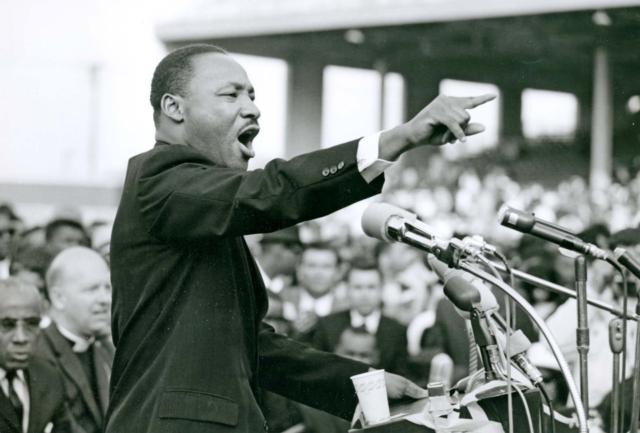
Martin Luther King Jr. Day didn’t start as a feel-good holiday. It started as an argument—loud, emotional, and deeply political—about what the country owes to the people who pushed it to change.
Get The Latest News!
Don't miss our top stories and need-to-know news everyday in your inbox.
The day matters because it is one of the few national holidays created to honor a citizen who challenged the government and the culture around him. It is also a reminder that progress is not automatic. It has to be demanded, organized, and defended. Understanding how this holiday was won helps explain why it still carries weight far beyond a day off from school or work.
The man behind the name—and the movement behind the man
Martin Luther King Jr. is often remembered through a few famous lines, especially “I have a dream.” That speech is real and powerful, but it can also shrink the story. King was not only a dreamer. He was a strategist, a preacher, and a public critic of injustice.
King rose to national attention during the Montgomery Bus Boycott in 1955–56. After Rosa Parks was arrested for refusing to give up her seat, Black residents in Montgomery, Alabama organized a boycott of the bus system. It lasted more than a year. People walked to work, shared rides, and built a community network to keep the boycott going. King, then a young pastor, became one of the leaders. The boycott worked. The Supreme Court ruled bus segregation unconstitutional.
That pattern—local people organizing, taking risks, and refusing to accept unfair rules—was the engine of the civil rights movement. King became its most recognized voice, but he was never the only one. When we treat MLK Day as a simple tribute to one man, we miss the bigger point: change came from collective action.
From assassination to a national holiday: a long and contested path
King was assassinated on April 4, 1968, in Memphis, Tennessee. The grief was immediate, but so was the question of what the country would do next. Supporters wanted a national holiday to honor his life and the cause he represented. The idea was introduced in Congress just days after his death.
It did not pass quickly. It took 15 years of campaigning, organizing, and political pressure.
A major driver was Coretta Scott King, King’s widow, who worked tirelessly to keep the push alive. Civil rights groups, labor unions, faith leaders, and students all joined in. They saw the holiday as more than a memorial. They saw it as a statement: the struggle for civil rights was central to the nation’s story, not a side chapter.
Opposition was strong. Some lawmakers argued that the country already had enough holidays. Others attacked King’s politics. Some used “cost” arguments, claiming a federal holiday would hurt business. Underneath many of these objections was a deeper discomfort: honoring King meant honoring protest, and it meant admitting that the nation had been wrong.
Public pressure grew. In the early 1980s, singer Stevie Wonder released “Happy Birthday,” a song that became an anthem for the holiday campaign. Petitions gathered millions of signatures. Marches and rallies kept the issue in the news.
In 1983, Congress passed the bill creating Martin Luther King Jr. Day, and President Ronald Reagan signed it into law. The first federal observance was held in 1986, on the third Monday in January.
Even then, the fight wasn’t over. Some states resisted adopting it or used different names. Arizona became a national flashpoint in the late 1980s and early 1990s, and the state faced boycotts and major event cancellations. Over time, state recognition became widespread. By 2000, all 50 states observed the holiday in some form.
That timeline matters. The holiday exists because people organized for it. It was not handed down as a simple act of national unity.
Why the date matters—and what it signals
MLK Day is observed on the third Monday in January, near King’s birthday on January 15. The Monday placement comes from the Uniform Monday Holiday Act era, when several holidays were moved to Mondays to create long weekends.
Some people see that as practical. Others see a trade-off: a long weekend can make the holiday easier to ignore. That tension is part of MLK Day’s story. Is it just time off, or is it time to reflect and act?
The holiday’s official federal name includes “Jr.” for a reason. It points to family legacy, but it also reminds people that King was young when he died—39 years old. The civil rights movement was not ancient history. Many people alive today have parents or grandparents who lived through legal segregation.
Common misunderstandings that flatten the meaning
MLK Day is often surrounded by simplified ideas that sound positive but miss the point.
Misunderstanding #1: King fixed racism.
King helped change laws and shift public opinion, but racism did not end in 1968. The holiday is not a “mission accomplished” banner. It is a reminder of unfinished work.
Misunderstanding #2: King was popular in his lifetime.
He was widely criticized while he was alive. Polls in the 1960s showed many Americans viewed him unfavorably. Remembering that helps explain why honoring him later was controversial.
Misunderstanding #3: King only talked about harmony.
People quote King on judging others “by the content of their character,” but ignore his sharp criticism of inequality. He spoke about unfair housing, low wages, and the moral cost of war. He supported sanitation workers in Memphis when he was killed. That was labor rights, not just inspirational rhetoric.
A common saying in American culture is “Don’t rock the boat.” King did the opposite. MLK Day honors the fact that sometimes the boat needs to be rocked to stop it from sinking certain people on purpose.
Traditions: from parades to “a day on, not a day off”
Many communities mark MLK Day with marches, speeches, and school programs. You may hear choir performances, readings from the “Letter from Birmingham Jail,” or recitations of famous lines from the 1963 March on Washington.
One of the most meaningful modern traditions is service. In 1994, Congress designated MLK Day as a National Day of Service, encouraging people to volunteer. The phrase often used is “a day on, not a day off.” It’s a cultural nudge: don’t treat the holiday like a pause button. Treat it like a push forward.
Service can look like tutoring students, helping at a food pantry, cleaning up a park, or joining a community project. But service also includes civic habits that last beyond one day—showing up at school board meetings, mentoring, voting, or supporting fair policies at work.
Why MLK Day still matters in everyday life
It’s easy to keep King’s legacy at the level of speeches and symbols. The harder part is noticing how his ideas connect to ordinary routines.
- At school: How are students disciplined? Who gets access to advanced classes? Are there barriers that don’t look like “rules,” but still shape outcomes?
- At work: Who gets hired, promoted, or listened to? Are pay decisions clear and fair? Do people feel safe reporting discrimination?
- In neighborhoods: Are there differences in public services, like parks, street repairs, or health clinics? What happens when people try to change that?
- In conversations: Do we avoid conflict to keep things “polite,” even when something is wrong? King’s work reminds us that discomfort is sometimes the price of honesty.
MLK Day matters because it trains a kind of attention. It asks people to look at society as something built by choices—laws, habits, budgets, and traditions—not as something fixed like gravity.
Practical ways to engage with the holiday
You don’t need to be a historian or an activist to make the day meaningful. A few simple actions can change how it lands.
Read one primary source, not just quotes.
Try the “Letter from Birmingham Jail.” It’s direct, clear, and still relevant to debates about protest and “waiting for a better time.”Ask what your community needs, then do one concrete thing.
Volunteer, donate, or join a local project. Even a small act can connect the holiday to real people.Talk about King accurately.
If you hear the story reduced to a single speech, mention that he also fought for voting rights, fair housing, and workers.Notice who is missing from the story.
Learn about people who worked alongside King, like Ella Baker, Bayard Rustin, John Lewis, Diane Nash, and many local organizers whose names don’t appear on monuments.
The deeper lesson behind the holiday
Martin Luther King Jr. Day is not only about remembering a leader. It is about remembering how change happens: through persistence, moral clarity, and ordinary people willing to act together. The holiday exists because a movement demanded that the country honor a man who demanded better from it. That is why it still matters. It is a yearly reminder that rights are not just inherited—they are maintained, expanded, and protected by what people choose to do next.
More like this:

- Most Popular



- Top Stories


- Most Recent


- Sign In
- Home
- Video
- News
-
Weather
 Sponsored by Michael Ryan Exteriors - Roofing Professionals
 - Sports
- Obits
- Events
- Radio
- AP News
- Shop Local
- Classifieds
- Autos
- Real Estate
- Directory
Get the RiverBender App


Follow Us
Copyright © 2026 RiverBender.com All rights reserved.
primary