


How Humans Learned to Measure Time
When you glance at a clock, you’re also looking at a fossil of ancient math.
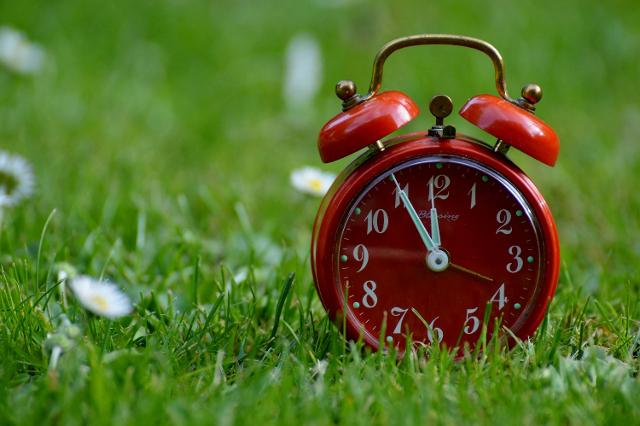
The “minute” on your phone is not a natural thing. Nothing in the sky divides an hour into 60 equal parts. Humans invented that slice of time—and then built machines and habits strong enough that the whole world agreed to live by it.
Get The Latest News!
Don't miss our top stories and need-to-know news everyday in your inbox.
Measuring time sounds simple until you try to do it well. The sun moves, but not at a constant speed across the sky. Seasons change the length of daylight. Clouds hide the stars. People travel. Armies need schedules. Farmers need to know when to plant. Traders need to agree on deadlines. What started as watching shadows turned into one of the most important shared systems in modern life.
First, time was a feeling—then it became a pattern
Early humans did not need “3:45 p.m.” They needed before dark, after the rains, when the river rises, and when the herd moves. Time was tied to events.
But patterns in nature were impossible to ignore. The day-night cycle is the most obvious clock. Then come the moon’s phases, and then the repeating rhythm of the seasons. These cycles gave people a way to predict what was coming next.
Even now, we still use event-time more than we think. “I’ll leave after this episode,” “Meet me when class ends,” or “I’ll call you when I’m home” are modern versions of the oldest timekeeping system: time measured by what happens.
Shadows and stone: the first “devices” for time
One of the earliest tools for measuring time was a stick in the ground.
A simple upright pole—often called a gnomon—casts a shadow that moves as the sun appears to cross the sky. Mark where the shadow falls at different moments, and you can divide the day into chunks. Sundials refined this idea by shaping the dial and adding markings.
Sundials worked well for midday routines: prayer times, market hours, public meetings. But they had limits:
- They fail at night.
- They fail in heavy clouds.
- They vary by season unless carefully designed.
- They are local—your sundial works for your location, not for a town far away.
Still, sundials left a deep mark on language and culture. The phrase “make hay while the sun shines” carries the idea that daylight is a resource you can spend. Even “daylight saving time” is built on the assumption that daylight is something we can manage, not just endure.
Water, sand, and candles: time you could carry indoors
To measure time without the sun, people turned to steady processes.
Water clocks (clepsydras) measured time by water flowing at a controlled rate into or out of a container. Ancient Egyptians, Greeks, Chinese, and others used versions of them. Water clocks could run at night and indoors, which made them useful for courts, speeches, and religious routines.
Hourglasses used sand instead of water. They were portable and fairly reliable for measuring a set interval—like 15 minutes—though they had to be flipped and could be affected by humidity.
Candle clocks and incense clocks measured time by burning at a known rate. Markings on the candle could show how much time had passed. In some places, incense clocks were designed to drop small weights as sections burned, making a sound—an early form of alarm.
These tools did something important: they separated time from the sky. Time became something you could track in a room, on a ship, or during the night shift. That shift paved the way for schedules, timed work, and the idea that “time is money.”
Why are there 60 minutes in an hour?
This is one of the most misunderstood parts of timekeeping. The number 60 is not “natural.” It’s a human choice with a long history.
Ancient Mesopotamian cultures, especially the Babylonians, used a base-60 number system for mathematics and astronomy. Sixty is handy because it has many divisors (2, 3, 4, 5, 6, 10, 12, 15, 20, 30). That makes it easy to split a unit into equal parts without messy fractions.
Over time, base-60 thinking influenced how people divided angles and time. That’s why we still have:
- 360 degrees in a circle (6 × 60)
- 60 minutes in an hour
- 60 seconds in a minute
So when you glance at a clock, you’re also looking at a fossil of ancient math.
Mechanical clocks: when time became a boss
The biggest change came when humans built clocks that escaped nature and ran on gears.
Mechanical clocks appeared in medieval Europe, likely in the late 1200s and 1300s. Early versions were not very accurate, but they could ring bells at set times. That mattered more than precision. Towns used bell towers to coordinate daily life: work, worship, markets, curfews.
This is where time becomes social pressure. If everyone hears the same bell, everyone can be held to the same standard. “On time” becomes a moral idea, not just a practical one. Idioms like “beat the clock” and “against the clock” show how time started to feel like an opponent.
As mechanical clocks improved, they moved from towers into homes and pockets. The invention of the pendulum clock in the 1600s greatly increased accuracy. Later, watches made time personal. You didn’t have to listen for the bell—you carried the bell with you.
The train problem: why the world needed time zones
For a long time, each town kept its own local solar time. Noon was when the sun was highest there. That works fine when travel is slow.
Then railroads arrived. A train schedule collapses if every station uses a slightly different clock. The same problem hit telegraphs and later phone calls. Industry needed shared time.
The solution was standard time and time zones. In the late 1800s, many countries adopted systems that grouped regions under the same clock time. This was not just a technical change—it was political and cultural. People had to accept that “noon” on the clock might not match the sun overhead.
You can still feel this tension today when someone says, “It’s not even dark yet, but it’s already 9.” That’s the old solar sense of time bumping into the modern standard.
Atomic clocks: measuring time by atoms, not gears
Mechanical clocks still drift. Temperature changes, friction, and tiny imperfections add up. The next leap came from physics.
Atomic clocks measure time using the natural vibration of atoms (commonly cesium). These vibrations are extremely consistent. The modern second is defined using a specific number of cesium atom oscillations.
This level of precision sounds abstract, but it runs your daily life in the background:
- GPS needs precise timing to calculate location.
- Phone networks rely on synchronized time signals.
- Internet systems use time stamps to order events and secure transactions.
- Power grids use timing to balance supply and demand.
When your map app finds you on a road within a few meters, it’s partly because humans learned to measure time with unbelievable accuracy.
Cultural habits: why time feels different in different places
Even with the same clocks, cultures treat time differently.
Some communities lean toward strict schedules. Others are more flexible and event-based. Neither approach is “wrong.” They reflect what a society rewards: coordination and speed, or relationships and adaptability.
Language shows this, too. We “spend” time, “save” time, “waste” time, and “invest” time, as if it were cash. That metaphor became popular in places shaped by wages, factories, and deadlines. In other settings, time is talked about more like a flow or a season of life.
A common misunderstanding is that people in the past had no sense of time. They did—often a sharp one—but it was tied to different signals: the sun’s position, prayer cycles, animal behavior, market days, and seasonal tasks.
How to notice timekeeping in your own life
You don’t need a sundial to see the layers of timekeeping around you. Try these small observations:
- Look for “natural time” cues. When do you rely on daylight, hunger, or tiredness instead of the clock?
- Notice who controls the schedule. Is it school bells, work shifts, transit timetables, or your phone’s notifications?
- Pay attention to the numbers. The 60-based system shapes how you plan. “Half an hour” feels normal because 60 divides easily.
- Watch how devices stay in sync. Your phone updates time automatically because shared time is now an infrastructure, like roads or plumbing.
These details show that timekeeping is not just about knowing the hour. It’s about coordinating lives.
Humans didn’t simply “discover” time measurement; they negotiated it. We borrowed patterns from the sky, built tools to keep time indoors, invented machines that could enforce schedules, and finally defined the second using atoms so our systems could agree down to fractions too small to feel. The next time you glance at a clock, you’re seeing a long chain of choices—made so millions of strangers can meet, travel, trade, and live together on the same invisible grid.
- Most Popular



- Top Stories
- Most Recent



- Sign In
- Home
- Video
- News
-
Weather
 Sponsored by Michael Ryan Exteriors - Roofing Professionals
 - Sports
- Obits
- Events
- Radio
- AP News
- Shop Local
- Classifieds
- Autos
- Real Estate
- Directory
Get the RiverBender App


Follow Us
Copyright © 2026 RiverBender.com All rights reserved.
primary