


Gov. Pritzker Announces Path To Full Pension Funding
Governor says pension funding plans build on fiscal progress and prepare Illinois for long-term fiscal stability
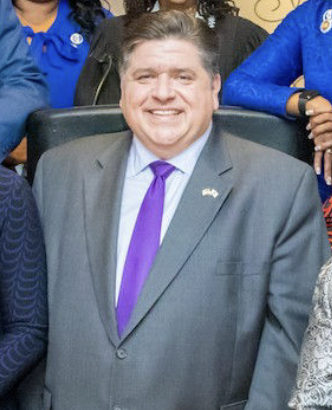 CHICAGO — Governor JB Pritzker reaffirmed his commitment to the core principles he outlined in his FY2025 budget proposal to manage Illinois pension commitments through a set of proposals designed to build on the state’s recent fiscal progress and further reduce long-term risk for taxpayers and retirees. The plans follow steps already taken that have produced Illinois’ strongest pension funded ratio in nearly two decades and reflects a continued focus on doubling down on fiscal responsibility and long-term planning as federal funding uncertainty hovers over the state budget and revenues.
“When I took office, Illinois was facing serious fiscal challenges that left taxpayers and working families carrying the burden,” said Governor JB Pritzker. “Through discipline and responsible budgeting, we’ve stabilized our finances, balanced seven consecutive budgets, delivered 10 credit upgrades, and strengthened our pension systems to the highest level since the Great Recession. Today, I’m building off that progress and reaffirming our commitment to staying on that responsible path and continuing to make steady progress toward full pension funding to ensure long-term stability for the people of Illinois.”
Get The Latest News!
Don't miss our top stories and need-to-know news everyday in your inbox.
Outlined below are a set of proposals to strengthen the state’s pension system’s long- term stability:
- Proposing an extension of the state’s pension buyout program to further reduce long-term liabilities and continue to save taxpayer dollars.
- Proposing to direct additional revenues toward paying down Illinois’ pension commitments through transferring unexpected surplus revenues left over after paying income tax refunds.
- Reaffirming commitment to the Governor’s 2024 multi-tiered plan to manage the state’s long-term pension funding commitments, including increasing the statutory funded ratio goal to 100% funded by 2048 and addressing the Tier II safe harbor concerns by adjusting pensionable earnings cap, building on $75 million set aside in the most recent budget.
Since taking office, Governor Pritzker has made stabilizing Illinois’ pension systems a central component of restoring the state’s financial health. The state has made full pension payments every year, contributed more than $700 million above required levels, and extended the state’s pension acceleration program twice. At the same time, the Governor has continued to push his 2024 pension proposal to ensure full funding and improve stability for Illinois residents.
Extension of State’s Pension Acceleration Program
A key element of the Governor’s pension cost management strategy has been the state’s pension buyout program, already signing into law two extensions since the original 2018 creation of the program. ? The program has delivered measurable reductions in long-term liabilities while providing retirees with voluntary options for greater financial certainty.
The new proposal looks to extend the program by two years to continue delivering long-term savings. Based on current assumptions, extending the program through FY28 would reduce the state’s pension liabilities by up to $1.4 billion. To date, approximately $2.05 billion in buyout payments have reduced the state’s unfunded pension liability by an estimated $2.9 billion, generating net savings for taxpayers by lowering long-term benefit obligations and reducing risk.
Using Surplus Revenues to Accelerate Pension Debt Reduction
The Governor is proposing to redirect excess amounts not needed for state income tax refunds to pay down Illinois’ pension commitments by transferring surplus funds above a $150 million balance to the state’s retirement systems at the end of the year in the account that holds the amounts set aside for income tax refunds.
This approach ensures that unexpected revenues are used to reduce long-term liabilities and interest costs, rather than creating new obligations. By applying surplus funds when available, Illinois can responsibly accelerate progress toward pension stability while protecting taxpayers and strengthening the state’s long-term fiscal position.
Renewed Commitment to 2024 Long-Term Pension Funding Plan
Governor Pritzker is also reintroducing his 2024 long-term pension funding plan to put the state on a sustainable path toward full funding while reducing risk to taxpayers and the state budget.
- The proposal increases Illinois’ statutory pension funded-ratio target from 90 percent to 100 percent by fiscal year 2048, aligning Illinois with peer states and actuarial best practices.
- As legacy debts are paid off — including backlog bonds by 2030 and remaining pension bonds by 2033 — the proposal also dedicates a portion of the resulting savings to increased pension contributions, accelerating debt reduction, and saving taxpayers billions by fiscal year 2045.
- To further protect the state from volatility, the proposal allows for the use of fixed-length amortization strips beginning in fiscal year 2035 to incorporate the impact of annual over- and under-performance of investment returns into annual payments, a tool used by many states to smooth the budgetary impact of market fluctuations and reduce the risk of sharp budget shocks.
- The plan also continues a measured approach to Tier 2 safe harbor compliance, including adjusting the Tier 2 pensionable earnings cap to the Social Security Wage Base for employees not coordinated with Social Security. The FY26 enacted budget set aside $75 million to help support this effort once legislation is enacted.
Doubling Down on Fiscal Responsibility Amid Economic Uncertainty
This new action comes as states across the country face growing fiscal uncertainty driven by actions of the Trump Administration that are putting pressure on state budgets and revenues. Rather than risking Illinois’ hard-won progress, Governor Pritzker is doubling down on fiscal responsibility — strengthening budget reserves and maintaining a disciplined approach to pension funding — to mitigate the impact to core services and ensure Illinois can continue meeting its long-term obligations even in an uncertain environment.
Since taking office, Governor Pritzker has made restoring the state’s fiscal health a central component of his administration. Under his leadership, Illinois has balanced seven consecutive budgets, eliminated its billions in the state’s bill backlog, earned 10 credit rating upgrades, and built a rainy-day fund of nearly $2.5 billion.
More like this:



- Most Popular
- Top Stories


- Most Recent


- Sign In
- Home
- Video
- News
-
Weather
 Sponsored by Michael Ryan Exteriors - Roofing Professionals
 - Sports
- Obits
- Events
- Radio
- AP News
- Shop Local
- Classifieds
- Autos
- Real Estate
- Directory
Follow Us
Copyright © 2026 RiverBender.com All rights reserved.
primary