


Illinois Attorney General Raoul Leads Opposition to Fuel Economy Rollback
Legal and civic leaders caution that weakening standards will lead to higher consumer expenses and undermine efforts to combat climate change.

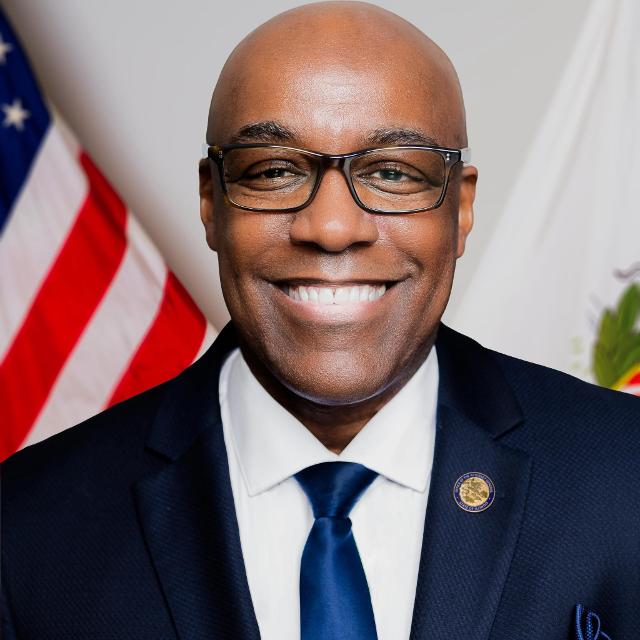
CHICAGO – Attorney General Kwame Raoul joined a coalition of 21 attorneys general, four cities and one county on Wednesday in submitting a comment letter to the National Highway Traffic Safety Administration (NHTSA) opposing its proposal to weaken corporate average fuel economy (CAFE) standards for passenger cars and light trucks. Historically, the NHTSA’s standards have reduced consumer costs by improving fuel efficiency for vehicles and decreasing gasoline demand. However, the new proposed rule would significantly weaken fuel economy standards, leading to increased costs for consumers.
Get The Latest News!
Don't miss our top stories and need-to-know news everyday in your inbox.
In their comment letter, Raoul and the coalition assert that the proposed rule is unlawful and would hurt consumers and the environment.
“The Trump administration’s proposal to lower fuel efficiency standards would undo decades of progress we have made to save consumers money at the pump, reduce oil dependence and cut the emission of pollution including particulate matter and greenhouse gases,” Raoul said. “I will continue to defend science-backed emission standards that lower prices while protecting the environment and our health.”
In 1975, Congress enacted the Energy Policy and Conservation Act which required the NHTSA to establish “maximum feasible” fuel economy standards and to consider technological feasibility, economic practicability, the effect of other government motor vehicle standards and the need to conserve energy. To set fuel economy standards, the NHTSA first models a baseline fleet and then considers what, if any, additional actions manufacturers could take to improve their fuel economy for the future model years in question. In past rulemakings, including during the first Trump administration, the NHTSA started from a realistic baseline fleet that included the millions of electric vehicles that already existed on our nation’s highways and roads.
The current proposed rule misinterprets the NHTSA’s statutory authority and forces the agency to ignore electric vehicles in the baseline fleet and throughout the rulemaking, leading to a dramatically distorted analysis of the “maximum feasible” fuel economy level that the auto industry can achieve. The NHTSA has also utilized defective analyses of vehicle affordability and sales, fleet turnover, fuel savings and vehicle safety to make a profoundly harmful and destructive rule look net-beneficial to society. For example, the NHTSA covers up billions of dollars in lost fuel benefits – money that drivers would save at the pump under its previous fuel economy standards – that its proposed rule would take from consumers and transfer back to oil companies.
It also treats hundreds of billions of dollars in future damages from climate change-driven disasters as zero dollars, flouting the best science and research. It also proposes that the U.S. does not really need to conserve energy, treating the high gasoline prices drivers pay and the instability of global oil markets as an even trade for fossil fuel companies’ profits.
In the comment letter, Raoul and the coalition argue that the NHTSA’s decision to pretend EVs and EV sales do not exist is bad law and bad agency decision-making; the NHTSA’s proposal contravenes its mandate from Congress to conserve energy; the NHTSA’s termination of credit trading between auto manufacturers is arbitrary and capricious and harms affordability; and the NHTSA’s proposal is based on its defective analyses of vehicle affordability and sales, fleet turnover, fuel savings benefits and vehicle safety.
Joining Raoul in sending this letter are the attorneys general of Arizona, Colorado, Connecticut, Delaware, the District of Columbia, Hawaii, Maine, Maryland, Massachusetts, Michigan, Minnesota, New Jersey, New Mexico, New York, North Carolina, Oregon, Rhode Island, Vermont, Washington and Wisconsin, as well as the cities of Chicago, Denver, New York and the city and county of San Francisco.
More like this:



- Most Popular


- Top Stories

- Most Recent

- Sign In
- Home
- Video
- News
-
Weather
 Sponsored by Michael Ryan Exteriors - Roofing Professionals
 - Sports
- Obits
- Events
- Radio
- AP News
- Shop Local
- Classifieds
- Autos
- Real Estate
- Directory
Get the RiverBender App


Follow Us
Copyright © 2026 RiverBender.com All rights reserved.
primary