


The Roots of Valentine’s Day
Valentine’s Day survives because it sits at the crossroads of two powerful human habits: telling stories about love and using rituals to show it.
 A holiday built around hearts and romance began with a public execution.
That jarring contrast is part of what makes Valentine’s Day so interesting. The familiar symbols—red roses, love notes, chocolate—feel soft and sweet. Yet the roots of the day reach back to a mix of early Christian martyr stories, older Roman festivals, and centuries of changing ideas about love. Valentine’s Day didn’t “start” as one neat tradition. It was stitched together over time, then reshaped again by poets, printers, and businesses.
The mystery behind “Saint Valentine”
Get The Latest News!
Don't miss our top stories and need-to-know news everyday in your inbox.
Ask who Valentine was, and the honest answer is: it’s complicated. Early Christian records mention more than one martyr named Valentine (or Valentinus). Two names come up most often:
- Valentine of Rome, said to be a priest who was executed in the 3rd century.
- Valentine of Terni, a bishop also linked to martyrdom around a similar time.
The stories overlap so much that historians are not sure whether they were two different people or versions of the same legend. What is clear is that “Valentine” became a name attached to bravery and faith under Roman rule.
One popular tale claims Valentine secretly performed marriages for couples when the emperor had banned them. Another says he helped persecuted Christians and was jailed. Some versions add a dramatic detail: Valentine befriended his jailer’s daughter and left her a note signed, “From your Valentine.”
That last line is famous, but it’s likely a later invention. Still, it shows something important: people wanted a romantic story to match the holiday they were building.
Why February 14?
February 14 became linked to Saint Valentine through the Christian calendar of feast days. A feast day is meant to honor a saint’s life and death. By the 5th century, the Church had officially marked February 14 as St. Valentine’s Day.
But choosing a date didn’t automatically create a romance holiday. For a long time, it was simply a religious observance. The romantic meaning came later, after culture started connecting the day to courtship and love.
The Roman festival often mentioned—what’s true and what’s not
Valentine’s Day is often tied to Lupercalia, an ancient Roman festival held in mid-February. Lupercalia involved rituals meant to promote fertility and health. It included animal sacrifices and ceremonies that would feel shocking today.
People sometimes say: “Valentine’s Day is just Lupercalia with a new name.” That’s an oversimplification. Here’s a more accurate way to think about it:
- Lupercalia was real, and it happened around the same time of year.
- Christian leaders did discourage or replace some pagan festivals as Christianity spread.
- But there isn’t solid proof that Valentine’s Day was created as a direct replacement for Lupercalia.
What likely happened is more gradual. Mid-February already had cultural energy around fertility and pairing. Later, Christian feast days and social customs mixed into that space. Traditions don’t always switch overnight; they blend.
The big shift: love, poetry, and “courtly” romance
The strongest push toward Valentine’s Day as a romantic celebration came in the Middle Ages. In medieval Europe, especially in England and France, people developed ideals of courtly love—a formal, poetic style of romance. It wasn’t always about marriage. It often focused on admiration, devotion, and longing.
A key belief helped the holiday along: the idea that birds begin to mate in mid-February. Whether that is biologically accurate everywhere is less important than the fact that people believed it. Writers used it as a symbol. If nature was pairing up, humans could too.
The English poet Geoffrey Chaucer is often credited with helping link Valentine’s Day and romance through poems that mention “Saint Valentine’s day” as a time for choosing a mate. Over time, other writers followed. The holiday’s meaning shifted from religious remembrance to romantic opportunity.
From handwritten notes to mass-produced cards
Once the idea caught on, people began exchanging messages. Early “valentines” were handwritten poems or letters. They could be playful, sincere, or even sharp. Not every valentine was sweet.
By the 1700s and 1800s, Valentine’s Day became more organized and commercial, especially in Britain and the United States. Two changes mattered a lot:
- Better printing made cards cheaper and easier to produce.
- Reliable mail service made it simple to send messages privately.
This is where many modern habits come from. The “valentine” became an object you could buy, sign, and send. In the 1800s, printed cards often featured lace, ribbons, flowers, and cupids—imagery that still shapes the holiday.
A real-world example: the same forces that make it easy to order a gift online today—mass production and fast delivery—once made it easy to send a romantic card without having to write a poem from scratch.
Symbols we take for granted (and where they came from)
Hearts
The heart as a symbol of love is older than Valentine’s Day. People long believed the heart was the center of emotion. The heart shape we draw is stylized, not anatomical, but it became a simple visual shortcut for affection.
You can see its power in daily life: a “like” button is often a heart because it instantly communicates warmth and approval.
Cupid
Cupid comes from Roman mythology (related to the Greek god Eros). He’s the mischievous archer who makes people fall in love. Cupid’s presence in Valentine’s imagery is another example of cultural blending—Christian feast day on one side, classical myth on the other.
Roses and chocolate
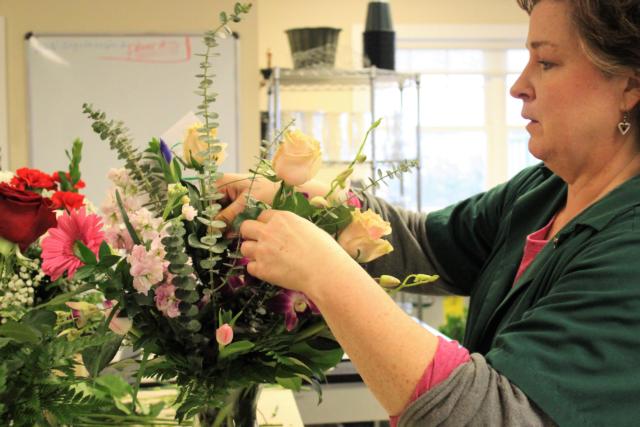
Roses have long been linked to romance and beauty. Chocolate became a popular gift as it became more available and affordable. Both also work because they are sensory: smell, taste, and touch make feelings feel more real.
Traditions and sayings that shape expectations
Valentine’s Day isn’t celebrated the same way everywhere:
- In the United States and Canada, cards and candy are common, and kids often exchange valentines at school.
- In Japan, it’s traditional for women to give chocolates to men, and men return gifts on White Day (March 14).
- In parts of Europe, the focus may be more on couples, with romantic dinners and small gifts.
- In some places, the day has expanded beyond romance to include friends and family.
Language also carries the holiday’s influence. The phrase “Be my Valentine” is a set script—simple, direct, and widely understood. Another common idea is the “valentine” as a person, not just a card: “He’s my valentine.” That way of speaking shows how the holiday turned into a label for relationships.
A commonly misunderstood point: Valentine’s Day has never been only about one kind of love. Even in the past, it included admiration, friendship, and playful teasing, not just serious romance.
How the roots show up in modern life
You can spot the holiday’s layered history in everyday choices:
- Religious roots still appear in the name “Saint Valentine,” even for people who don’t think of it as a religious day.
- Poetic traditions live on in love notes, song lyrics, and even short texts that try to say something meaningful in a few words.
- Commercial traditions show up in the pressure to buy something, from flowers to jewelry.
- Old myths still peek through in cupids, arrows, and the idea of “love striking” suddenly.
If you want a practical way to recognize the holiday’s influence, listen for the scripts people use: “What are we doing for Valentine’s Day?” “Are we making it official?” “Do I need to get a card?” Those questions are modern versions of older social rituals about pairing, commitment, and public signals of affection.
A few grounded takeaways
- Valentine’s Day is a blend, not a single origin story. That’s why it can feel both romantic and awkward, heartfelt and commercial.
- Traditions change when technology changes. Printed cards and mail reshaped the holiday, just as social media and online shopping reshape it now.
- You can choose what the day means. Knowing its roots makes it easier to treat it as a tool—an excuse to express care—rather than a test you have to pass.
Valentine’s Day survives because it sits at the crossroads of two powerful human habits: telling stories about love and using rituals to show it. A saint’s name, a poet’s metaphor, a printer’s design, and a simple message in a card all ended up pointing in the same direction. The holiday may not have started with hearts and roses, but it has always been about one thing people keep trying to do—turn private feelings into something they can share.
More like this:



- Most Popular



- Top Stories



- Most Recent



- Sign In
- Home
- Video
- News
-
Weather
 Sponsored by Michael Ryan Exteriors - Roofing Professionals
 - Sports
- Obits
- Events
- Radio
- AP News
- Shop Local
- Classifieds
- Autos
- Real Estate
- Directory
Follow Us
Copyright © 2026 RiverBender.com All rights reserved.
primary