


How Humans Tracked Seasons Before Calendars
You can tell what month it is without a calendar — if you know where to look.
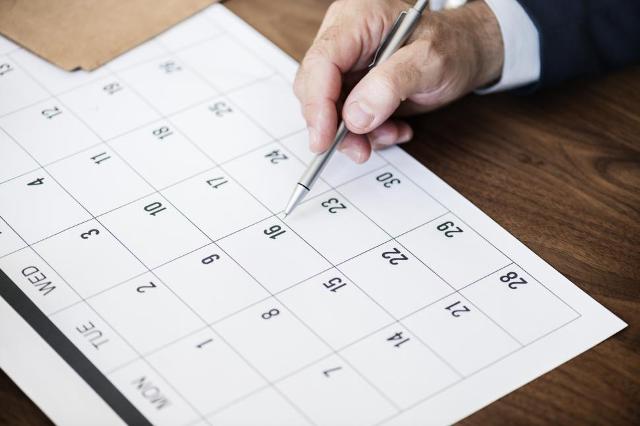
You can tell what month it is without a calendar—if you know where to look. A shadow that falls a little shorter than it did last week. A star that rises in a new spot. A plant that suddenly sends up shoots on the same hillside it always has. For most of human history, these were not fun observations. They were survival information.
Before printed calendars and phone reminders, people still needed to answer the same hard questions: When should we plant? When will animals migrate? When is it safe to travel? When do rivers flood? The way humans tracked seasons was practical, local, and often shared through stories and rituals so nobody forgot.
Why tracking seasons mattered more than counting days
A calendar is great at naming dates. It is not always great at telling you what the land is about to do. Early communities cared less about “the 14th day” and more about patterns that affected food and safety.
If you live by hunting, you want to know when herds move. If you fish, you watch spawning runs. If you farm, you need the right window for planting and harvest. If winter storms can trap you, you need warning signs before they hit. Seasonal knowledge was a tool, like a knife or a net. It helped people plan ahead.
That is why many early “calendars” were not sheets of paper. They were memories tied to landmarks in the sky and changes in plants, animals, and water.
The sky as a reliable clock: sun, shadows, and horizons
The sun was the most obvious guide. People noticed that its path across the sky changes in a steady cycle. Even without numbers, you can track that cycle with simple methods.
Shadows and sticks. A vertical stick in the ground (a basic gnomon) creates a shadow that changes length and direction during the day. Over many days, people could notice that the shortest midday shadow of the year and the longest midday shadow of the year are special turning points. You do not need to know the word “solstice” to recognize a pattern that repeats.
Sunrise and sunset points. If you pay attention to where the sun rises along a distant ridge, you can see it shift day by day. Some communities marked these points with stones, posts, or notches. This is one reason many ancient structures line up with sunrise or sunset on key dates. It was not just “astronomy” for its own sake. It was a way to anchor the year.
Natural “calendar lines.” A doorway, a mountain notch, or a standing stone can become a reference point. When the sun rises exactly through that gap, everyone knows the cycle has reached a certain stage.
These methods were powerful because they did not depend on writing. They depended on careful looking.
Stars as seasonal signposts
Stars helped because they change position in the night sky over the year. Certain stars or constellations appear at predictable times. People used this as a seasonal checklist.
One famous example is the Pleiades, a small cluster of stars that shows up in stories worldwide. In different regions, its appearance or disappearance at certain times was linked to farming, navigation, or ceremonies. The details varied by place, but the logic was the same: “When this appears in this way, it’s time to do that.”
Sailors also learned to read the sky for direction and for timing. Even inland communities used stellar patterns as memory hooks. A star’s first appearance before dawn after being hidden in the sun’s glare (often called a “heliacal rising”) can be a reliable annual marker.
A common misunderstanding is that ancient people needed complex math to use the stars. Many did develop sophisticated astronomy, but basic seasonal tracking could come from repeated observation and shared teaching: watch this group of stars; when it returns, prepare.
The land’s signals: plants, animals, and water
Sky markers are consistent, but daily life depends on local conditions. That is why many communities relied on phenology—the timing of natural events.
Plants: first buds, flowering, seed drop, leaf color changes, and which plants appear after rain.
Animals: bird migrations, insect emergence, mating seasons, and when certain fish run upstream.
Water: snowmelt, river levels, coastal tides, and the return of predictable winds.
These cues were often more useful than a fixed date. A “normal” date can be wrong in an unusual year. A plant blooming on your hillside is harder to ignore. Even today, gardeners often plant by cues like soil warmth and last frost rather than strictly by the calendar.
You can hear echoes of this in sayings such as “Make hay while the sun shines.” It is not really about sunshine. It is about catching a narrow window when conditions are right.
Memory tools: stories, songs, and festivals as seasonal technology
Without widespread literacy, people needed ways to store and transmit seasonal knowledge. One of the smartest solutions was to tie it to culture.
Stories and myths often encode observations: an animal character arrives, a hero travels, a spirit changes the world. These are not “science textbooks,” but they can act like memory maps that keep key timing information alive.
Songs and chants work the same way. Rhythm makes details easier to remember. If a community needs to remember a sequence of tasks—burning fields, planting, moving animals, storing food—music can carry that schedule across generations.
Festivals and rituals also served a practical purpose. A shared event can act like a public reminder: now we prepare; now we store; now we move. In many cultures, communal gatherings were timed around predictable seasonal shifts because that is when people were available and when resources could support a feast.
Even common idioms can reflect older seasonal thinking. Phrases like “saving for a rainy day” point to the idea that hard periods are expected and must be planned for. The “rainy day” is not random bad luck; it is a predictable phase.
Built markers: stones, posts, and aligned buildings
Some communities created permanent markers to track repeating sky events. These could be simple or complex:
- A line of stones that points to a sunrise position
- A doorway or corridor aligned with a particular sunrise or sunset
- A set of posts that cast shadows onto marked spots
- Hilltop sites where the horizon makes the sun’s movement easy to measure
These structures did not replace local knowledge. They supported it. They gave people a shared reference that did not rely on one expert’s memory.
It is easy to assume these sites were only religious. Many likely had spiritual meaning, but they also solved a practical problem: they made the cycle visible to everyone.
Early “calendars” that weren’t pages: moons, knots, and tally marks
Humans also tracked time with counting systems. The moon is an obvious choice because its phases are easy to see. Many societies used lunar months to organize activities.
But lunar months do not line up neatly with the solar year. That mismatch creates drift. Communities handled this in different ways: adding an extra month sometimes, using seasonal sky markers to reset the count, or treating the lunar count as one tool among several.
People also used tally marks, knotted cords, or carved bones to keep track of cycles. These were not always “calendars” in the modern sense. Often they were reminders: how many days since an event, how many nights until a gathering, how many moons since a birth.
How this still shows up in modern life
Even with calendars everywhere, people still use pre-calendar habits more than they think:
- Farmers track soil temperature, rainfall, and plant stages, not just dates.
- Fishers and surfers pay attention to tides and seasonal winds.
- Parents notice sleep and mood shifts that follow daylight changes.
- Many holidays are tied to older seasonal markers, even if the reason is forgotten.
You can also see it in the way people talk. “Spring cleaning” is a cultural habit tied to a predictable shift in living patterns. “Harvest” is used as a metaphor because it is a clear, shared experience: work now, benefit later.
Practical ways to notice seasonal tracking around you
You do not need special equipment to try this yourself:
- Pick a sunrise or sunset reference. Use a building edge, a tree, or a hill. Notice how the sun’s position shifts over weeks.
- Watch one plant closely. Choose a tree or bush you pass often. Note budding, flowering, and leaf changes.
- Track one animal pattern. A bird species, insects near a porch light, or neighborhood pets’ shedding can be surprisingly consistent.
- Pay attention to shadows at the same time of day. A quick photo from the same spot can reveal slow changes you normally miss.
These small observations show why early seasonal tracking worked. It did not require perfect precision. It required attention, shared knowledge, and respect for patterns.
Humans tracked seasons before calendars by building a relationship with repeating signals—above them, around them, and within their communities. The tools were simple, but the thinking was sharp: notice what changes, remember what it means, and act before it’s too late. That mindset still matters, even when the date is always one tap away.
More like this:



- Most Popular



- Top Stories


- Most Recent



- Sign In
- Home
- Video
- News
-
Weather
 Sponsored by Michael Ryan Exteriors - Roofing Professionals
 - Sports
- Obits
- Events
- Radio
- AP News
- Shop Local
- Classifieds
- Autos
- Real Estate
- Directory
Follow Us
Copyright © 2026 RiverBender.com All rights reserved.
primary