


This Weekend in History on March 7 and 8: "Bloody Sunday" Attacks on Civil Rights Protesters
Read on to learn more about what has happened on this weekend in history.
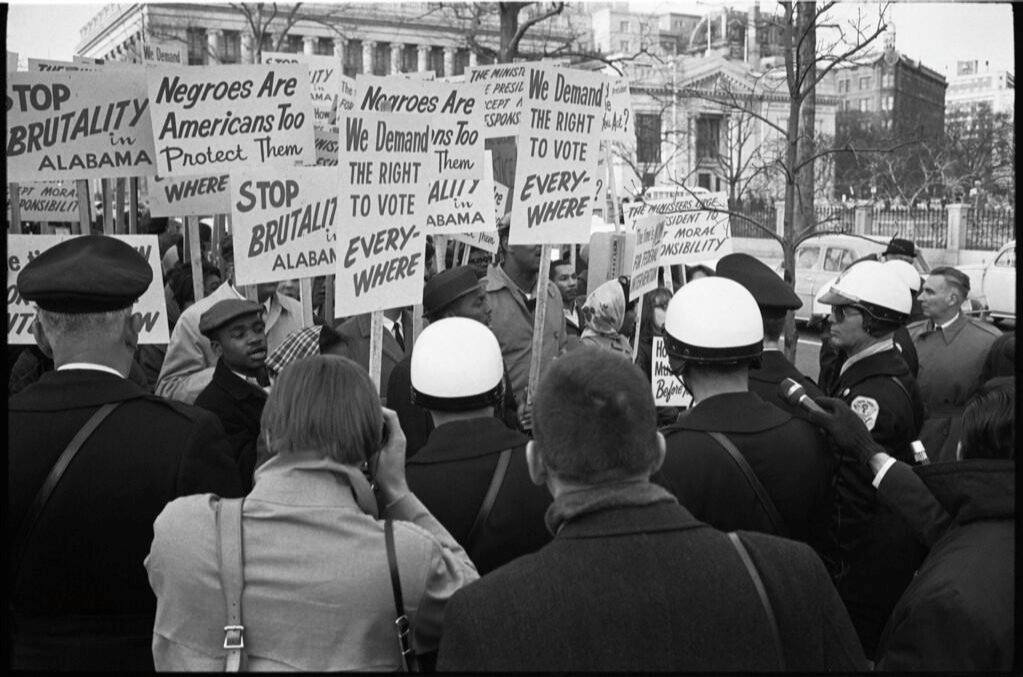
On March 7, 1965, several hundred peaceful marchers set out from Selma, Alabama, to walk to the state capital in Montgomery and demand equal voting rights. As they crossed the Edmund Pettus Bridge, state troopers and local law enforcement attacked them with clubs and tear gas in a scene that quickly became known as “Bloody Sunday.” It mattered immediately because it exposed, in plain view, how violent resistance to civil rights could be—and how hard it still was for many Americans to exercise a basic democratic right. It still matters today because the images and testimony from that day helped push major changes in U.S. law, and it remains a widely recognized example of how public protest, media coverage, and political pressure can combine to reshape policy.
Get The Latest News!
Don't miss our top stories and need-to-know news everyday in your inbox.
The Selma-to-Montgomery march did not begin in a vacuum. For years, Black citizens in Alabama and across the U.S. South faced obstacles designed to keep them from registering to vote, including intimidation, unfair tests, and bureaucratic hurdles. Local organizers and national civil rights groups had been building a campaign in Selma to challenge these barriers. When marchers tried to take their demands to the state capital on March 7, the response was swift and brutal. News footage spread across the United States and beyond, prompting national outrage and increasing support for federal action. Within months, the U.S. Congress passed the Voting Rights Act of 1965, which strengthened federal protections for voting access and gave the government tools to challenge discriminatory practices.
Long before Selma, March 7 had already marked moments of political change in other parts of the world. In 321 CE, the Roman emperor Constantine issued a decree making the “day of the sun” a legal day of rest for many workers in the empire. The order did not create Christianity’s Sunday worship, but it helped shape the weekly rhythm of public life in Europe and, later, in societies influenced by European law and custom. Over time, the idea of a regular weekly rest day became a social expectation in many places, affecting labor patterns, family life, and commerce.
In 1876, Alexander Graham Bell received a U.S. patent for the telephone. The device was still in its early form, and many technical and business challenges lay ahead, but the patent marked a turning point in the long effort to send voices over wires. The telephone’s impact grew steadily: it changed how businesses coordinated, how governments managed emergencies, and how families kept in touch across distance. It also helped lay groundwork for later communication networks, from long-distance switching systems to the digital infrastructure that supports modern mobile and internet-based calling.
A different kind of milestone arrived on March 7, 1936, when Germany remilitarized the Rhineland, a region that had been restricted under the post–World War I settlement. German forces moved in despite international agreements meant to limit militarization and reduce the risk of another major war in Europe. The immediate outcome was a sharp test of resolve for European powers and international diplomacy. In the longer view, the move weakened the credibility of the restrictions imposed after World War I and encouraged further aggressive steps in the late 1930s, contributing to the path toward World War II.
In the space age, March 7, 1962, brought a major step for solar science when the United States launched Orbiting Solar Observatory 1 (OSO-1). The satellite helped scientists observe the Sun above Earth’s atmosphere, where many wavelengths of solar radiation can be studied more clearly. Understanding solar activity is not just an academic pursuit: solar storms can disrupt radio communication, satellite operations, and power grids. Missions like OSO-1 helped build the foundation for modern space weather monitoring and for the broader practice of using satellites to study Earth’s environment and the wider solar system.
Sports history also claims this day. On March 7, 2004, the Boston Celtics retired Reggie Lewis’s number 35, honoring a player whose career and life ended abruptly when he died in 1993. Jersey retirements are symbolic, but they can carry real meaning for teams and communities: they mark collective memory, acknowledge loss, and connect new generations of fans to the people who shaped a club’s identity.
Notable births on March 7 span politics, literature, music, and performance. Maurice Ravel, born in 1875 in France, became one of the most recognized composers of the early 20th century. Works like Boléro and Daphnis et Chloé showed his skill with orchestral color and rhythm, and his music continues to be performed worldwide, influencing composers and film scoring alike.
Anna Magnani, born in 1908 in Italy, earned a reputation for powerful, naturalistic acting that helped define postwar Italian cinema. She became an international figure and won an Academy Award for The Rose Tattoo, a rare achievement for a performer working across languages and film industries. Magnani’s legacy is tied to a style of acting that emphasized emotional truth and everyday realism.
The day also marks the birth of Bryan Cranston in 1956 in the United States. Over decades, he built a career across comedy and drama, becoming widely known for television roles that showed how long-form storytelling could support complex character development. His work is often cited in discussions of how television acting and writing evolved as TV became a leading venue for serious drama.

Notable deaths on March 7 include figures whose work shaped politics, art, and music. In 1932, French statesman Aristide Briand died after a long public career that included multiple terms as prime minister and a prominent role in international diplomacy after World War I. He is remembered in part for efforts to reduce conflict through agreements and dialogue during a period when Europe was struggling to stabilize.
Stanley Kubrick, who died on March 7, 1999, left a lasting mark on cinema through films such as 2001: A Space Odyssey, Dr. Strangelove, and A Clockwork Orange. His productions were known for careful visual composition and technical experimentation. Kubrick’s influence shows up in filmmaking craft, from camera techniques to the way directors use sound, editing, and set design to shape mood and meaning.
Taken together, March 7 offers a cross-section of how history moves.
On March 8, 1917, mass protests in Petrograd (now St. Petersburg) helped set off the Russian Revolution, a turning point that quickly ended centuries of imperial rule and reshaped politics far beyond Russia’s borders. What began as public anger over food shortages, harsh working conditions, and the strain of World War I grew into a wave of strikes and demonstrations that the government could not contain. Within days, the tsar abdicated, and a new political order began to form. It mattered at the time because it changed who held power in one of Europe’s largest empires during a global war. It still matters today because the revolution helped lead to the creation of the Soviet Union, influenced political movements worldwide, and left long-running effects on international relations, economic systems, and everyday life across much of the 20th century.
The spark in Petrograd did not come out of nowhere. Russia had entered World War I with high hopes, but the war brought heavy casualties, inflation, and breakdowns in transportation that made basic goods scarce in cities. On March 8 (March 23 by the then-used Russian calendar), crowds—many of them women workers—took to the streets demanding bread and better conditions. Their demonstrations spread, workers walked off the job, and soldiers increasingly refused orders to fire on civilians. That loss of loyalty was decisive. The immediate result was the fall of the tsarist government and the rise of a provisional government, alongside councils of workers and soldiers that competed for authority. Over the longer term, the instability of 1917 opened the door to the Bolshevik seizure of power later that year and, after civil war, the formation of a new state with global influence.
A different kind of milestone arrived on March 8, 1945, near the end of World War II in Europe. Germany launched Operation Spring Awakening in Hungary, its last major offensive of the war, aiming to secure oil supplies around Lake Balaton. The attack initially pushed forward but soon stalled against Soviet defenses and a lack of resources. Its failure underscored a reality that had been building for months: Germany no longer had the manpower, fuel, or strategic position to change the war’s outcome. Within weeks, Soviet forces advanced deeper into Central Europe, and the war in Europe ended in May. The episode remains significant because it shows how logistics—especially fuel—can decide military possibilities as much as battlefield tactics.
March 8 is also closely tied to the history of social movements through International Women’s Day, which has roots in early 20th-century labor activism and campaigns for political rights. The date became widely recognized after women’s demonstrations in Russia in 1917 helped ignite the revolution, and it later gained broader international observance. In 1975, the United Nations began marking International Women’s Day, and in 1977 the UN General Assembly invited member states to observe a day for women’s rights and world peace. The day’s importance lies in its long arc: it reflects the way local struggles—over wages, working hours, education, and voting rights—can grow into international conversations about opportunity, safety, and participation in public life.
In science, March 8, 2011 marked the formal announcement of a major medical milestone: U.S. regulators approved the first drug to treat systemic lupus erythematosus in more than half a century. The medication, belimumab (brand name Benlysta), offered a new option for a complex autoimmune disease that can damage organs and sharply reduce quality of life. The approval mattered because it showed progress in targeting immune pathways more precisely, and it encouraged further research into autoimmune conditions that are often difficult to diagnose and manage. Even when a single drug is not a complete answer, breakthroughs like this can shift what doctors expect is possible and where research investment goes next.
Sports history adds another layer. On March 8, 1971, “The Fight of the Century” took place at Madison Square Garden, where Joe Frazier defeated Muhammad Ali in a heavyweight boxing match that drew worldwide attention. The bout mattered because it was about more than titles: it was a meeting of two unbeaten champions, each with a distinct style and public identity, at a time when boxing was one of the most watched sports on the planet. The match helped shape the modern idea of a global sporting event, where athletic achievement, media coverage, and public interest blend into a shared moment that people remember for decades.
Notable births on March 8 span fields that rarely overlap but often influence one another. In 1922, Ralph Baer was born in Germany and later became known as a key pioneer of home video games. His work helped move interactive entertainment from laboratories and arcades into living rooms, shaping an industry that now reaches billions of people. Baer’s legacy is not just about games; it is about the idea that consumer electronics could be interactive, playful, and widely accessible.
Deaths on March 8 also mark the passing of people whose work shaped public life. In 1869, composer Hector Berlioz died in Paris. Berlioz expanded the possibilities of orchestration and musical storytelling, and his bold approaches influenced later composers who explored new sounds and larger musical forms. His music remains a reference point for how the orchestra can be used to create vivid atmosphere and emotion.
Taken together, March 7 and 8 trace a wide path through human experience.
More like this:



- Most Popular



- Top Stories



- Most Recent



- Sign In
- Home
- Video
- News
-
Weather
 Sponsored by Michael Ryan Exteriors - Roofing Professionals
 - Sports
- Obits
- Events
- Radio
- AP News
- Shop Local
- Classifieds
- Autos
- Real Estate
- Directory
Follow Us
Copyright © 2026 RiverBender.com All rights reserved.
primary