


March 19 in History: Iraq War Invasion
The date links the 2003 invasion of Iraq with turning points in diplomacy, war, technology and culture spanning centuries.
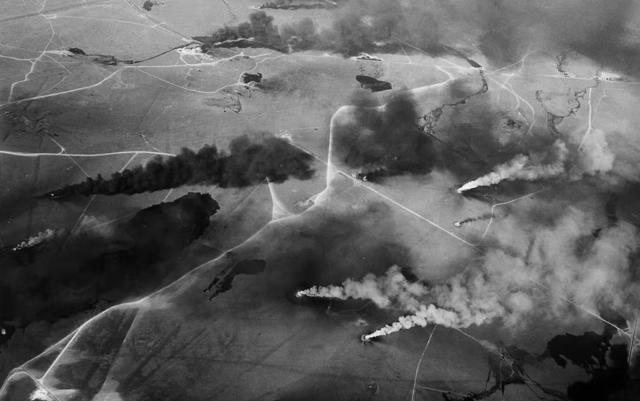
On March 19, 2003, the United States and its allies launched the invasion of Iraq, beginning a war that quickly toppled Saddam Hussein’s government and reshaped politics and security across the Middle East. At the time, supporters of the invasion argued it would remove a dangerous regime and reduce long-term threats, while critics warned it could destabilize the region and strain international norms around the use of force. What happened next—years of conflict, shifting alliances, and deep debate over intelligence, civilian costs, and postwar planning—made the start of the war a turning point that still affects regional stability, global diplomacy, and how many countries think about intervention and nation-building.
Get The Latest News!
Don't miss our top stories and need-to-know news everyday in your inbox.
The roots of the Iraq War’s opening day lay in the tense post–Cold War period and the aftermath of the 1991 Gulf War, when Iraq faced sanctions and weapons inspections. In the early 2000s, arguments over Iraq’s suspected weapons programs and its relationship to broader security threats became central to international discussions. When the invasion began on March 19 (March 20 in Iraq local time), it did more than start a military campaign. It also tested the strength of international institutions, highlighted divisions among allies, and set off changes in Iraq’s internal politics that would influence the region for years.
Several centuries earlier, March 19 became tied to the era of revolutions in Europe. In 1812, the Spanish Constitution of 1812—often called “La Pepa” because it was proclaimed on Saint Joseph’s Day—was adopted during the Peninsular War against Napoleonic France. It aimed to limit royal power, establish a constitutional monarchy, and define rights and representation. Although the constitution was suspended and restored more than once as Spain’s politics swung between absolutism and liberal reform, it became a reference point for constitutional movements in Spain and parts of Latin America. Its influence mattered less because it lasted unchanged, and more because it introduced ideas about citizenship and governance that kept returning during later struggles over political authority.
By the early 20th century, March 19 was connected to another kind of upheaval. In 1918, the United States Congress created time zones and approved daylight saving time through the Standard Time Act. Railroads had already pushed the country toward standardized timekeeping, but the law made it official and tied it to national policy. The change affected commerce, travel, and daily life by making schedules more predictable across long distances. Debates over daylight saving time have continued ever since, but the broader idea—treating time as shared infrastructure—helped modern economies function more smoothly.
The day also carries weight in the history of global conflict and reconciliation. On March 19, 1944, Germany occupied Hungary during World War II in an operation known as Operation Margarethe. Hungary had been allied with Nazi Germany but was exploring ways to leave the war as German fortunes declined. The occupation tightened German control and had severe consequences for Hungary’s Jewish population, as deportations accelerated soon after. Remembering this date helps explain how rapidly political decisions and military moves could change the fate of entire communities during the war.
Science and technology also mark March 19 in a way that changed everyday life. In 1991, the World Wide Web became publicly accessible in a practical sense when the first web server and basic tools were opened beyond a small circle of researchers, helping the web move from a specialized project to a system others could use and build on. The internet already existed, but the web’s simple linking of documents made online information far easier to navigate. Over time, this helped transform communication, education, business, and media, creating new opportunities while also raising questions about privacy, misinformation, and the power of digital platforms.
March 19 has also been a day of dramatic political change. In 2011, a coalition led by NATO began military action in Libya after the United Nations authorized measures intended to protect civilians during the uprising against Muammar Gaddafi. The intervention contributed to the fall of the Libyan government later that year. In the years that followed, Libya faced prolonged instability and competing centers of power. The events connected to this date remain part of ongoing global discussions about humanitarian intervention, the limits of military solutions, and what long-term support is needed after a regime collapses.
Notable people born on March 19 reflect the wide range of human achievement associated with this date. In 1813, David Livingstone was born in Scotland. He became one of the most famous European explorers and missionaries in Africa, known for his long journeys and for drawing European attention to the interior of the continent. His writings shaped public understanding in his own time, and his legacy is closely tied to the complicated history of exploration, missionary work, and European expansion.
In 1848, Wyatt Earp was born in the United States. Earp became a well-known figure of the American frontier, associated with law enforcement and events like the gunfight near the O.K. Corral. His later fame, amplified by books and films, helped create lasting myths about the “Wild West.” He is remembered less for a single clear historical record than for how his life became part of a larger cultural story about order, violence, and legend-making.
The arts are represented by Ursula Andress, born March 19, 1936, in Switzerland. She became an international film star, especially known for her role in the early James Bond series. Her work is often discussed as part of the rise of global popular cinema in the postwar era, when film and television began to circulate widely across borders and shape shared pop culture.
March 19, 1955, is the birthday of Bruce Willis. One widely recognized name is Ivan Ljubicic (born 1979), a Croatian tennis player who reached the top ranks of men’s tennis and later became influential as a coach. His career reflects how modern professional sports have become increasingly international, with training and competition spanning continents.
Deaths on March 19 also highlight turning points in culture and politics. In 1721, Pope Clement XI died after a papacy shaped by European power struggles and disputes over religious practice and authority, including debates about missionary work and local customs. His era shows how closely religion and state politics were linked in early modern Europe and beyond.
A major cultural loss came in 2008, when Arthur C. Clarke died. Clarke, a British science fiction writer and futurist, helped shape how the public imagined space exploration and technology. His novel “2001: A Space Odyssey,” connected to Stanley Kubrick’s film, became a landmark of modern science fiction. Clarke’s work mattered because it made complex scientific possibilities feel tangible to general audiences, influencing both popular culture and some real-world scientific curiosity.
Looking across March 19, the day brings together decisions made in war rooms and negotiating halls, changes to how people measure time, and ideas that traveled through books, films, and the early web.
More like this:





- Most Popular



- Top Stories



- Most Recent



- Sign In
- Home
- Video
- News
-
Weather
 Sponsored by Michael Ryan Exteriors - Roofing Professionals
 - Sports
- Obits
- Events
- Radio
- AP News
- Shop Local
- Classifieds
- Autos
- Real Estate
- Directory
Follow Us
Copyright © 2026 RiverBender.com All rights reserved.
primary