


How Earth Day Awareness Began as a Grassroots Push Against Pollution
The modern environmental movement grew from public outrage over pollution, organizing by ordinary citizens, and a 1970 nationwide teach-in that pushed leaders toward sweeping environmental laws.

The first Earth Day wasn’t launched by a big environmental group. It was powered by ordinary people—students, teachers, neighbors, union members, faith communities—who decided that dirty air and poisoned water were not the price of progress.
That idea sounds obvious now. It wasn’t in 1970. Earth Day awareness began as a public wake-up call, built from frustration, fear, and a new belief that citizens could push government and business to protect the basics: clean air, safe water, and healthy places to live.
Before Earth Day: When “pollution” felt like the cost of doing business
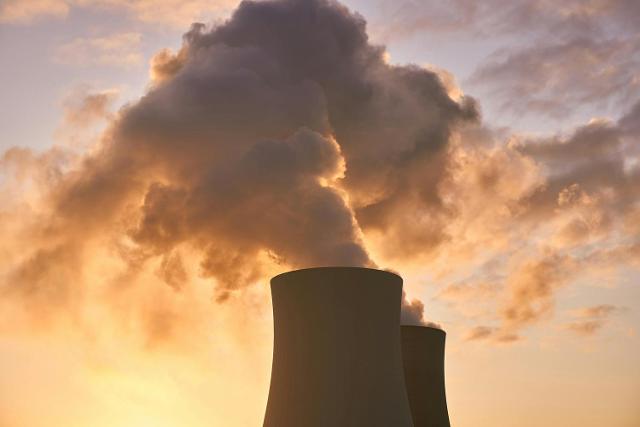
In the mid-1900s, many Americans accepted smog, smoke, and chemical runoff as normal. Factory towns often carried a bitter joke: if the river smells bad, it means people have jobs. That kind of thinking wasn’t rare. Pollution was seen as an unfortunate side effect of growth.
But the damage was becoming hard to ignore.
- In cities like Los Angeles, thick smog stung eyes and made breathing harder.
- Rivers caught fire from oil and industrial waste—most famously the Cuyahoga River in Ohio.
- Pesticides and chemicals were spreading through food chains, raising worries about wildlife and human health.
People didn’t always have scientific terms for what they were seeing. They just knew something was off. If your kid’s asthma got worse on certain days, or your tap water tasted strange, you didn’t need a textbook to feel alarm.
The spark: A book that changed the conversation
One of the biggest early boosts to environmental awareness came from a book: Silent Spring by Rachel Carson, published in 1962.
Carson wrote about how pesticides, especially DDT, were harming birds and ecosystems. The title was haunting—“silent” because birdsong could disappear if bird populations collapsed. The book didn’t just share facts. It gave people a story they could picture in their own neighborhoods.
It also challenged a common assumption: that new chemicals were automatically safe because they were modern. Carson’s work helped popularize a new kind of caution—what we might now call “look before you leap.”
The backlash was intense. Some chemical companies attacked Carson personally. That fight mattered, because it showed how environmental debates could become cultural battles. Even so, the public attention grew. More people started asking: Who decides what gets sprayed, dumped, or released into the air?
A nation on edge: Disasters, protests, and a changing mood
By the late 1960s, the United States was already in a period of major activism. Civil rights organizing, anti-war protests, and student movements were reshaping what people thought was possible.
Environmental concern blended into that larger mood. It wasn’t only about protecting “nature” in faraway parks. It was about daily life:
- Can I let my kids play outside without coughing?
- Is the fish in this lake safe to eat?
- Why does my neighborhood get the factory smoke while others get the clean air?
This period also included visible environmental disasters. A major oil spill off the coast of Santa Barbara in 1969 coated beaches and killed wildlife. Scenes like that hit television and newspapers, making pollution feel immediate and personal.
Awareness often grows when people can’t “unsee” what they’ve seen. Images of blackened shorelines and burning rivers did that.
The political idea: A “teach-in” for the planet
Earth Day came from a simple political insight: if enough people cared at the same time, leaders would have to respond.
The key figure was U.S. Senator Gaylord Nelson of Wisconsin. After witnessing the Santa Barbara spill, he wanted a national event that would bring environmental issues into public view. He borrowed a familiar protest format of the era: the “teach-in,” which was often used on college campuses to discuss the Vietnam War.
A teach-in wasn’t a lecture from experts only. It was a mix of speeches, discussions, demonstrations, and community events. The point was participation.

Nelson recruited Denis Hayes, a young organizer, to help coordinate. They chose April 22, 1970, partly because it fit the college calendar—students could take part.
That choice mattered. Earth Day awareness grew fast because it was designed to be local. Instead of one rally in one city, thousands of events happened across the country at once.
The first Earth Day: Not a holiday, a mass civic action
On April 22, 1970, an estimated 20 million Americans participated in Earth Day activities. That number is hard to picture. It was roughly one in ten people in the country at the time.
Events ranged widely:
- Students held campus cleanups and debates.
- Communities organized marches and park projects.
- Teachers built lessons around pollution and conservation.
- Some groups staged dramatic demonstrations to show how dirty the air and water had become.
Earth Day wasn’t owned by one political party, one age group, or one region. That broad mix helped it spread. People could show up in their own way.
It also created a shared language. Words like “environment,” “ecology,” and “pollution control” became dinner-table topics, not just scientific terms.
From awareness to law: Why Earth Day changed policy
Earth Day awareness didn’t stay symbolic. It helped create pressure for real rules.
In the years around the first Earth Day, the U.S. government passed major environmental laws and built new institutions, including:
- The Environmental Protection Agency (EPA), established in 1970
- The Clean Air Act (strengthened in 1970)
- The Clean Water Act (1972)
- The Endangered Species Act (1973)
Earth Day didn’t single-handedly cause these changes, but it helped make them politically unavoidable. When millions of people show up, lawmakers pay attention.
A common misunderstanding is that Earth Day began as a feel-good celebration. It was closer to a public demand: stop treating the environment as an unlimited trash can.
Cultural roots: Why “Earth Day” became a tradition
Earth Day stuck because it tapped into something deeper than politics. It gave people a ritual.
Cultures build traditions around shared values. Earth Day became a modern civic tradition—like a community clean-up, a school poster contest, or planting a tree with your family. These acts are small, but they carry meaning. They say, “We’re responsible for this place.”
It also connected with older sayings and ideas:
- “Leave it better than you found it.” This isn’t an official Earth Day slogan, but it captures the spirit.
- “Waste not, want not.” A traditional warning about thrift became newly relevant in a throwaway society.
- The idea of being a “good neighbor” expanded to include not dumping problems downstream or downwind.
Earth Day helped turn environmental care into a basic social expectation, not just a hobby for hikers.
Earth Day awareness in modern life: Where you can see it now
Even if you never attend an Earth Day event, its influence shows up in everyday routines:
- Recycling bins and compost programs at schools and workplaces
- “No idling” signs near campuses and hospitals
- Cleaner car standards and lower-sulfur fuels
- Product labels that mention energy use, emissions, or “BPA-free” materials
- Community fights over landfills, pipelines, or industrial permits
Some of these changes are imperfect. Some are contested. But the fact that people argue about environmental impact at all is part of Earth Day’s legacy. Before Earth Day, many communities didn’t feel they had the right—or the power—to question pollution.
Practical takeaways: How to recognize Earth Day’s original message
Earth Day started as awareness with teeth: public attention aimed at real-world change. You can connect to that original spirit in a few simple ways:
- Notice what affects your daily environment. Pay attention to air quality alerts, water advisories, and local development plans. Awareness begins with observation.
- Ask “who benefits, who pays?” If a factory, highway, or waste site brings profits, who gets the pollution? This question shaped early environmental justice conversations.
- Treat Earth Day as a prompt, not a performance. A single clean-up is helpful, but the bigger impact often comes from habits and civic choices—voting in local elections, attending community meetings, or supporting policies that reduce pollution.
- Connect the global to the local. Climate change can feel distant, but energy bills, heat waves, and insurance costs are not. Earth Day awareness works best when it links big issues to lived experience.
Earth Day began as a mass act of public attention—people deciding that the environment wasn’t someone else’s job. That awareness didn’t appear out of nowhere. It grew from visible harm, persuasive voices, and a moment when citizens believed they could reshape the rules. The lasting lesson is simple: when enough people notice the same problem at the same time, “normal” can change.
More like this:


- Most Popular


- Top Stories



- Most Recent


- Sign In
- Home
- Video
- News
-
Weather
 Sponsored by Michael Ryan Exteriors - Roofing Professionals
 - Sports
- Obits
- Events
- Radio
- AP News
- Shop Local
- Classifieds
- Autos
- Real Estate
- Directory
Follow Us
Copyright © 2026 RiverBender.com All rights reserved.
primary