


Non-Invasive Spine Surgery Offers Hope After Years Of Pain
OSF HealthCare introduces minimally invasive technique to treat spinal conditions, promising smaller incisions and quicker pain relief for patients like Tyler Stratman.
 Key Takeaways:
- A newer endoscopic technique available at OSF HealthCare allows surgeons to treat certain spinal conditions with smaller incisions and faster recovery times.
- Tyler Stratman of Clinton, Illinois experienced near-immediate pain relief following surgery for a bulging disc.
- Full recovery times vary depending on a person's age and severity of the condition.
Get The Latest News!
Don't miss our top stories and need-to-know news everyday in your inbox.
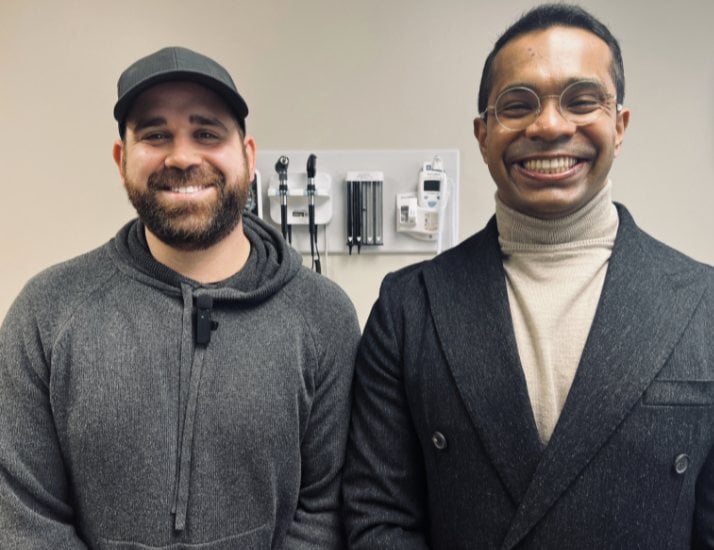
After years of chronic pain stripped away his active lifestyle, 36-year-old Tyler Stratman of Clinton, Illinois, says he has finally reclaimed his life thanks to a specialized spine procedure now available in Central Illinois.
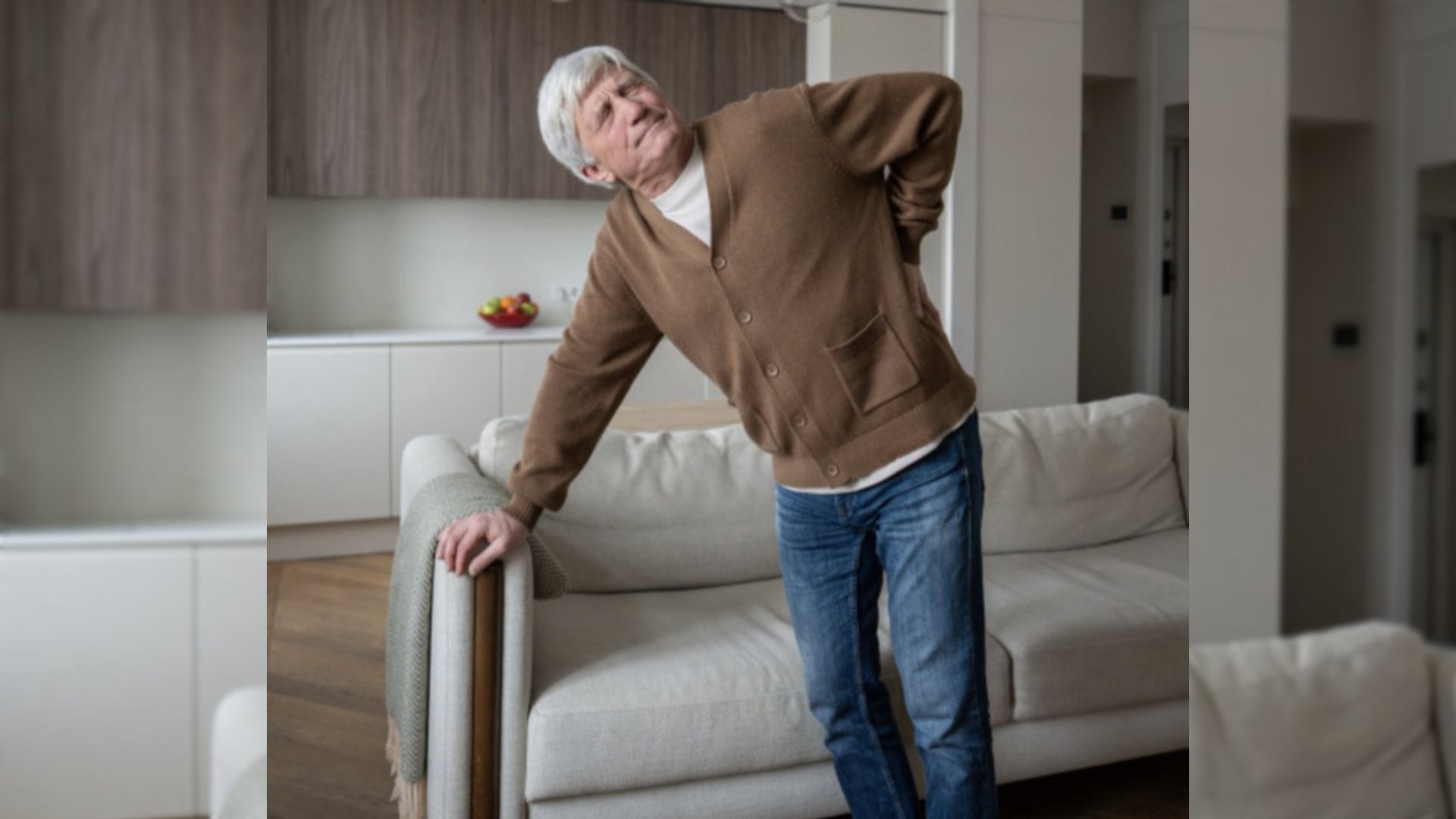
Stratman, who once ran several miles a day while living in Chicago, says his life changed dramatically when persistent back pain began about two and a half years ago. What started as discomfort escalated into debilitating immobility.
Active lifestyle disrupted by chronic back pain
The pain prompted Stratman to completely stop his habit of running four to five miles a day.
“Even walking down the street to get Starbucks, my whole entire body would just kind of charley horse. I would have to stop in between blocks and kind of do hamstring stretches and things like that. And you know I was only 33 years old. And so, it was a huge, huge part of my life taken away.”
An MRI eventually revealed a severe herniated disc in his lower spine. At its peak, Stratman describes unbearable pain and sleepless nights.
“I don’t think I slept for probably four to five days,” Stratman explains. “I would have to go out in the middle of the night. We have a treadmill and I would have to go out at like three or four in the morning to walk just to relieve something – just so I wouldn’t feel pain.”
Minimally invasive spine surgery offers new option in Central Illinois
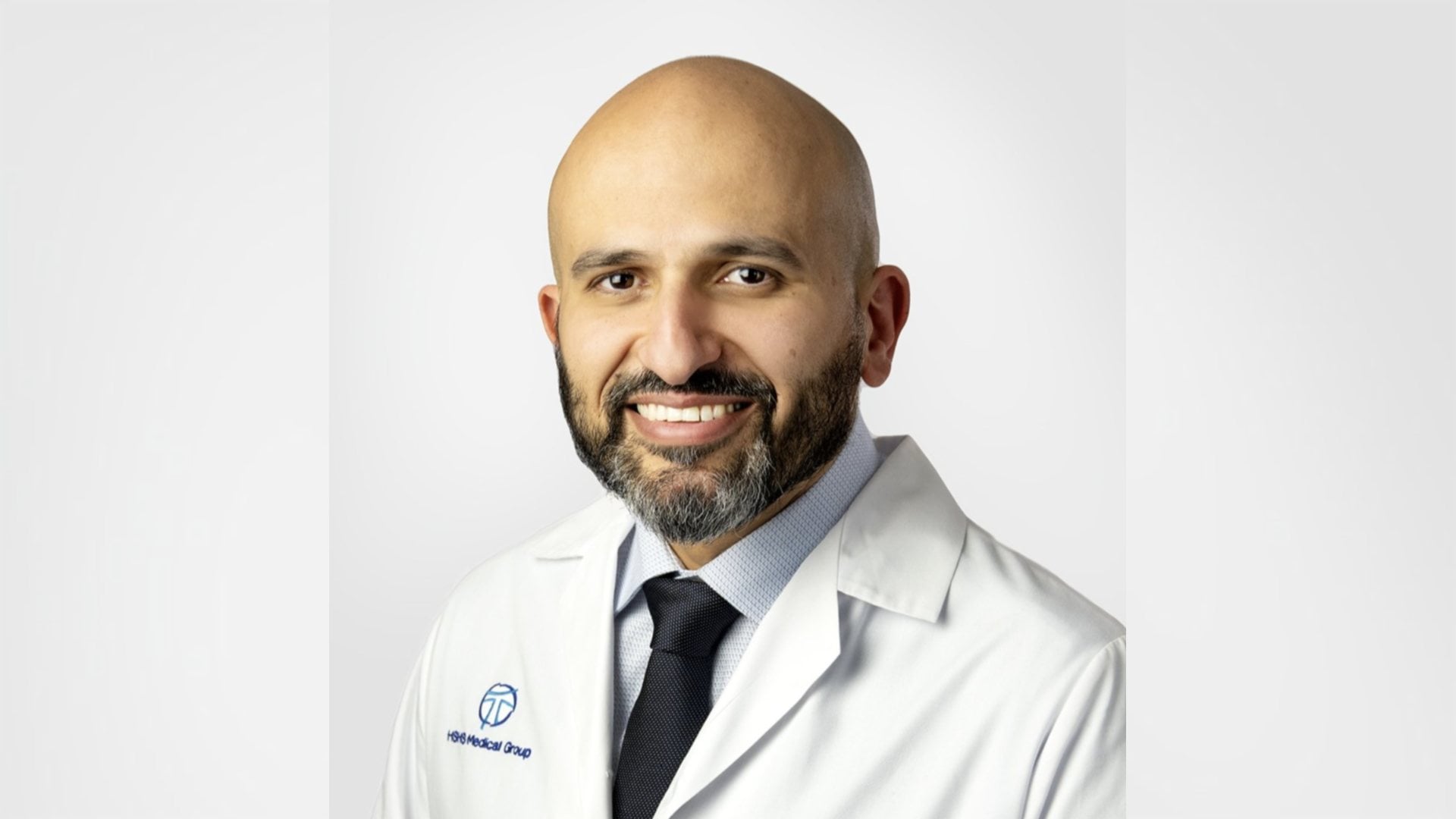
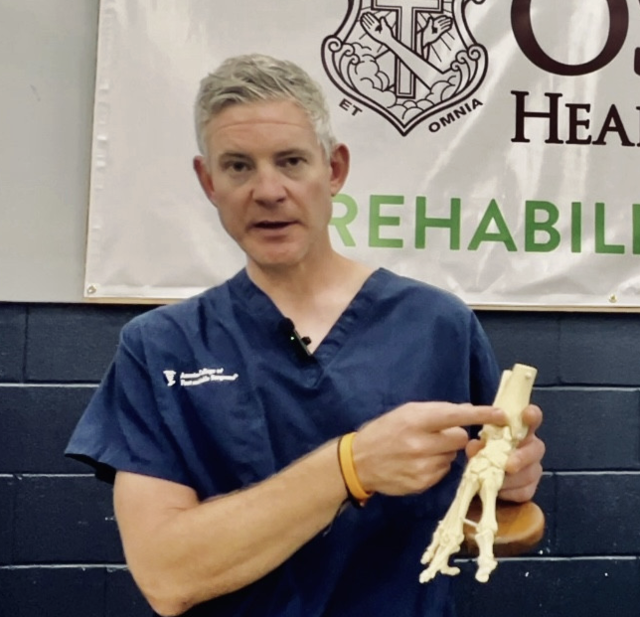
After exhausting non-surgical options including physical therapy, steroid injections and chiropractic care, Stratman was referred to neurosurgeon Sohail Syed, MD, who specializes in minimally invasive endoscopic spine surgery.
Spine surgeons at OSF HealthCare Illinois Neurological Institute (OSF INI) Spine Institute perform approximately 1,000 spine surgeries each year, more than any other hospital system in the area and is the second largest program in Illinois. OSF HealthCare began using new minimally invasive spine surgery technology in June 2024, expanding treatment options for patients with certain spinal conditions. Since then, fellowship-trained spine surgeon Dr. Syed has performed 50 non-invasive spine surgeries using this advanced approach.
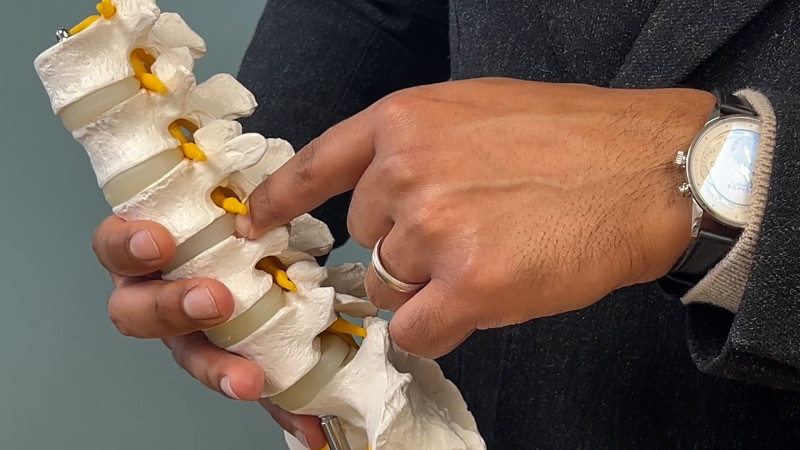
The endoscopic approach uses a small camera and specialized instruments inserted through a narrow pathway, avoiding the need for large incisions or significant tissue disruption.
Dr. Syed notes that in traditional spine surgery, surgeons often must remove bone and move a nerve aside to reach the problem area – steps the endoscopic technique can often minimize or avoid.
Endoscopic spine surgery reduces damage and recovery time
“Rather than going through all that, you can sneak underneath the nerve. And the endoscopic camera has an angle on it so it lets you look around the corner and work in the natural hole that exists in the spine without removing any bone or tissue and go right to the disc, remove the disc that’s pushing on the nerve or the bone spur and be in and out just using a one to two centimeter incision.”
Dr. Syed emphasizes that surgery is typically a last resort after conservative treatments fail but says Stratman was an ideal candidate due to both his condition and mindset.
“He was a great candidate for endoscopic spine surgery because of the type of disc herniation he had, the location, his age and his attitude,” Dr. Syed emphasizes, “He was really willing to do the work required after to get the best benefit from the surgery.”
Stratman ultimately chose the less invasive option that allowed surgeons to access his spine through a natural pathway while he remained partially awake. Though initially daunting, he says the decision became clear after years of suffering.
It offered him hope and following a two-and-a-half-hour procedure, the results were almost immediate.
Finding immediate relief
 “It was an instant relief. The kind of like nugget charley horse I just felt like I had in my back for those years – it was just gone. I didn’t feel it anymore,” he explains.
Stratman was also relieved he didn’t have to travel to St. Louis or Chicago for the innovative surgical approach. He was back home the same day – seven hours after his surgery.
Dr. Syed notes that while some people experience immediate improvement, recovery timelines can vary depending on the severity and duration of nerve compression.
Surgery removes whatever’s causing an injury, but Dr. Syed reminds people the procedure doesn’t repair injury.
The body has to heal on its own, and that can take time. For some older patients, Dr. Syed cautions it could mean a few months before they feel significantly better.
“While the nerve is being hurt, so is the muscle, so is the skin and for all of that to recover, it can take time – especially for older patients. So, if you wake up feeling great, that’s awesome. But if you don’t, give it at least three months.”
Now several months post-surgery, Stratman says he feels stronger and more mobile than ever.
“I’m better than I’ve ever been. I feel stronger than I ever have. My mobility is better than it ever has been. I feel more flexible and [I’m] sleeping fantastic.”
Stratman is not ready to start running again. Instead, he has adapted his routine with other forms of exercise, such as strength training and fast walking. He remains focused on long-term health.
For others facing similar decisions, both Stratman and Dr. Syed stress the importance of persistence, trust and informed care.
And for Dr. Syed, the ultimate goal is simple: meaningful improvement in patients’ lives. You can learn more here about non-invasive spine surgery available through OSF HealthCare.
More like this:
- Most Popular


- Top Stories


- Most Recent

- Sign In
- Home
- Video
- News
-
Weather
 Sponsored by Michael Ryan Exteriors - Roofing Professionals
 - Sports
- Obits
- Events
- Radio
- AP News
- Shop Local
- Classifieds
- Autos
- Real Estate
- Directory
Follow Us
Copyright © 2026 RiverBender.com All rights reserved.
primary