


How Easter Traditions Took Shape From Faith, Folklore and Family Customs
From the holiday’s shifting date to eggs, bunnies and candy baskets, Easter customs reflect centuries of religious practice, folk tradition and modern commercialization.
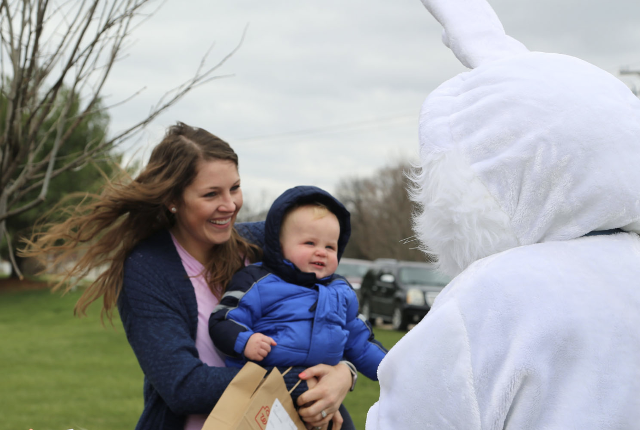
A rabbit delivering eggs sounds like a joke—until you realize it’s one of the most widely recognized holiday symbols in the world. Easter traditions often feel like they’ve always been there, but many of them are stitched together from different places: early Christian worship, older springtime customs, medieval church rules, and even modern marketing. That mix is exactly why Easter can look so different from one family to the next.
Easter: one holiday, several layers of meaning
Get The Latest News!
Don't miss our top stories and need-to-know news everyday in your inbox.
At its core, Easter is the central celebration of Christianity: the resurrection of Jesus. That religious meaning shaped the date, the worship services, and many of the symbols people still use. But Easter also picked up local customs wherever it spread. Over centuries, communities blended church practices with familiar foods, folk stories, and seasonal habits.
That’s why you can see Easter as both a church holiday and a cultural event. One household may focus on services and fasting. Another may mostly think of candy, brunch, and dyed eggs. Both versions have roots worth knowing.
Why the date keeps changing
A common assumption is that Easter should have a fixed date, like Christmas. Instead, it moves every year. The reason goes back to how early Christians linked Easter to Passover, a Jewish festival that follows a lunar calendar.
In Western Christianity, Easter is celebrated on the first Sunday after the first full moon on or after the spring equinox (using a church-set version of the equinox and full moon). That’s why it can fall anywhere from late March to late April.
You can still see this “moon-and-calendar” history in everyday life. It’s the reason schools and workplaces can’t lock Easter-related breaks to the same week each year, and why people sometimes ask, “Why is it so early this time?”
The name “Easter” and the language puzzle
In many languages, the word for Easter comes from “Passover” or from a Greek word tied to it. For example, “Pascua” (Spanish) and “Pâques” (French) connect to Pascha, a term used in early Christianity.
English and German are different. “Easter” and “Ostern” may connect to a Germanic word linked to dawn or an older festival name. A popular claim is that Easter is directly named after a goddess called Eostre, mentioned by an early medieval writer. The evidence is thin, and historians debate how much that idea explains modern Easter. What’s safe to say is this: the English name likely reflects local language and older cultural vocabulary, while the holiday’s main religious meaning comes from Christian tradition.
Practical takeaway: when you see Easter called “Pascha” on calendars or in churches, that’s not a different holiday—it’s the same celebration under an older name.
Eggs: from fasting rules to a symbol of new life
Eggs feel like the most “obvious” Easter symbol, but their rise is surprisingly practical.
For many Christians in the Middle Ages, Lent (the period leading up to Easter) involved fasting and restrictions on rich foods. In some places, that included eggs and dairy. Hens didn’t stop laying eggs, so eggs piled up. By the time Easter arrived, people had a lot of eggs to use, share, or preserve.
Eggs also became a strong symbol. An egg looks plain, but something living can come out of it. That made it an easy image for themes of new life and resurrection.
Why people dye eggs
Coloring eggs likely began as a way to mark them as special and festive. In some traditions, red eggs are common, symbolizing blood and life. Over time, dyeing became a family activity. That’s still true now: even people who don’t attend church may dye eggs because it’s hands-on, cheap, and easy to do with kids.
Modern example: the grocery store egg-dye kit is a direct descendant of older “make it special” practices—just packaged for convenience.
The Easter Bunny: folk belief meets family fun
The Easter Bunny is not a biblical character, and that’s part of the confusion. The rabbit or hare likely comes from European folk traditions where hares were linked with fertility and the return of abundant life. In parts of Germany, stories developed about an “egg-laying hare” that brought treats to children. German immigrants carried versions of this custom to America, where it spread and evolved into the Easter Bunny many people know now.
The bunny also fits a simple rule of successful traditions: it gives kids a story to play along with. Like Santa Claus or the Tooth Fairy, it turns a holiday into a small mystery and a game.
Practical takeaway: if your family does an egg hunt, you’re participating in a tradition shaped as much by storytelling as by religion.
Hot cross buns and Easter foods with hidden history
Food traditions often preserve history better than textbooks because people repeat them year after year.
Hot cross buns—spiced sweet buns marked with a cross—are strongly associated with Good Friday in parts of the English-speaking world. The cross signals the Christian meaning, while the spices connect to older baking traditions and the idea of making a special, richer bread after a period of simpler eating.
Other Easter foods reflect local culture:
- Lamb is common in many places, connecting both to biblical imagery and to the timing of spring lambing in farming communities.
- Ham became popular in some regions partly because pork was a practical preserved meat after winter.
- Sweet breads and cakes show up where families celebrate the end of fasting with richer ingredients like butter, eggs, and sugar.
A saying you may have heard—“Good Friday, good eating”—captures the way many communities tie the religious calendar to the kitchen.
New clothes and the idea of “Easter best”
Wearing new clothes for Easter has been common for centuries. In Christian settings, it connects to ideas of renewal and celebration. In everyday life, it also became a social custom: you show respect by dressing up.
That habit left a lasting phrase: “Easter best.”strong> Even if someone doesn’t buy a new outfit, they might still say they’re wearing their “Easter best” to mean their nicest clothes.
Modern example: think of how many family photos are taken on Easter. The tradition of dressing up helps explain why Easter is still a big “picture day” for many households.
Parades, processions, and public celebration
Easter parades didn’t start as fashion events. In many cities, people left church services and walked in groups, sometimes with music or formal processions. Over time, these public walks turned into social scenes. In some places, they became organized parades where clothing and hats were part of the show.
That’s why an Easter parade can feel both religious and purely cultural. It comes from communities gathering in public, then evolving into a tradition that anyone can watch.
The rise of candy and commercial Easter
Chocolate eggs and marshmallow chicks are not ancient customs. They’re modern expansions of older ideas: eggs as gifts, sweets as celebration foods, and small treats for children.
Chocolate became more affordable and widely produced in the 1800s and 1900s. Once factories could make molded shapes, the egg became an obvious product. The same is true for wrapped candies and themed baskets. Businesses didn’t invent Easter, but they did reshape how many people experience it—especially in households where the holiday is mainly about family activities.
Practical takeaway: if your Easter feels centered on baskets, candy, and small gifts, you’re seeing a newer layer of tradition built on older symbols.
Recognizing Easter traditions in your own life
If you want to spot where your own Easter habits come from, ask a few simple questions:
- Does this tradition involve eggs, rich foods, or special baking? It may trace back to Lent and the end of fasting.
- Is it a kid-focused story (bunny, egg hunt, hidden treats)? It likely grew from folk customs and family storytelling.
- Is it about public gathering (church services, parades, photos)? That connects to community celebration and older processions.
- Does it feel highly branded or product-based? That’s often a modern add-on built around older symbols.
Knowing the roots doesn’t take away the fun. It can make the holiday feel more meaningful, because you can see how many people—across languages, countries, and centuries—added something to it.
Easter traditions are less like a single ancient script and more like a shared scrapbook. Some pages come from church worship, some from folk stories, and some from the candy aisle. The reason they still work is simple: they give people a way to mark change, gather with others, and tell a story—whether that story is sacred, playful, or a bit of both.
More like this:


- Most Popular



- Top Stories


- Most Recent



- Sign In
- Home
- Video
- News
-
Weather
 Sponsored by Michael Ryan Exteriors - Roofing Professionals
 - Sports
- Obits
- Events
- Radio
- AP News
- Shop Local
- Classifieds
- Autos
- Real Estate
- Directory
Follow Us
Copyright © 2026 RiverBender.com All rights reserved.
primary