


Why Superstitions Still Shape Everyday Life in a Scientific Age
From the evil eye to lucky shirts and ladders, everyday superstitions persist because they offer comfort, routine, and a sense of control.
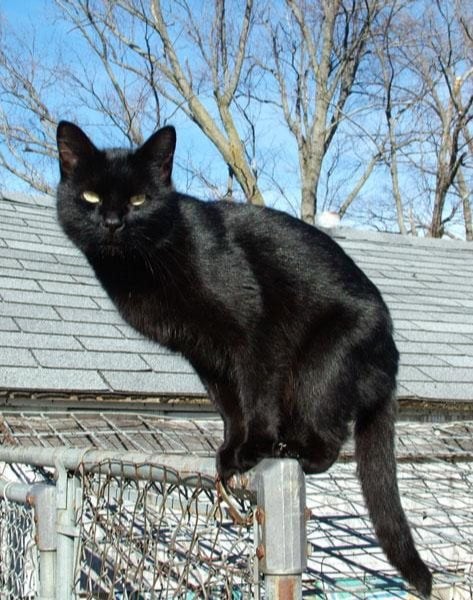
A baseball player taps home plate three times before stepping into the batter’s box. A student refuses to walk under a ladder on the way to an exam. Someone says “bless you” after a sneeze without thinking twice. These small habits can look silly, yet they show how superstition slips into ordinary life—often in moments when people want a little extra control.
Get The Latest News!
Don't miss our top stories and need-to-know news everyday in your inbox.
Superstitions are beliefs that certain actions, objects, or words can bring good luck or bad luck, even when there’s no clear proof. They are not the same as organized religion, and they are not always tied to a specific culture. They spread because they feel useful. When life is uncertain—illness, storms, money, love, war—superstitions offer a simple rule: do this, avoid that, and you might be safer.
What counts as a superstition?
A superstition usually has three parts:
- A trigger: a sign or event (a black cat, a broken mirror, a sneeze).
- A rule: an action to take or avoid (knock on wood, don’t open an umbrella indoors).
- A promised result: luck changes (good fortune, a curse, protection).
The key is that the connection is not based on solid evidence. But it can still feel real because humans are pattern-seekers. If you wore a “lucky” shirt and had a great day, your brain may link the two. The next time you want another great day, the shirt seems like a smart choice.
Early roots: when nature felt unpredictable
Long before modern science, the world was full of mysteries. Why did crops fail? Why did a child get sick? Why did lightning strike one home and not another? People built explanations from what they could observe.
Many early superstitions came from nature and survival:
- Animals as signs: Birds, snakes, and insects were often treated as messengers. If they appeared at the “wrong” time, it could mean danger ahead.
- Weather and farming: A strange cloud, an early frost, or an unusual wind could be read like a warning. Some sayings that sound like folk wisdom today started as attempts to predict weather patterns.
- Protection rituals: Charms, amulets, and special symbols were used to guard against sickness and misfortune. Even now, people wear lucky jewelry or carry a token in their wallet.
These beliefs were not always irrational in their original setting. If a community noticed that certain conditions often came before a storm, a superstition could form around it. The “rule” might be wrong, but it came from real fear and real observation.
The “evil eye” and the power of envy
One of the oldest and most widespread superstitions is the evil eye—the idea that envy or a hostile stare can cause harm. Versions of this belief appear in the Mediterranean, the Middle East, South Asia, and Latin America, among many others.
The evil eye makes sense as a social warning: success can attract jealousy, and jealousy can lead to conflict. So cultures created ways to protect themselves:
- Blue eye-shaped charms (common in Greece and Turkey)
- Spitting lightly or saying a phrase to “undo” envy in some traditions
- Avoiding excessive praise for a baby or a new purchase
Even in places where people don’t talk about the evil eye directly, you can hear the echo of it in everyday speech. When someone quickly adds “knock on wood” after saying something hopeful, they are often trying to avoid “jinxing” it—another form of fear about attracting bad luck through attention.
Medieval Europe: religion, fear, and folk magic
In medieval Europe, superstition mixed with religion, local traditions, and fear of the unknown. People accepted the idea of unseen forces, but they didn’t always agree on what those forces were. Some practices were treated as harmless folk customs. Others were seen as dangerous.
Common themes included:
- Witches and curses: Misfortune could be blamed on a person believed to have harmful powers. This fear helped fuel witch trials in parts of Europe and colonial America.
- Protective objects: Horseshoes over doors, iron charms, and special herbs were used to keep evil away.
- Sacred words and gestures: Saying certain prayers, making signs, or using holy water could feel like a defense against both spiritual and everyday threats.
A lot of modern superstitions grew out of this period’s mix of faith and folk practice. “God bless you” after a sneeze, for example, is often linked to old ideas that sneezing could make you vulnerable—either because illness was near or because your soul could be threatened. The exact origin is debated, but the habit stuck because it feels polite and protective.
Everyday objects that became “lucky” or “dangerous”
Many famous superstitions are tied to household items. Their origins are often practical, but the meaning changed over time.
Breaking a mirror
The belief that breaking a mirror brings bad luck is sometimes linked to the idea that mirrors reflect the soul. Another reason is simpler: mirrors used to be expensive. Breaking one was a serious loss, so it “felt” like a curse.
Walking under a ladder
A ladder leaning against a wall forms a triangle. In Christian Europe, triangles could be seen as a sacred symbol. Disturbing that shape was considered risky. There’s also a practical point: walking under a ladder is a good way to get hit by falling tools.
Opening an umbrella indoors
Early umbrellas had metal parts and stiff springs. Opening one inside could knock things over or poke someone. A “bad luck” story is a memorable way to teach people not to do it.
These examples show a pattern: a safety rule or social rule becomes a superstition because it’s easier to remember when it carries a threat.
Idioms and sayings: superstition hiding in plain language
Even people who claim they aren’t superstitious still use superstitious language:
- “Knock on wood” to prevent a good statement from being ruined by bad luck.
- “Jinx” to describe the fear that speaking a hope will make it fail.
- “Third time’s the charm” suggesting the number three has special power.
- “Step on a crack, break your mother’s back” a playground rhyme that turns anxiety into a game.
These phrases act like cultural leftovers. You may not believe them, but they still shape behavior. You might knock on a wooden table automatically because it feels like a harmless insurance policy.
Why superstitions survive in a scientific world
Superstitions don’t disappear just because people learn more science. They adapt.
Here’s why they last:
- They give comfort. When you can’t control the outcome, a ritual can calm your nerves.
- They create routine. Athletes and performers often use rituals to focus. The ritual becomes “lucky” because it’s linked to good performance.
- They spread socially. Families pass them down. Friends copy each other. Movies and sports culture keep them alive.
- They reward selective memory. People remember the time the “sign” came true and forget the times it didn’t.
In modern life, you can see superstition in small choices: wearing a “lucky” outfit to an interview, avoiding certain numbers in hotel rooms, or keeping a charm on a keychain. Even tech has its versions—people joke about “not jinxing” a computer by saying it’s working fine.
How to spot superstition in your own life
You don’t need to argue with every superstition you hear. But it helps to recognize when a belief is steering your choices.
Ask yourself:
- Am I doing this to feel calmer, or because I truly think it changes reality?
- Would I still do it if no one else was watching?
- Do I notice only the “hits” and ignore the “misses”?
- Is this habit harmless, or is it limiting me?
A small ritual can be harmless and even helpful if it reduces stress. But superstitions can become a problem when they create fear, cost money, or stop you from making sensible decisions.
Superstitions are not just odd leftovers from the past. They are a mirror of human needs: the need for safety, meaning, and a sense of control. The objects and rituals change from place to place, but the impulse stays the same. When you notice a superstition—whether it’s a whispered “knock on wood” or a careful step around a ladder—you’re seeing a very old strategy at work: turning uncertainty into a rule you can hold in your hand.
More like this:


- Most Popular



- Top Stories



- Most Recent



- Sign In
- Home
- Video
- News
-
Weather
 Sponsored by Michael Ryan Exteriors - Roofing Professionals
 - Sports
- Obits
- Events
- Radio
- AP News
- Shop Local
- Classifieds
- Autos
- Real Estate
- Directory
Follow Us
Copyright © 2026 RiverBender.com All rights reserved.
primary