


Texas City Disaster, "Letter From Birmingham Jail," and More Mark April 16 in History
From the 1947 Texas City explosion to landmark moments in revolution, science and civil rights, April 16 has repeatedly marked pivotal events in world history.
On April 16, 1947, a ship loaded with fertilizer-grade ammonium nitrate exploded in the U.S. port of Texas City, triggering fires, a tidal surge, and a chain reaction that destroyed much of the waterfront and nearby neighborhoods. The Texas City disaster became one of the deadliest industrial accidents in modern history, killing hundreds and injuring thousands. At the time, it exposed how quickly everyday industrial materials could become catastrophic when heat, confined storage, and emergency response collide. It still matters because it reshaped public expectations around hazardous cargo rules, port safety, disaster preparedness, and the legal responsibilities of governments and companies when preventable risks are ignored.
Get The Latest News!
Don't miss our top stories and need-to-know news everyday in your inbox.
The story of April 16 stretches far beyond one port, though, and it shows how a single date can hold turning points in politics, science, culture, and public life. Over centuries, decisions made on this day have helped redraw borders, open new ways of thinking, and change what societies consider acceptable or possible.
In 1746, April 16 marked a very different kind of turning point with the Battle of Culloden in Scotland. Government forces defeated the Jacobite army, ending a major attempt to restore the Stuart line to the British throne. The immediate result was military defeat, but the longer impact was social and cultural. The aftermath brought harsh crackdowns and policies aimed at reshaping Highland life, leaving memories that still echo in Scottish identity, literature, and debates over cultural preservation. It also showed how civil conflict can be followed by state-building measures that reach deep into everyday customs.
The date took on a new global political weight in 1917, when Vladimir Lenin returned to Petrograd during the Russian Revolution. His arrival, after years in exile, mattered because it helped sharpen the direction and messaging of the Bolshevik movement at a moment when Russia’s future was unsettled. The Provisional Government was struggling to manage war, food shortages, and competing political demands. Lenin’s influence did not single-handedly determine what came next, but it did contribute to the momentum that led to the October Revolution and the creation of the Soviet state. The long-term consequences—new political systems, Cold War rivalries, and debates about revolution and governance—shaped much of the twentieth century.
Two decades later, April 16, 1922, saw the signing of the Treaty of Rapallo between Germany and Soviet Russia. Both countries were diplomatically isolated after World War I in different ways, and the agreement restored relations and opened paths for economic cooperation. At the time it was a practical move by two governments seeking room to maneuver. In the longer view, it signaled how states can reshape the international landscape by forming unexpected partnerships, especially when existing alliances and treaties leave them constrained.
The year 1947 brought the Texas City disaster, a tragedy that also became a policy lesson. Investigations and lawsuits that followed pushed questions about labeling, storage, firefighting protocols, and the chain of responsibility in industrial settings. The disaster’s influence can be seen in later improvements to hazardous materials handling and in the broader idea that safety is not just an on-site concern; it depends on training, regulation, and coordination across many agencies.
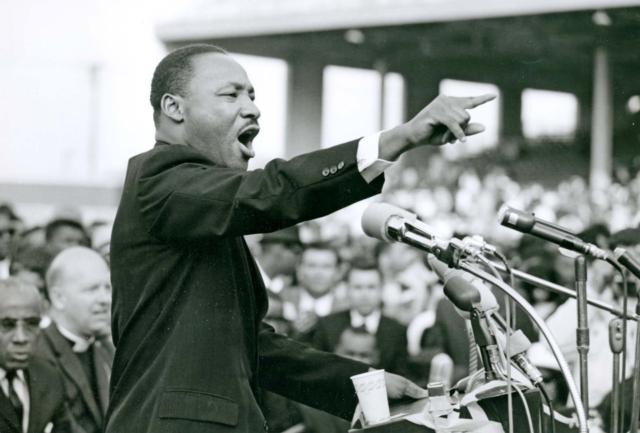
In 1963, April 16 introduced a text that would become central to the U.S. civil rights movement: Martin Luther King Jr.’s “Letter from Birmingham Jail.” Written in response to criticism of nonviolent protests, the letter explained why waiting for gradual change often meant accepting injustice. Although rooted in a specific campaign, its wider impact came from its clear moral reasoning and its explanation of civil disobedience as a disciplined, public act. Across decades and borders, the letter has been read as a guide for how social movements argue their case to the broader public.
Science and technology also claim April 16 as a marker. In 2003, the Human Genome Project announced that it had completed the sequencing of the human genome. The achievement mattered immediately because it provided a reference map for researchers studying inherited disease, human variation, and basic biology. It still matters because it helped launch a new era of biomedical research, from faster gene discovery to more targeted drug development. The project also raised lasting questions about privacy, consent, and who benefits from genetic knowledge—issues that remain active as DNA testing and gene-based medicine become more common.
Culture and media changed on April 16, 1972, when Apollo 16 launched toward the Moon. While it was a scientific mission, it was also a global media moment in an era when spaceflight symbolized national capacity and human curiosity at the same time. The mission expanded knowledge of lunar geology and demonstrated how complex operations could be carried out far from Earth with limited computing power by today’s standards. Its legacy is part technical—data, tools, and procedures—and part inspirational, feeding later ideas about returning to the Moon and traveling onward to Mars.
Sports history joins the date in 1948, when the first modern European championship match for the sport of snooker took place under rules and formats that helped shape professional competition. The event reflected how organized sports were becoming more standardized and internationally visible, supported by broadcasting and growing leisure time. Over time, snooker and many other sports became not just games but industries tied to media, sponsorship, and global audiences.
Notable births on April 16 include Charlie Chaplin (1889), whose silent-era films combined physical comedy with sharp social observation. Chaplin’s work mattered because it showed how film could communicate across languages and class lines, and because it helped define cinema as a modern art form with worldwide reach. Another influential figure is Queen Margrethe II of Denmark (1940), remembered for steering a constitutional monarchy through decades of social and economic change while remaining a cultural presence through her interests in art and design. Kareem Abdul-Jabbar (1947) was also born on this date; he became one of basketball’s defining players, known for record-setting performance and for helping shape the sport’s modern professional era. From a different field, Wilbur Wright (1867) shares the date as well, and his work with Orville Wright helped turn controlled, powered flight from an experiment into a practical reality, laying foundations for aviation and the connected world that followed.
Notable deaths on April 16 include Marie Tussaud (1850), the French artist behind the famous wax museum tradition; her work shaped popular culture by turning public figures into accessible, three-dimensional displays long before photography and film became everyday media.
Seen together, April 16 is a reminder that history is rarely one kind of story.
More like this:




- Most Popular



- Top Stories



- Most Recent



- Sign In
- Home
- Video
- News
-
Weather
 Sponsored by Michael Ryan Exteriors - Roofing Professionals
 - Sports
- Obits
- Events
- Radio
- AP News
- Shop Local
- Classifieds
- Autos
- Real Estate
- Directory
Follow Us
Copyright © 2026 RiverBender.com All rights reserved.
primary