


Bay of Pigs, Benjamin Franklin's Death, and More: Why April 17 Echoes Through History
A look at major events, milestones, births and deaths tied to April 17, from the Bay of Pigs invasion to Benjamin Franklin's death.
On April 17, 1961, a U.S.-backed force of Cuban exiles landed at the Bay of Pigs on Cuba’s southern coast, aiming to overthrow Fidel Castro’s government. The invasion quickly unraveled, ending in a decisive defeat for the attackers. At the time, it mattered because it exposed the limits of covert power and pushed the United States and Cuba into a deeper, more hostile standoff. It still matters today because it helped lock the Caribbean into Cold War rivalries, strengthened Cuba’s ties with the Soviet Union, and set the stage for later crises—most famously the Cuban Missile Crisis—where miscalculation could have had global consequences.
Get The Latest News!
Don't miss our top stories and need-to-know news everyday in your inbox.
That failed landing did not happen in isolation. It grew out of Cuba’s 1959 revolution, rising tensions between Havana and Washington, and the broader Cold War struggle in which both superpowers tried to shape events far from their own borders. When the operation collapsed, the political shockwaves were immediate: Castro’s government gained domestic and international standing, U.S. leaders faced hard questions about strategy and intelligence, and the Soviet Union saw an opening to support an embattled ally close to U.S. shores. In a single day, a regional conflict became a sharper global flashpoint.
Long before the Cold War, April 17 also carried the weight of empire and resistance. In 1492, Spain’s monarchs Ferdinand and Isabella issued the Capitulations of Santa Fe, an agreement that laid out terms for Christopher Columbus’s westward voyage. The document promised Columbus titles and a share of profits, reflecting how exploration was tied to wealth, status, and state power. Its long-term significance is hard to miss: it helped launch sustained European expansion across the Atlantic, reshaping trade, migration, and political control for centuries, while also setting in motion profound and often devastating changes for Indigenous peoples in the Americas.
A different kind of turning point arrived in 1521, when Martin Luther stood before the Diet of Worms, an imperial assembly of the Holy Roman Empire, and refused to withdraw his writings. Whether quoted exactly or paraphrased over time, the core message was clear: he would not recant against his conscience. The immediate result was condemnation and outlawry, but the larger impact was the acceleration of the Protestant Reformation. Over the long run, the Reformation changed Europe’s religious map, influenced education and politics, and contributed to conflicts and reforms that reached well beyond Germany.
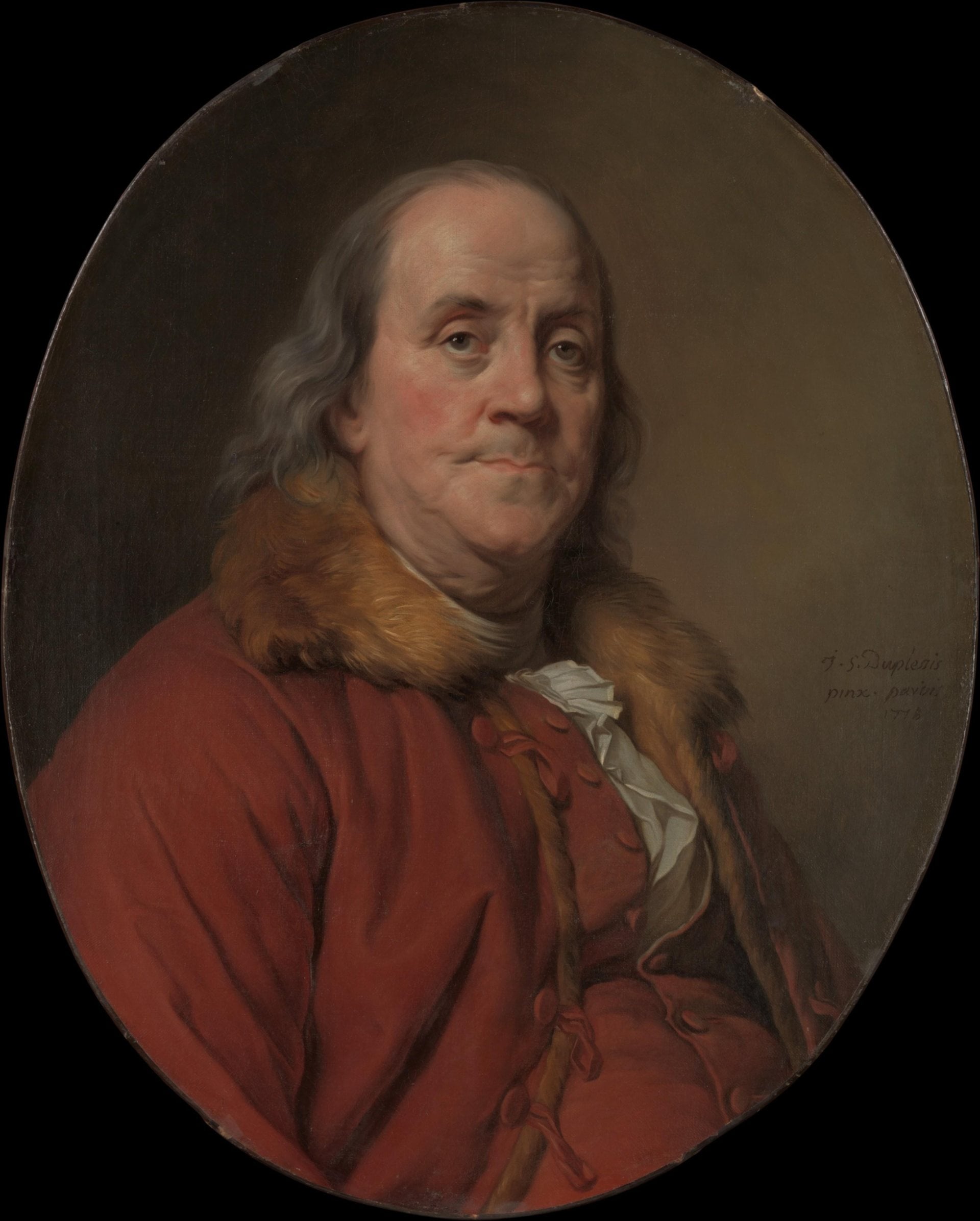
By the late 1700s, revolutions were rewriting political expectations on both sides of the Atlantic. On April 17, 1790, Benjamin Franklin died in Philadelphia. Franklin’s death did not mark a single event like a battle or treaty, yet it closed the life of a figure who embodied the era’s mix of science, civic organizing, and statecraft. His work in diplomacy helped secure French support during the American Revolutionary War, and his experiments and inventions shaped public understanding of electricity and practical innovation. Even outside the United States, Franklin became a symbol of Enlightenment-era curiosity and public service.
The 19th century brought its own mix of conflict and social change. On April 17, 1861, Virginia voted to secede from the United States, a step that helped widen the American Civil War just days after fighting began at Fort Sumter. Virginia’s decision mattered because it shifted the balance in manpower, geography, and symbolism; it also made the conflict harder to contain. The war’s outcomes—emancipation, constitutional changes, and long struggles over civil rights—would echo for generations. The same period also saw the slow, uneven expansion of voting rights in other parts of the world. In 1895, Japan’s victory over Qing China was formalized when the Treaty of Shimonoseki was signed on April 17, ending the First Sino-Japanese War. The treaty altered power dynamics in East Asia, accelerated Japan’s rise as a major power, and deepened political pressures inside China that would drive reform movements and upheaval.
In the early 20th century, April 17 intersected with the hard realities of war and the reshaping of borders. In 1912, Russian troops opened fire on striking miners at the Lena goldfields in Siberia, an event often called the Lena massacre. News of the killings intensified public anger toward the imperial government and fed broader labor unrest. While it did not cause revolution on its own, it became one of the moments people pointed to when explaining why trust in the old system collapsed in the years leading to 1917.
The date also marks milestones in civil rights and social movements. On April 17, 1970, the Apollo 13 crew returned safely to Earth after an explosion crippled their spacecraft on the way to the Moon. The mission’s famous phrase—“a successful failure”—captured the mix of disappointment and achievement. It mattered in the moment because it tested crisis management under extreme pressure and brought global attention to the risks of spaceflight. It still matters because the engineering solutions and teamwork became a model for managing complex systems when things go wrong, influencing safety culture in space programs and beyond.
Culture and media have their own April 17 touchstones. In 1964, Ford unveiled the Mustang, a car that quickly became an icon of American automotive design and mass-market aspiration. Its debut mattered because it helped define the “pony car” category and showed how marketing, styling, and affordability could combine to create a cultural phenomenon. While rooted in one country’s consumer culture, its influence spread through global car design and the idea of vehicles as lifestyle symbols.
Notable births on April 17 span very different worlds. Born on April 17, 1972, Jennifer Garner became an actor and producer whose television and film work reflected the growing role of women-led action and drama in popular entertainment, while her later public-facing philanthropy highlighted how celebrities can use visibility to support community causes.
Several notable deaths on April 17 also help frame the day’s historical range. Benjamin Franklin’s death in 1790, as noted earlier, marked the passing of a scientist-statesman whose influence touched diplomacy, printing, civic life, and early electrical science. In 1961, the day of the Bay of Pigs landing, the world was reminded how quickly political decisions can become irreversible once events begin; while not tied to a single famous death that day, the invasion’s casualties and prisoners became part of a long human aftermath that extended through negotiations and prisoner exchanges. On April 17, 2014, Colombian writer Gabriel García Márquez died, leaving behind novels and stories that reshaped modern literature through “magical realism” and a distinctive voice rooted in Latin American history and everyday life. His legacy endures in how he expanded what readers expect a novel can do—mixing the personal and the political without losing the feel of ordinary human experience.
April 17 brings together agreements that launched voyages, refusals that reshaped religion, conflicts that redrew regions, and breakthroughs that changed who could step onto a ballfield or return home from space.
More like this:



- Most Popular



- Top Stories



- Most Recent


- Sign In
- Home
- Video
- News
-
Weather
 Sponsored by Michael Ryan Exteriors - Roofing Professionals
 - Sports
- Obits
- Events
- Radio
- AP News
- Shop Local
- Classifieds
- Autos
- Real Estate
- Directory
Follow Us
Copyright © 2026 RiverBender.com All rights reserved.
primary