


Chernobyl Disaster Headlines April 26 in History as World-Changing Events Span Centuries
The date spans major milestones from Jamestown’s first landing and Tanzania’s formation to the Human Genome Project, but Chernobyl remains its most consequential modern turning point.

On April 26, 1986, an explosion and fire tore through Reactor No. 4 at the Chernobyl Nuclear Power Plant in what was then the Soviet Union (now Ukraine). The accident sent radioactive material into the air for days, forcing hurried evacuations, exposing workers and nearby residents to dangerous doses, and spreading contamination across parts of Europe. It mattered immediately because it overwhelmed local emergency systems and challenged the Soviet government’s ability to manage a fast-moving crisis. It still matters because it reshaped how the world thinks about nuclear safety, government transparency during disasters, and the long-term human and environmental costs of industrial accidents.
Get The Latest News!
Don't miss our top stories and need-to-know news everyday in your inbox.
The chain of events began during a late-night safety test meant to explore how the reactor would behave during a power loss. A mix of design vulnerabilities and procedural mistakes made the reactor unstable. When operators attempted to regain control, the situation escalated quickly. The resulting blast destroyed the reactor core’s protective structures and ignited graphite, creating a plume that carried radioactive particles far beyond the plant’s perimeter. In the days that followed, firefighters and plant staff—many without full knowledge of what they were facing—worked to contain the disaster, and thousands of people in nearby towns were relocated. Over time, Chernobyl became a turning point for nuclear regulation, emergency planning, and international monitoring, while also leaving a lasting mark on public trust and health policy.
Long before Chernobyl, April 26 had already seen moments that changed societies in quieter but lasting ways. In 1607, settlers of the Virginia Company of London landed at Cape Henry, near the mouth of the Chesapeake Bay, beginning England’s first permanent push toward colonization in North America. The landing itself was only the beginning; it led soon after to the founding of Jamestown and a long, complicated history of settlement, conflict, and economic development that reshaped Indigenous communities and helped build the framework of what would become the United States. The date is remembered not because the landing solved anything, but because it set larger forces in motion—migration, trade, and political claims—that would echo for centuries.
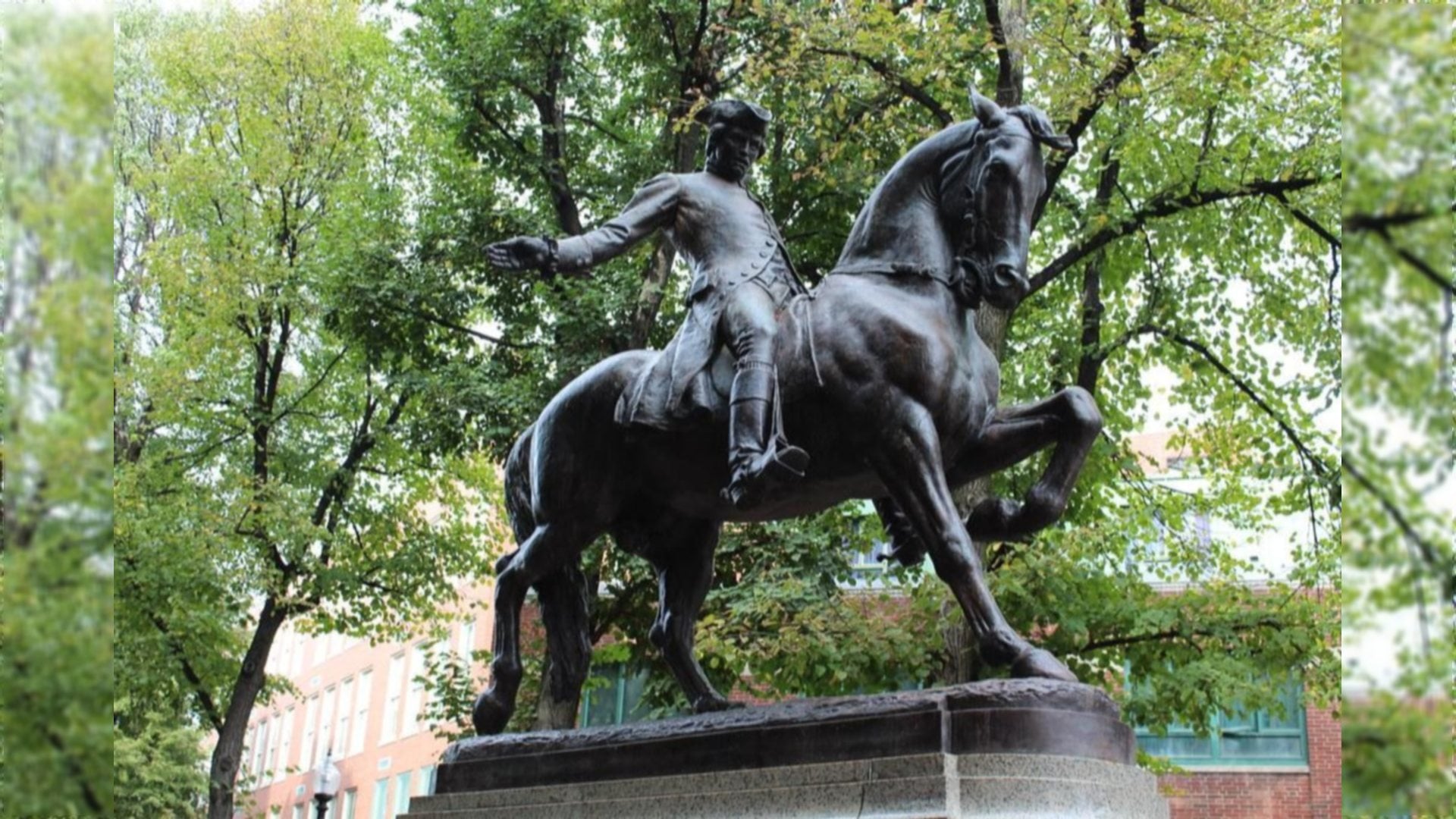
In 1777, during the American Revolutionary War, Sybil Ludington is widely said to have ridden through the night to warn militia forces of a British raid in Connecticut. While historians debate details and documentation, the story has endured as a symbol of how ordinary people—especially women and young people—were involved in wartime mobilization and local defense. Whether treated as firm fact or regional legend, it reflects a broader truth about the era: information, speed, and community networks often mattered as much as formal armies.
The 19th century brought a different kind of conflict to April 26. In 1865, after the assassination of U.S. President Abraham Lincoln, actor John Wilkes Booth was tracked down and killed by Union soldiers in Virginia. Booth’s death ended a manhunt that had gripped the country and closed the immediate chapter of the assassination plot, though it did not end the political turmoil of the post–Civil War period. The event mattered because it underscored how fragile national recovery could be and how violence could shape politics long after the battlefield fell quiet.
By 1915, April 26 was tied to a major shift in the Mediterranean during World War I. On that day, Italy signed the secret Treaty of London, agreeing to join the Allied powers in exchange for promised territorial gains. The decision pulled Italy deeper into the war and opened a new front against Austria-Hungary. In the short term, it changed military planning; in the long term, it contributed to postwar disputes over borders and promises, feeding political instability in Europe during the years that followed.
In 1937, the Spanish town of Guernica was bombed during the Spanish Civil War, an attack carried out by German and Italian forces supporting Francisco Franco’s Nationalists. Many civilians were killed, and the assault became one of the most widely discussed early examples of aerial bombing used to terrorize or break a population. The event resonated internationally not only because of the destruction, but because it signaled how air power could transform warfare. It also entered cultural memory through Pablo Picasso’s painting “Guernica,” which helped people far from Spain grasp the human cost of the conflict.
April 26 also appears in the history of space exploration. In 1962, NASA’s Ranger 4 spacecraft struck the Moon after a mission plagued by technical failures. The probe did not return the images scientists hoped for, but the impact still added to the growing body of knowledge needed for later lunar missions. Early space exploration often advanced through partial successes and hard lessons, and Ranger 4 is a reminder that progress in complex engineering rarely follows a straight line.
In 1964, the African nations of Tanganyika and Zanzibar united to form Tanzania. The merger followed Zanzibar’s revolution earlier that year and reflected a broader period of political change across Africa as colonial rule ended and new states formed. The union mattered because it created a larger, more stable political entity on the East African coast, balancing mainland and island interests in a single country. Tanzania’s formation also illustrates how newly independent regions experimented with different models of governance and national identity.
Then came April 26, 1986, when Chernobyl forced governments, scientists, and the public to confront nuclear risk on a global scale. In the months and years afterward, countries reviewed reactor designs, emergency procedures, and communication practices. International cooperation on radiation monitoring expanded, and the disaster influenced energy debates in many places, even where nuclear power remained part of the mix. Chernobyl’s long-term health impacts—especially thyroid cancer risks linked to radioactive iodine exposure—also shaped medical research and public health planning for radiation events.
In 2003, the Human Genome Project announced that it had completed sequencing the human genome, finishing a massive international effort to map human DNA. The public announcement marked a major step for biology and medicine, offering new tools for understanding inherited disease, developing targeted treatments, and improving diagnostic testing. The work also raised lasting questions about privacy, consent, and how genetic information should be used—questions that remain relevant as DNA testing becomes more common.
Several notable people were born on April 26, each remembered for different reasons. In 1564, William Shakespeare was baptized on this date in Stratford-upon-Avon; tradition often treats April 23 as his birth date, but April 26 is the recorded baptism. Shakespeare’s plays and poems helped shape the English language and remain widely performed because they explore power, love, ambition, and moral choice in ways that still feel recognizable.
In 1889, Ludwig Wittgenstein was born in Vienna. He became a major figure in 20th-century philosophy, especially in the study of language and meaning. Wittgenstein’s work influenced fields far beyond philosophy, including linguistics and cognitive science, by challenging how people think about rules, understanding, and what it means for words to “make sense.”
In 1933, Carol Burnett was born in the United States. Burnett became a landmark figure in television comedy and variety entertainment, known for “The Carol Burnett Show” and a style that combined sharp timing with warmth and physical humor. Her influence can be seen in later generations of performers, and her success helped widen opportunities for women in comedy and television production.
April 26 is also associated with the deaths of people whose work shaped public life. In 1865, John Wilkes Booth died after assassinating Abraham Lincoln, an event that left a deep scar on U.S. history and underscored the dangers of political violence. The significance lies less in Booth himself than in the national crisis his actions intensified at a moment when the country was struggling to rebuild.
In 1986, following the Chernobyl explosion, several plant workers and first responders later died from acute radiation syndrome, and the disaster became inseparable from their sacrifice. Their deaths are remembered as part of the human cost of emergency response when information is incomplete and risks are extreme, and they remain central to how the world measures the price of industrial failure.
Looking across April 26, the day links events that might otherwise feel unrelated.
More like this:




- Most Popular



- Top Stories



- Most Recent



- Sign In
- Home
- Video
- News
-
Weather
 Sponsored by Michael Ryan Exteriors - Roofing Professionals
 - Sports
- Obits
- Events
- Radio
- AP News
- Shop Local
- Classifieds
- Autos
- Real Estate
- Directory
Follow Us
Copyright © 2026 RiverBender.com All rights reserved.
primary