


April 30 in History: Vietnam War Ends, Washington Takes Office and Adolf Hitler Dies
A look at major events, births and deaths tied to April 30, from the fall of Saigon and Washington’s inauguration to the death of Adolf Hitler.
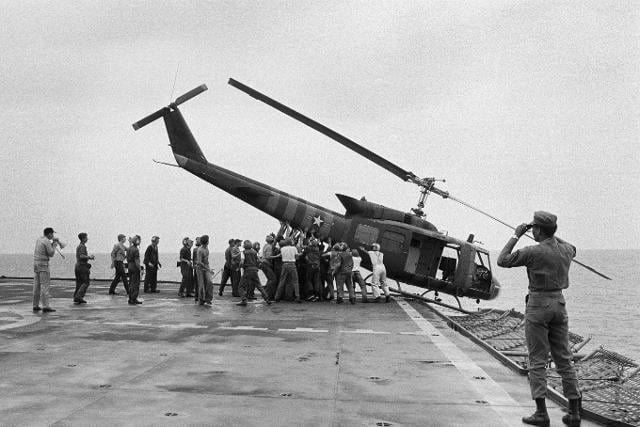
On April 30, 1975, the Vietnam War came to an end when North Vietnamese forces entered Saigon, the capital of South Vietnam, and the South Vietnamese government collapsed. The moment mattered immediately because it ended a long, costly conflict that had drawn in global powers, reshaped politics across Southeast Asia, and displaced millions of people. It still matters today because it influenced how countries think about military intervention, alliance commitments, refugees, and postwar rebuilding. It also marked a turning point for Vietnam itself, setting the stage for national reunification and, later, major economic and social changes.
April 30, 1789, introduced a new political chapter on the other side of the Atlantic. George Washington took the oath of office as the first president of the United States in New York City. At the time, the new federal government was still an experiment, and many people doubted it would hold together. Washington’s inauguration helped establish early norms for peaceful leadership transitions and civilian control of government. Even for readers outside the United States, it stands as an example of how new political systems try to build legitimacy through public rituals, written laws, and institutions that outlast individual leaders.
In the 19th century, April 30 became linked to a different kind of turning point: territorial change in North America. On April 30, 1803, the Louisiana Purchase was finalized, transferring a vast region from France to the United States. The deal mattered because it dramatically expanded U.S. territory and shifted the balance of power among European empires and emerging states in the Americas. It also accelerated exploration, settlement, and conflict, especially for Indigenous nations whose lands were increasingly pressured by newcomers and government policies. The purchase remains a key example of how diplomacy and economics can redraw maps in ways that ripple for centuries.
By 1945, April 30 was tied to the collapse of a regime that had plunged much of the world into war. As Soviet forces closed in on Berlin, Adolf Hitler died by suicide. His death did not end World War II instantly, but it signaled that Nazi Germany’s leadership structure was breaking apart, and the fighting in Europe was nearing its end. The event is remembered less as a personal story and more as a marker of a regime’s downfall, followed by urgent questions about surrender, occupation, justice for war crimes, and the rebuilding of shattered societies.
Three decades later, April 30 again became a date associated with the end of an era—this time in Southeast Asia. In 1975, the fall of Saigon led to the reunification of Vietnam under a single government. The immediate aftermath included major political change, economic hardship, and large-scale departures by sea and land, creating refugee communities across Asia, North America, Europe, and Australia. Over time, Vietnam rebuilt and later pursued market-oriented reforms, while many veterans and civilians in multiple countries continued to debate what the war meant and how it should be remembered. The date remains central to Vietnamese history and to the wider global history of the Cold War.
Not every April 30 milestone is defined by war and politics. In 1993, the World Wide Web took a major step toward becoming a truly public resource when CERN announced that web technology would be made available without fees. The web already existed, but this decision helped ensure it could spread widely across borders, universities, companies, and households. It mattered at the time because it lowered barriers to innovation and communication. It still matters because so much of modern life—education, commerce, media, and social connection—runs through tools that grew from those early, open standards.
April 30 carries notable cultural and social milestones as well. In 1948, the Organization of American States (OAS) was founded, aiming to encourage cooperation across the Americas. Its history has included diplomacy, election monitoring, development work, and disputes among member states. The organization’s record has been mixed, but its creation reflects a broader post–World War II trend: countries forming regional institutions to manage conflict, trade, and shared challenges.
Notable births on April 30 reflect the day’s wide range of human accomplishment. Queen Juliana of the Netherlands, born in 1909, is remembered for leading her country through the post–World War II period and for a style of monarchy that emphasized public service and accessibility. Her reign included decolonization challenges and social change at home, and she remains a significant figure in modern Dutch history.
Willie Nelson, born in 1933, became one of the most influential musicians in American country and popular music. Known for his distinctive voice, songwriting, and long career, he helped broaden the sound and audience of country music. His work also shows how artists can shape culture over decades, adapting to new eras while maintaining a recognizable identity.
In the arts and entertainment, Kirsten Dunst, born in 1982, is known for a wide range of film and television roles, from major studio productions to smaller independent projects. Her career is often noted for its longevity and versatility, reflecting how modern actors navigate changing media landscapes and audience expectations.
Gal Gadot, born in 1985, represents the increasingly global nature of modern celebrity and media, with careers that can cross national industries and reach worldwide audiences. Her prominence illustrates how film franchises and streaming distribution can make performers internationally recognizable in ways that were far less common a century ago.
Notable deaths on April 30 include figures whose lives marked major historical shifts. In 1945, Adolf Hitler’s death, coming as Germany faced defeat, remains a key date in the timeline of World War II in Europe. The legacy associated with him is inseparable from the regime’s policies, the Holocaust, and the war’s destruction, and the day is remembered as part of the broader collapse of Nazi leadership.
In 1989, Sergio Leone died in Rome. He was a major Italian film director whose “spaghetti westerns,” including The Good, the Bad and the Ugly, influenced global cinema through their visual style, music partnerships, and storytelling approach. His work helped show how film traditions outside Hollywood could reshape international popular culture.
Seen together, April 30 is a reminder that history is not one single track.
More like this:



- Most Popular



- Top Stories



- Most Recent



- Sign In
- Home
- Video
- News
-
Weather
 Sponsored by Michael Ryan Exteriors - Roofing Professionals
 - Sports
- Obits
- Events
- Radio
- AP News
- Shop Local
- Classifieds
- Autos
- Real Estate
- Directory
Follow Us
Copyright © 2026 RiverBender.com All rights reserved.
primary