


What "In Full Bloom" Really Means Beyond Flowers
The phrase often describes confidence, growth and visible fulfillment — not just flowers at their peak.
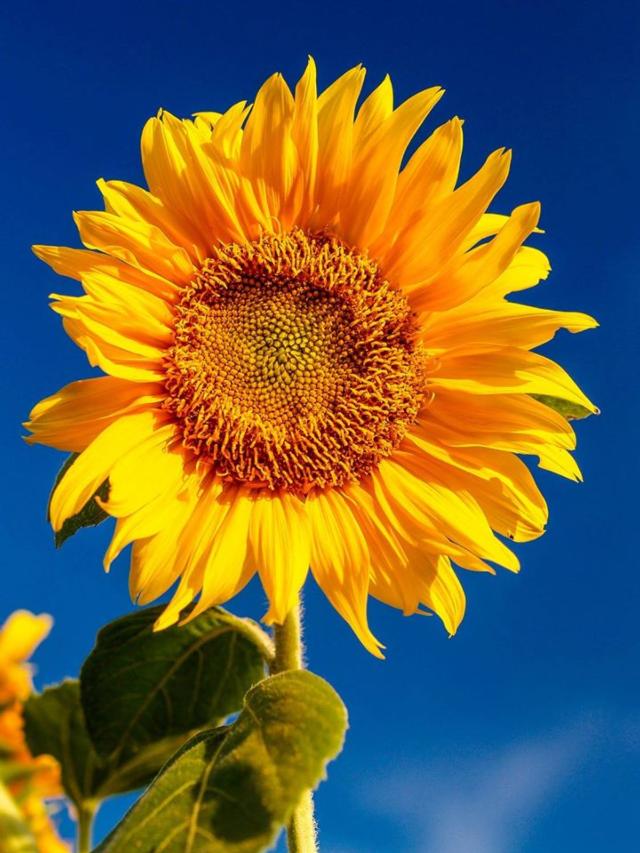
A rose is not the only thing that can be “in full bloom.” A person can be in full bloom too — and that shift in meaning is what makes the phrase so powerful.
Get The Latest News!
Don't miss our top stories and need-to-know news everyday in your inbox.
We usually picture flowers first when we hear “in full bloom.” The image is easy to see: petals open, color at its brightest, life at its peak. But the phrase does more than describe a plant. In everyday English, it often points to growth, confidence, beauty, success, or a moment when something has fully become what it was meant to be.
That is why the expression shows up in so many places. People use it for gardens, careers, creativity, relationships, neighborhoods, and even stages of life. To understand the meaning behind “in full bloom,” it helps to look at both the literal image and the emotional idea it carries.
The literal meaning: a flower at its peak
At the most basic level, “in full bloom” describes a flower that has opened completely. It is no longer a tight bud. It has reached the stage where its shape, color, and scent are most noticeable.
This matters because blooming is not just about appearance. It marks a key point in a plant’s life cycle. A flower in full bloom is mature. It is active. It is doing what flowers are meant to do, whether that is attracting pollinators or producing seeds.
That natural process gives the phrase its deeper force. When something is in full bloom, it is not half-formed or hidden. It has arrived at a clear and visible stage of development.
How the phrase took on a wider meaning
English often borrows from nature to describe human experience. We talk about “putting down roots,” “turning over a new leaf,” or “growing apart.” “In full bloom” fits that same pattern.
The move from flowers to people feels natural because blooming suggests progress. A bud holds promise, but a bloom shows fulfillment. Over time, speakers began using the phrase to describe any person or thing reaching a strong, vivid stage of growth.
If someone says, “She really came into full bloom in her thirties,” they usually do not mean physical beauty alone. They may mean confidence, self-knowledge, emotional strength, or a sense of purpose. The phrase suggests that something valuable was already there, waiting to unfold.
That is an important part of its meaning. “In full bloom” does not usually imply sudden change from nothing. It implies development from potential into visible form.
Why the phrase feels so positive
Part of the phrase’s appeal is the image behind it. Flowers carry strong associations. They suggest beauty, care, color, life, and fragility. When those ideas are attached to a person or situation, the result feels warm and hopeful.
“In full bloom” also carries a sense of timing. A flower cannot be rushed open without damage. It blooms when ready. That makes the phrase especially useful when talking about growth that takes patience.
Think about a teenager who struggles with confidence and later becomes calm and sure of herself. Or someone who spends years trying different jobs before finding work that fits. Saying they are “in full bloom” captures more than success. It hints at ripeness, readiness, and a kind of natural completion.
The phrase can also soften hard ideas. Instead of saying someone is “finally successful” or “at their peak,” “in full bloom” sounds more humane. It feels less competitive and more personal.
Common ways people use “in full bloom”
In daily life, the phrase appears in several familiar ways.
For people
This is one of the most common figurative uses. A person “in full bloom” may be thriving socially, emotionally, creatively, or professionally.
For example:
- A shy student becomes a strong public speaker.
- A musician finds a distinct style after years of practice.
- A retiree begins painting, traveling, and building new friendships.
In each case, the phrase points to visible growth. It suggests that inner qualities are now fully expressed.
For beauty and appearance
Sometimes the phrase does refer to physical beauty, especially in literature or older styles of writing. A person may be described as “in full bloom” to suggest youthful freshness or striking attractiveness.
Still, modern readers often hear more than that. The phrase can feel richer when it includes personality and presence, not just looks.
For places and communities
A neighborhood can be “in full bloom” when gardens are thriving, public spaces feel alive, or local culture is active and visible. A town square full of art, music, and people may be described this way.
Businesses and ideas can be spoken of similarly. A startup may be “in full bloom” once it has found its audience. A creative movement may reach full bloom when its style is widely recognized.
For emotions and states
Writers often use the phrase for moods or conditions. Love may be “in full bloom.” So may hope, creativity, or even conflict. In these cases, the phrase means something has intensified and become fully present.
Cultural meaning and related expressions
“In full bloom” connects to a larger group of expressions about growth and flowering. “Blooming” itself can mean healthy, glowing, or doing well. Someone might say, “She is blooming,” to mean she looks happy and strong.
The word “blossom” works in a similar way. To “blossom” means to develop in a promising or attractive way. A child may blossom in a supportive school. A friendship may blossom into romance.
These expressions appear in poetry, songs, novels, and everyday conversation because they balance beauty with change. They suggest that growth is visible, but also delicate. That mix makes them memorable.
In some cultures, flowers carry deep symbolic meaning tied to youth, renewal, honor, or short-lived beauty. That symbolism strengthens the emotional power of phrases like “in full bloom.” Even if people do not think about the cultural history directly, they often feel it.
A phrase that can be misunderstood
Because the phrase sounds polished and romantic, it can sometimes seem shallow at first glance. Some people assume it only refers to appearance, especially when used about women. That reading exists, but it is limited.
In most modern use, “in full bloom” has a broader and often more respectful meaning. It can describe a whole person becoming more fully themselves. It can also apply at any age. Someone can be in full bloom at 18, 48, or 78.
Another misunderstanding is that “full bloom” means a final stage, as if growth stops there. Real life is not that neat. People can bloom in one area, then begin again in another. A career may be in full bloom while someone is still learning in relationships. The phrase marks a moment of fullness, not the end of change.
How to recognize “full bloom” in real life
You do not need a garden to spot this idea around you.
Look for moments when potential becomes visible. That may be:
- A coworker who finally speaks with confidence
- A child whose talent becomes clear after patient support
- A local business that grows into a gathering place
- A person who seems more at ease in their own skin
- A long-term project that suddenly feels alive and complete
The key sign is not perfection. It is expression. Something that was forming quietly now stands open and clear.
This can be useful in your own life as well. The phrase reminds us that growth often happens before others notice it. A bloom is the visible part of a longer process. Roots, care, setbacks, and waiting all come first.
That perspective can shift how we measure progress. Not every important change is immediate. Some of the most meaningful forms of growth take time before they show.
Why the phrase still resonates
“In full bloom” lasts as an expression because it captures a truth people keep recognizing: becoming takes time, but there are moments when growth turns unmistakable. The phrase gives us a way to name those moments with warmth and precision.
It speaks to more than beauty. It speaks to readiness, presence, and the quiet work behind visible change. Whether it refers to a flower, a person, a relationship, or a creative life, the idea is the same. Something has opened fully enough for the world to see what it was capable of all along.
More like this:


- Most Popular



- Top Stories

- Most Recent
- Sign In
- Home
- Video
- News
-
Weather
 Sponsored by Michael Ryan Exteriors - Roofing Professionals
 - Sports
- Obits
- Events
- Radio
- AP News
- Shop Local
- Classifieds
- Autos
- Real Estate
- Directory
Get the RiverBender App


Follow Us
Copyright © 2026 RiverBender.com All rights reserved.
primary