


The Three Sisters Gardening Method
Indigenous gardening wisdom still offers lessons for today’s growers.
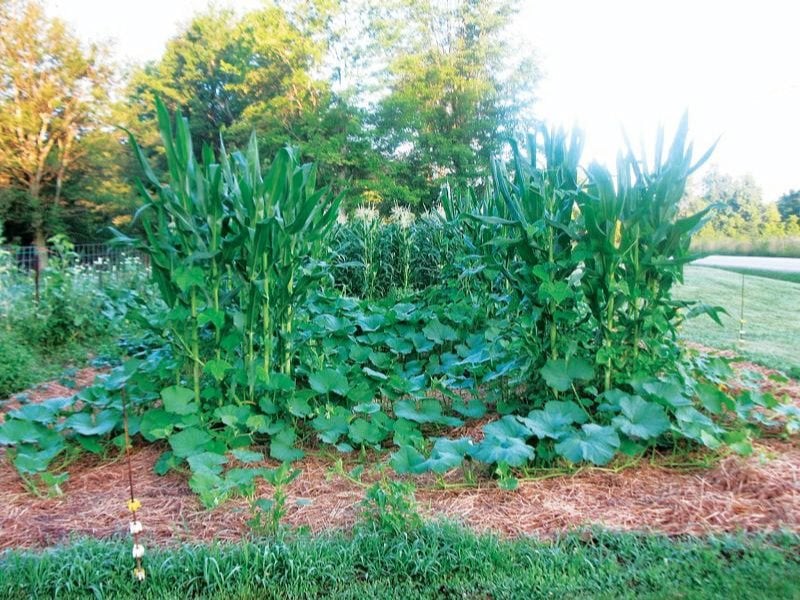
BUZZ MAGAZINE – A great way to grow a lot of food in a relatively small amount of space is by using the indigenous gardening method, the Three Sisters Garden. A Three Sisters Garden is a companion gardening method that utilizes three different plants with three different growth habits that all support each other to maximize their yields for you. Doing this gives you three staple crops in one plot of ground, and if you are intentional, you can even add some cousins to the plot to add some bonus crops to your harvest.
Get The Latest News!
Don't miss our top stories and need-to-know news everyday in your inbox.
What exactly is a Three Sisters Garden? Three Sisters Gardens were designed by indigenous tribes to be a high yielding poly-culture growing system. These gardens, at their most basic level, are pole beans that grow up living corn plants surrounded by winter squash plants. The corn plants act as a living trellis for the pole beans. The pole beans will provide the soil with nitrogen, as beans are nitrogen fixing plants, for next years garden. (Nitrogen fixing means that the plants grow nitrogen rich nodules on the root systems that break down and feed that nitrogen back to the soil as the root systems decompose after the growing season.) The winter squash will act as a living mulch keeping weeds down in the garden. They will also shade the soil, keeping it cooler and help it retain it's moisture. All three support each other while they grow and they all produce a huge amount of calories for the gardeners.
Laying out a Three Sisters Garden is fairly simple. Plant your corn either in a clump of up to 10 plants on a mound or in an eight inch grid, rather than rows. Allow this to grow for a couple of weeks to get a head start on your beans. Once your corn gets about 12” tall, plant one or two climbing beans per corn plant, about 3” away from the corn stalk. Next, you will plant your winter squash seeds either in the middle of the clump of corn plants or around the perimeter of the grid garden once the beans get to be six or more inches tall. Keep in mind when planting that winter squash will ramble up to 20 feet! Squash puts on huge leaves that will cover the ground, preventing a lot of weed growth.

What's really cool is that if you are looking to beef up your crop harvests even more, you can! Native people were so in tune with nature, they could see that gardens performed much better and required far less work on the gardener's part when they incorporated a wide variety of other non-competitive plants in the gaps for a time. Planting some quick growing additional plants in between the corn plants before they get too big is a great way to maximize your growing space and yields. Some great examples would include: young potatoes, radish, beets, carrots, onions, and leafy greens.
This is a great way to produce a lot of food in a small amount of space. This is also a great way to maximize your confidence as this garden becomes increasingly more self-sufficient the more it grows. Once it gets going, you may only be required come harvest time. This is also great in terms of food preservation because all three of these major crops can dry/cure where it is, then all you have to do is collect and store them in a cool dry place.
I hope this information is helpful and you get out there and get your hands dirty! Please feel free to share your experience and tips on my Instagram or Facebook page @BottomViewFarmIL.
Kris Hart lives in Litchfield and has a small hobby farm making strides towards sustainable living and organic/heirloom gardening. Contact her at kris.hart17@yahoo.com.
This story originally ran in the June 2026 issue of The Prairie Land Buzz Magazine http://www.thebuzzmonthly.com
More like this:


- Most Popular



- Top Stories


- Most Recent


- Sign In
- Home
- Video
- News
-
Weather
 Sponsored by Michael Ryan Exteriors - Roofing Professionals
 - Sports
- Obits
- Events
- Radio
- AP News
- Shop Local
- Classifieds
- Autos
- Real Estate
- Directory
Get the RiverBender App


Follow Us
Copyright © 2026 RiverBender.com All rights reserved.
primary