


Flag Day’s Long History Helped Make the American Flag a Daily National Symbol
Observed each June 14, Flag Day commemorates the adoption of the Stars and Stripes and reflects a broader history of patriotism, public ritual, protest, and national identity.
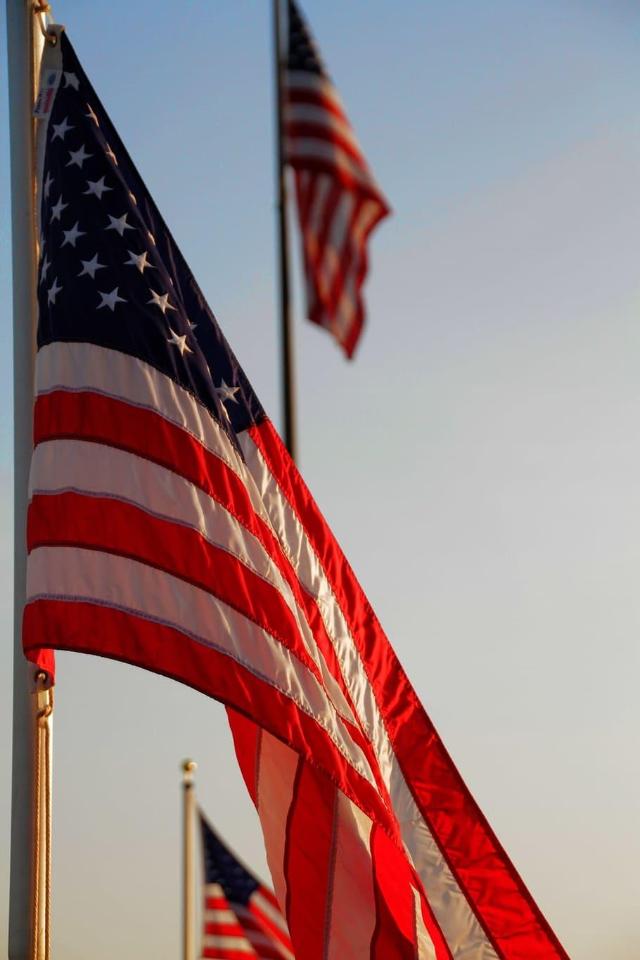
Flag Day is not a federal holiday, yet it helped shape one of the most familiar symbols in American life.
Get The Latest News!
Don't miss our top stories and need-to-know news everyday in your inbox.
Every day, people pass flags outside schools, post offices, car dealerships, front porches, and stadiums without thinking much about how that custom took hold. Flag Day is the moment when the United States pauses to focus on the flag itself—where it came from, what it has meant at different times, and why it still stirs strong feelings. Its history is not just about one date on a calendar. It is also about patriotism, public ritual, war, protest, and the changing idea of national identity.
What Flag Day marks
Flag Day in the United States is observed on June 14. It marks the adoption of the Stars and Stripes as the national flag by the Second Continental Congress on June 14, 1777.
That early resolution was short and simple. It stated that the flag of the United States would have thirteen stripes, alternating red and white, and thirteen white stars on a blue field, representing a new constellation. The wording did not explain every detail, and early versions of the flag were not fully standardized. Even so, the basic design became one of the country’s most recognizable images.
People sometimes assume Flag Day celebrates the creation of the nation itself. It does not. That is the role of Independence Day on July 4. Flag Day is specifically about the flag and the meaning people have attached to it over time.
The early flag and what it represented
In the Revolutionary era, the flag stood for a fragile new union. The thirteen stars and thirteen stripes represented the original states that had broken away from British rule. At that stage, the United States was still an experiment. The flag was less a settled symbol of power than a statement of hope.
As the country grew, the flag changed with it. New states joined the Union, and people debated how to reflect that on the flag. For a time, both stars and stripes were increased. That became hard to manage. In 1818, Congress decided to return the number of stripes to thirteen, honoring the original states, while adding a new star for each new state.
That choice helped turn the flag into a story in cloth. The stripes looked backward to the nation’s founding. The stars kept moving forward with the country’s expansion.
How Flag Day began
Flag Day did not start as a national event created by Congress. It grew from local efforts, school programs, and the work of people who believed the flag deserved its own day of recognition.
Several people are often linked to the origin of Flag Day. One of the earliest was Bernard J. Cigrand, a Wisconsin schoolteacher. In 1885, he encouraged students to observe June 14 as “Flag Birthday.” He later spent years promoting the idea more broadly through speeches and writing.
Another important figure was William T. Kerr, who helped organize support through civic groups. In Pennsylvania, George Bolch, a school principal, also promoted special flag observances for students. Because the movement developed in different places, more than one person has been called the “father of Flag Day.”
That confusion is part of the story. Flag Day was not born in one dramatic moment. It spread because ordinary citizens, especially teachers and local leaders, kept pushing for it.
Schools, patriotism, and public ceremony
Flag Day took root at a time when public schools were becoming a major force in American life. In the late 1800s and early 1900s, many educators saw the flag as a tool for civic education. Ceremonies taught children not only respect for the flag but also ideas about citizenship, unity, and national belonging.
This was especially important in communities with large immigrant populations. School leaders often used flag observances to help newcomers and their children feel connected to the country. Recitations, songs, and flag salutes became common.
That history helps explain why flag rituals still feel familiar. The morning Pledge of Allegiance in schools, patriotic assemblies, and flag displays at public events all grew from this broader culture of civic symbolism.
At the same time, this history has a more complicated side. Public rituals around the flag were often meant to unify people, but they could also pressure people to show loyalty in specific ways. The flag has long carried both shared meaning and political tension.
When Flag Day became official
By the late 1800s, several cities and states were already holding Flag Day events. In 1916, President Woodrow Wilson issued a proclamation establishing June 14 as Flag Day. That gave national recognition to the observance, even though it was not yet created by Congress as a permanent national holiday.
Later, in 1949, President Harry S. Truman signed an Act of Congress officially designating June 14 as National Flag Day.
Even then, Flag Day did not become a federal holiday like Thanksgiving or Independence Day. Government offices and most businesses generally remain open. That may be one reason the day is less prominent than other patriotic observances. Still, in some places, especially in Pennsylvania, it is marked with parades, ceremonies, and community events.
The flag in war, protest, and everyday life
The meaning of Flag Day cannot be separated from the larger meaning of the American flag. During wars, the flag has often represented sacrifice and service. Images of the flag at battlefields, military funerals, and memorials gave it emotional weight far beyond its original design.
But the flag has also appeared in protest movements. People have marched under it while demanding broader rights and a more honest version of the nation’s promise. Civil rights activists, labor organizers, and veterans have all used the flag to make claims about justice, equality, and belonging.
That is one reason the flag remains powerful. It does not speak with only one voice. For some, it stands for pride and continuity. For others, it is a reminder that the country must live up to its ideals.
This tension shows up in daily life. A flag on a porch may signal family tradition, military service, civic pride, or simple habit. A flag patch on a uniform carries a different meaning from a giant flag at a sports event. The same symbol can feel solemn, festive, comforting, or controversial depending on the setting.
Traditions and common misunderstandings
One common misunderstanding is that there has only ever been one “American flag.” In fact, the design has changed many times as states were added. The current 50-star flag has been in use since 1960, after Hawaii became a state.
Another widely known part of flag culture is the U.S. Flag Code. It offers guidance on how the flag should be displayed, folded, and treated. For example, many people know that a worn-out flag should be retired respectfully, often by burning in a dignified ceremony. Civic groups such as the American Legion and the Boy Scouts have often helped carry out these traditions.
There are also phrases and customs tied to the flag. “Flying the flag” can mean more than literally raising it. It can also mean showing support, identity, or allegiance. “Half-staff” signals mourning or respect after a tragedy or the death of a public figure. These customs are so common that people often understand the message instantly without a word being spoken.
Flag Day events often include parades, essay contests, concerts, school programs, and ceremonies honoring veterans. In Quincy, Massachusetts, and Troy, New York, for example, Flag Day celebrations have drawn attention for their long-running traditions.
Why Flag Day still matters
Flag Day matters because symbols matter. They shape public memory. They teach values. They also reveal conflict. Looking at the history of Flag Day shows how a piece of fabric became part of school life, politics, military ritual, neighborhood custom, and national debate.
You can notice that history in ordinary places. It appears when a class says the Pledge of Allegiance, when a local group collects old flags for retirement, when a town holds a parade, or when a flag is lowered after a national loss. These small acts connect daily life to a long tradition.
Flag Day may not come with fireworks or a day off, but its history is deeply woven into American culture. It asks a quiet but important question: not just what the flag is, but what people believe it should stand for.
More like this:


- Most Popular



- Top Stories



- Most Recent


- Sign In
- Home
- Video
- News
-
Weather
 Sponsored by Michael Ryan Exteriors - Roofing Professionals
 - Sports
- Obits
- Events
- Radio
- AP News
- Shop Local
- Classifieds
- Autos
- Real Estate
- Directory
Get the RiverBender App


Follow Us
Copyright © 2026 RiverBender.com All rights reserved.
primary