


Attorney General Raoul Sues Trump Administration Over Unlawful Implementation Of Medicaid Work Requirements
The Illinois AG is part of a bipartisan coalition of 24 attorneys general and two governors challenging a federal rule tied to Medicaid work requirements.

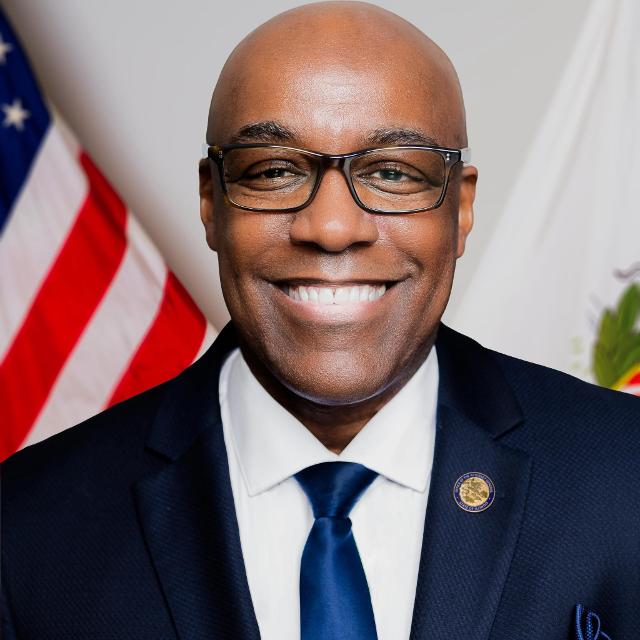
CHICAGO – Attorney General Kwame Raoul, as part of a bipartisan coalition of 24 attorneys general and two governors, today announced a lawsuit over the Trump administration’s unlawful implementation of new Medicaid work requirements included in the One Big Beautiful Bill Act.
Get The Latest News!
Don't miss our top stories and need-to-know news everyday in your inbox.
Raoul and the coalition’s lawsuit challenges provisions of a rule issued June 1 by the U.S. Department of Health and Human Services (HHS) and Centers for Medicare & Medicaid Services (CMS). The states are responsible for determining whether applicants qualify for Medicaid, including whether applicants have satisfied the work requirement or qualify for an exception to that requirement.
“Congress clearly stated that our most vulnerable residents, including people living with disabilities or struggling with serious medical conditions, shouldn’t have to jump through hoops to qualify for lifesaving medical coverage,” Raoul said. “No one should have to work through a pile of papers from their hospital bed to prove that they’re too sick to work. I will continue to advocate for all Illinoisans and people across the country to have access to affordable healthcare.”
The lawsuit explains that Congress created exemptions from Medicaid’s work requirements to ensure people with serious illnesses and disabilities – people who Congress called “medically frail” – do not lose coverage or face interruptions in care. However, CMS’ new rule changes the definition of “medically frail,” imposing extra requirements: Under the new rule, even people diagnosed with serious medical conditions like cancer or quadriplegia would have to prove their condition makes them too sick to work. If they can’t find the right paperwork or otherwise prove their case, the new rule would take away their healthcare coverage.
CMS told the states for months that they could rely on Congress’ definition of “medically frail” in the law, and Illinois and other states spent significant money and time updating their systems and training their staff based on that guidance. When CMS issued the new rule on June 1, changing the definition of “medically frail,” the states were blindsided. Now the states must comply with a legal requirement to tell Medicaid recipients by Aug. 31 how they can comply with the work requirement or qualify for the “medically frail” exception or other exceptions. For that reason, Raoul and the attorneys general have moved quickly to seek a court order blocking CMS’ unlawful rule.
The interim final rule makes other changes that increase administrative burdens, create unnecessary red tape, and put eligible people at risk of losing their health coverage – including those who are already working or qualify for an exemption. Raoul and the coalition state CMS disregarded substantial evidence weighing against the changes in the rule, failed to consider reasonable alternatives to those unlawful changes, and did not give states clear or workable guidance. Past Medicaid work requirement programs have shown that added red tape causes eligible people to lose coverage, placing greater strain on state Medicaid programs, safety net providers and emergency rooms, while increasing costs as more sick or disabled residents become uninsured.
In today’s lawsuit, Raoul and the coalition allege that the interim final rule:
- Unlawfully narrows Congress’ protections for medically frail Medicaid recipients.
- Violates the Administrative Procedure Act by ignoring substantial evidence that burdensome work reporting requirements cause eligible individuals to lose healthcare coverage because of administrative barriers rather than failure to work.
- Fails to adequately consider the significant harms that will be imposed on states, Medicaid beneficiaries, healthcare providers and state healthcare systems.
- Unconstitutionally coerces states by imposing new compliance requirements after states had already begun implementing the One Big Beautiful Bill Act based on the statute’s plain language and CMS’ prior guidance.
Raoul and the attorneys general explain states had already made substantial investments in reliance on the plain language of the One Big Beautiful Bill Act and CMS’ prior guidance and now face the risk of harsh financial penalties for noncompliance with the interim final rule.
Joining Raoul in filing the lawsuit were the attorneys general of Arizona, Colorado, California, Connecticut, Delaware, District of Columbia, Hawaii, Maine, Maryland, Massachusetts, Michigan, Minnesota, Nevada, New Jersey New Mexico, New York, North Carolina, Oregon, Rhode Island, Vermont, Virginia, Washington and Wisconsin. The governors of Kentucky and Pennsylvania also joined the lawsuit.
More like this:


- Most Popular


- Top Stories



- Most Recent



- Sign In
- Home
- Video
- News
-
Weather
 Sponsored by Michael Ryan Exteriors - Roofing Professionals
 - Sports
- Obits
- Events
- Radio
- AP News
- Shop Local
- Classifieds
- Autos
- Real Estate
- Directory
Get the RiverBender App


Follow Us
Copyright © 2026 RiverBender.com All rights reserved.
primary