


July 2 in History: Independence Vote, Civil Rights Act and Earhart Disappearance
The date includes the Continental Congress vote for independence, the signing of the Civil Rights Act, and milestones in science, literature, sports and aviation.
On July 2, 1776, the Second Continental Congress voted to approve a resolution declaring that the American colonies were free and independent from Great Britain. Although July 4 later became the better-known date because it was attached to the public adoption of the Declaration of Independence, July 2 was the day the formal break was decided. At the time, this was a major turning point in the Atlantic world. It transformed a colonial rebellion into a struggle for statehood and helped inspire later independence movements elsewhere. It still matters today because it marked a shift in how many people understood government, political authority, and the idea that nations could be built on written principles rather than inherited rule alone.
Get The Latest News!
Don't miss our top stories and need-to-know news everyday in your inbox.
Long before that vote, July 2 had already been tied to major moments of political change. In 1566, the French astrologer and physician Nostradamus died in Salon-de-Provence. He became famous for a book of cryptic prophecies that continued to attract attention for centuries. While his writings belong more to cultural history than to science, his lasting reputation shows how people in many eras have searched for patterns in uncertain times.
A different kind of power struggle unfolded in 1644 at the Battle of Marston Moor during the English Civil War. Parliamentary forces, joined by Scottish allies, defeated the Royalists near York. The battle weakened King Charles I’s control in northern England and strengthened the military position of Parliament. It also helped raise the profile of Oliver Cromwell, whose cavalry played an important role. The conflict was part of a wider debate about monarchy, religion, and the balance of political power in Britain.
The date gained even greater global importance in the eighteenth century. After the July 2 vote for independence in 1776, the American Revolutionary War continued for years, but the political meaning of the decision was immediate. It announced that the colonies no longer saw themselves as subjects seeking redress. They now claimed the status of separate states. That change affected diplomacy, war strategy, and the future shape of the United States. It also entered world history as one of the best-known examples of a colony breaking from imperial rule.
In the nineteenth century, July 2 became linked to struggles over freedom and equality within the United States itself. In 1839, a group of Africans aboard the Spanish slave ship Amistad seized control of the vessel after being kidnapped and sold into slavery illegally. Their revolt began a legal and political battle that reached the U.S. Supreme Court. The case became internationally known and added force to arguments against the slave trade and slavery. It remains significant because it showed enslaved people actively resisting oppression and because the legal decision that followed recognized their right to fight for their freedom.
Science and technology also have an important place on this date. In 1900, the first successful flight of the rigid airship Zeppelin LZ 1 took place over Lake Constance in Germany. The aircraft stayed aloft only briefly, but it demonstrated that controlled lighter-than-air flight on a large scale was possible. Airships would later be used for transport, military observation, and public spectacle. Even though airplanes soon proved more practical in many ways, the Zeppelin represented a real step in the early history of aviation and engineering.
Only a few decades later, July 2 marked a dramatic moment in the history of exploration. In 1937, aviator Amelia Earhart and navigator Fred Noonan disappeared over the Pacific Ocean while attempting to fly around the world. Their loss shocked the public because Earhart had become one of the most famous pilots of her time and a symbol of skill and determination in a field still seen as new and dangerous. The disappearance remains one of aviation’s enduring mysteries, but its historical importance is clear even without a final answer. Earhart’s career helped widen public ideas about who could lead in science, technology, and long-distance exploration.
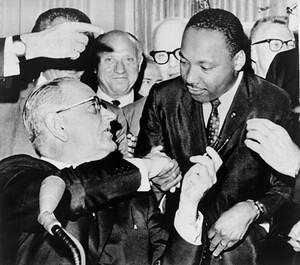
Another event on this date changed the course of twentieth-century politics in the United States and shaped later civil rights policy. In 1964, President Lyndon B. Johnson signed the Civil Rights Act into law. The act banned discrimination based on race, color, religion, sex, or national origin in several areas of public life, including public accommodations and employment. It came after years of organizing, protest, court cases, and intense political debate. The law did not end inequality, but it created new legal tools to challenge segregation and discrimination. Its influence extended well beyond the United States by becoming part of a broader global history of human rights legislation.

Culture and media history are also part of July 2. In 1985, Andrei Gromyko proposed Mikhail Gorbachev as leader of the Soviet Union’s Communist Party, helping confirm the rise of a figure who would soon become central to the final years of the Cold War. Gorbachev’s leadership brought reforms that reshaped Soviet politics and affected international relations across Europe and beyond. While this was a political event, it also had deep cultural consequences, opening space for greater public discussion and changing the media environment inside the Soviet Union.
Sports fans remember July 2, 1994, for a tragic reason. Colombian footballer Andrés Escobar died after scoring an own goal during the FIFA World Cup. His death drew international attention to the pressures surrounding sport, crime, and public life in Colombia at the time. He is remembered not only for that event but also for his reputation as a disciplined and respected athlete. The story remains a reminder that sports history often reflects wider social conditions.
This date has also produced notable births across many fields. Hermann Hesse, born on July 2, 1877, became one of the most widely read German-language writers of the twentieth century. His novels, including Siddhartha and Steppenwolf, explored identity, inner conflict, and the search for meaning. His work reached readers far beyond Europe and influenced literary and countercultural movements in later decades.
A very different kind of public figure arrived on this date in 1906: Hans Bethe, the German-born physicist who later became a leading scientist in the United States. Bethe made major contributions to understanding how stars produce energy, helping explain nuclear processes at the heart of astrophysics. He also worked on wartime nuclear research and later became an important voice in scientific policy debates. His career connected pure science, global conflict, and the responsibilities of modern researchers.
Thurgood Marshall, born in 1908, is remembered as one of the most influential legal figures in American history. Before becoming the first African American justice on the U.S. Supreme Court, he argued key civil rights cases, including Brown v. Board of Education, which helped end legally enforced school segregation. His work shaped constitutional law and had lasting influence on equality before the law.
In popular culture, Lindsay Lohan, born in 1986, became a recognizable figure in film and music at a young age. Her career reflects the changing nature of celebrity in the late twentieth and early twenty-first centuries, especially the close relationship between entertainment media, youth stardom, and public scrutiny. In sports, Margot Robbie does not fit, so a better example is Ashley Tisdale, born in 1985, known for television, music, and youth entertainment culture in the 2000s. Their public visibility shows how mass media can turn performers into global cultural figures very quickly.
Among notable deaths, Jean-Jacques Rousseau died on July 2, 1778. He was one of the Enlightenment’s most influential thinkers, writing about education, political authority, and the relationship between society and the individual. His ideas shaped later debates in Europe and the Americas, especially around citizenship and the source of legitimate government.
Ernest Hemingway died on this date in 1961. He was one of the most important writers of the twentieth century, known for a direct prose style and works such as The Sun Also Rises, A Farewell to Arms, and The Old Man and the Sea. His fiction and journalism influenced generations of writers and helped define modern literary realism for many readers.
Vladimir Nabokov, who died in 1977, left a different but equally strong literary legacy. Writing in both Russian and English, he combined linguistic precision, complex structure, and deep attention to memory and perception. His career reflected the experience of exile and the movement of culture across borders in the modern age.
July 2 brings together events that span war, revolution, law, science, literature, and popular culture.
More like this:


- Most Popular



- Top Stories



- Most Recent



- Sign In
- Home
- Video
- News
-
Weather
 Sponsored by Michael Ryan Exteriors - Roofing Professionals
 - Sports
- Obits
- Events
- Radio
- AP News
- Shop Local
- Classifieds
- Autos
- Real Estate
- Directory
Get the RiverBender App


Follow Us
Copyright © 2026 RiverBender.com All rights reserved.
primary