


This Day in History: July 6 From Jan Hus’ Execution to Sherlock Holmes Debut
A look at major July 6 events spans religious upheaval, imperial conflict, medical advances, and the launch of Sherlock Holmes.
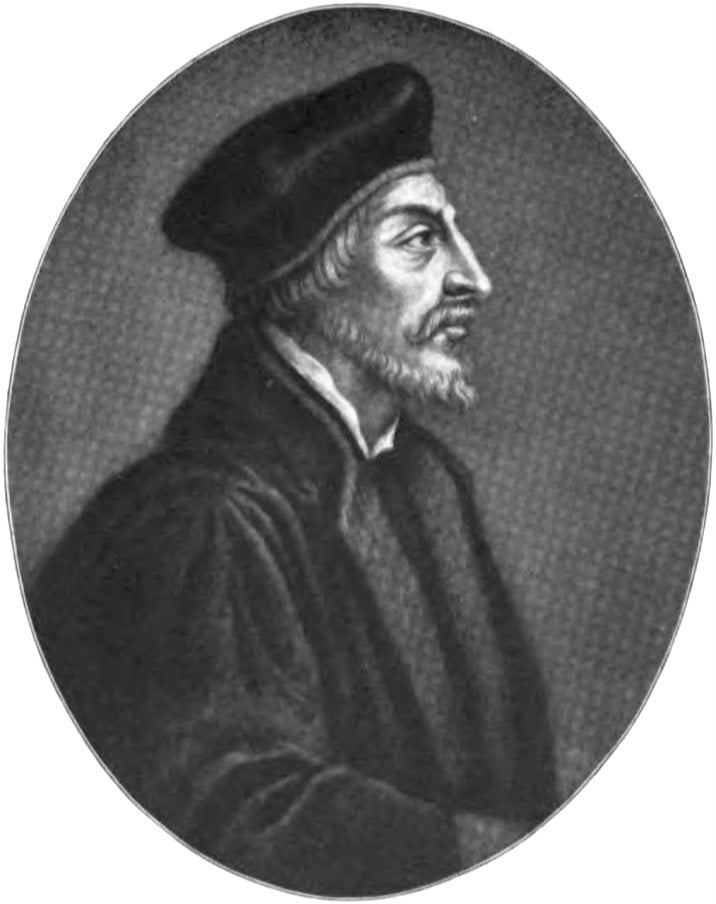 On July 6, 1415, the Czech religious reformer Jan Hus was executed at the Council of Constance, a moment that became one of the most important turning points in late medieval Europe. Hus had criticized corruption in the church and argued that religious authority should be held accountable to scripture and moral conduct. His death mattered immediately because it deepened conflict within the Christian world and helped spark the Hussite Wars in Bohemia. It still matters today because it stands as an early example of how challenges to powerful institutions can reshape religion, politics, and public life for generations.
That story began in a Europe marked by religious tension and competing claims to authority. The Western Church was still dealing with divisions and internal disputes, and reformers were increasingly calling for change. Hus, influenced in part by the ideas of the English thinker John Wycliffe, preached in Prague and attracted broad support. When he was summoned to Constance under a promise of safe conduct, many expected a hearing that might settle the dispute. Instead, he was condemned for heresy and burned at the stake. In Bohemia, his execution was seen not simply as the silencing of one preacher, but as an attack on local identity and reform itself. The uprisings that followed showed how religious questions could quickly become political and social struggles as well.
Get The Latest News!
Don't miss our top stories and need-to-know news everyday in your inbox.
More than three centuries later, another July 6 brought a major shift in the balance of power in Europe. In 1685, the Battle of Sedgemoor took place in England, ending the Monmouth Rebellion against King James II. The rebellion had grown from fears about the rule of a Catholic monarch in a largely Protestant kingdom. James Scott, Duke of Monmouth, tried to claim the throne, but his forces were defeated. The battle was important because it was the last major pitched battle fought on English soil. Its aftermath also mattered: harsh punishments followed, and public unease with James II increased. That instability helped set the stage for the Glorious Revolution just a few years later, when the English monarchy was reshaped under new political conditions.
In the eighteenth century, July 6 marked a striking moment in imperial rivalry. In 1758, during the French and Indian War, British forces captured the French fortress of Louisbourg on Cape Breton Island. This stronghold guarded the approaches to the St. Lawrence River and was a key part of France’s defense in North America. Its fall opened the way for later British campaigns against Quebec. At the time, it was a major military success. Over the long term, it contributed to the shift of power in North America from France to Britain, a change that would affect the future of Canada, Indigenous diplomacy, and eventually the political path that led to the American Revolution.
The nineteenth century brought developments in science and medicine. In 1885, Louis Pasteur successfully tested his rabies vaccine on Joseph Meister, a boy who had been bitten by a rabid dog. Rabies was widely feared because it was almost always fatal once symptoms began. Pasteur’s treatment was a major breakthrough in preventive medicine. It showed that laboratory science could lead directly to life-saving therapies, and it strengthened public confidence in vaccination and germ theory. Modern immunology and disease prevention owe much to this period of research.
Only two years later, on July 6, 1887, the physician and writer Arthur Conan Doyle published A Study in Scarlet, the first story to feature Sherlock Holmes. At first, its impact was modest, but Holmes soon became one of the most recognizable fictional characters in the world. The detective’s use of observation, logic, and forensic detail helped shape crime fiction as a genre. The character also influenced popular ideas about investigation, reason, and the relationship between science and storytelling. From print to radio, film, and television, Holmes has remained part of global culture for well over a century.
The early twentieth century added a milestone in exploration. In 1908, Robert Peary set out from New York on the expedition that he later claimed took him to the North Pole. Historians have long debated whether he actually reached it, but the expedition was still significant in the history of polar exploration. It reflected an era when travel to the earth’s most remote regions was tied to science, national prestige, and public fascination with discovery. Arctic expeditions also depended heavily on knowledge from Indigenous peoples, especially in survival techniques and travel methods, though that contribution was not always fully recognized at the time.
Mid-century events on this date show how power and conflict were changing after the Second World War. In 1942, Anne Frank and her family went into hiding in Amsterdam as Nazi persecution of Jews intensified in the occupied Netherlands. This was not a public event in its own time, but it became historically important because Anne’s diary later gave millions of readers a deeply personal view of life under persecution. The diary remains one of the most widely read accounts of the Holocaust, helping later generations understand that vast historical crimes were experienced by individuals and families in daily life.
Just a few years later, in 1945, the United States awarded the Medal of Honor to 28 Black Americans, including several posthumously, in one of the largest such recognitions linked to the Second World War period. The broader context was a military and a society still shaped by racial segregation. Recognition of Black service members was often delayed or denied. Efforts to correct those records became part of a longer history of civil rights and military integration, reminding people that official honors can reflect both courage and the limits of the institutions granting them.
Space exploration enters the story in 1957, when Althea Gibson won the Wimbledon women’s singles title, becoming the first Black player to do so. Though this belongs to sports rather than science, it symbolized a similar crossing of barriers. Gibson’s victory came during an era when access to elite competition was still restricted by race and class in many places. Her success opened doors in tennis and gave visibility to athletes who had long been excluded. It remains one of the defining milestones in the global history of sport.
Another event on this date changed modern communication and culture. In 1964, Malawi became independent from British rule. The move was part of the larger wave of decolonization that reshaped Africa and the wider world after the Second World War. Independence brought the promise of self-government, but also the challenge of building national institutions after colonial rule. Malawi’s path, like that of many newly independent states, reflected both the hopes and the pressures of the era. July 6 is still observed there as Independence Day.
Several notable people were born on July 6. In 1781, Thomas Stamford Raffles was born; he is remembered as a British colonial administrator and founder of modern Singapore’s port settlement, a development that had lasting effects on trade in Southeast Asia. In 1907, Frida Kahlo was born in Mexico. Her paintings, often deeply personal and visually distinctive, made her one of the most influential artists of the twentieth century. In 1925, Bill Haley was born, and his recordings helped bring early rock and roll to a mass audience. Also born on this date, in 1946, was George W. Bush, who served as president of the United States during a period shaped by the September 11 attacks, wars in Afghanistan and Iraq, and major debates over security and foreign policy. In 1980, actress Eva Green was born; her work in international film has made her a notable figure in contemporary screen culture.
July 6 has also seen the deaths of important figures. In 1533, Ludovico Ariosto died; his epic poem Orlando Furioso was a landmark of Renaissance literature and influenced writers across Europe. In 1553, King Edward VI of England died at age fifteen, a death that triggered a disputed succession and a brief political crisis involving Lady Jane Grey and Mary Tudor. In 1854, Georg Simon Ohm died in Germany. His work on electrical resistance, expressed in Ohm’s law, became fundamental to physics and engineering. More recently, in 1971, jazz trumpeter Louis Armstrong died. Armstrong transformed modern music through his playing, singing, improvisation, and stage presence, leaving a global legacy in jazz and popular culture.
Taken together, the events of July 6 show how history is shaped by belief, conflict, creativity, and change.
More like this:



- Most Popular



- Top Stories

- Most Recent


- Sign In
- Home
- Video
- News
-
Weather
 Sponsored by Michael Ryan Exteriors - Roofing Professionals
 - Sports
- Obits
- Events
- Radio
- AP News
- Shop Local
- Classifieds
- Autos
- Real Estate
- Directory
Get the RiverBender App


Follow Us
Copyright © 2026 RiverBender.com All rights reserved.
primary