


Gov. Pritzker Signs Nation-Leading Artificial Intelligence Safety Law
Landmark bipartisan legislation creates the country's strongest AI accountability framework while supporting responsible innovation.
Get The Latest News!
Don't miss our top stories and need-to-know news everyday in your inbox.
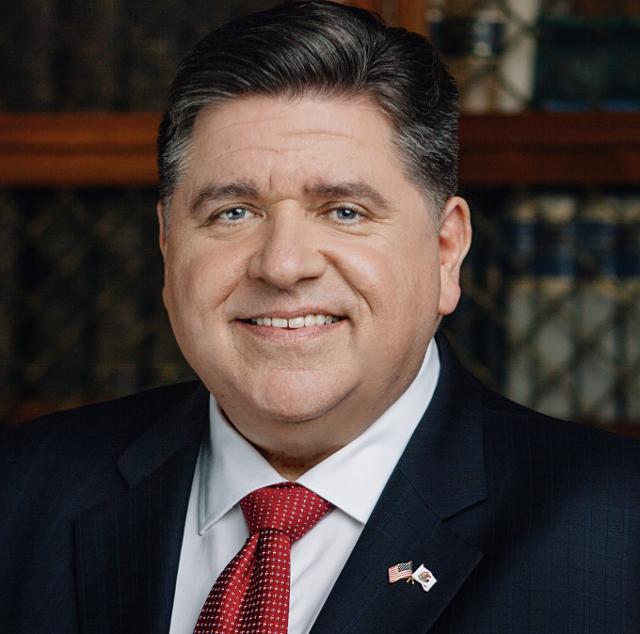
CHICAGO — Today, Governor JB Pritzker signed SB 315, the Artificial Intelligence (AI) Safety Measures Act, a landmark legislation establishing the nation's strongest framework for AI safety, transparency, and accountability. The bipartisan law positions Illinois as the national leader by requiring the largest AI developers to identify, disclose, and mitigate risks while providing independent oversight and protections for workers who report safety concerns. The law earned widespread support, from safety and transparency advocates to technology industry leaders, demonstrating broad agreement that there is a need to establish responsible parameters around AI.
“As AI systems become more powerful and the federal government is unwilling to step in, states have a responsibility to protect our people from the dangers of AI while still harnessing the unique potential of the technology,” said Governor JB Pritzker. “People want protections from the risks of AI and Illinois is stepping up with a bipartisan, first- and most-protective-in-the-nation law.”
“Artificial intelligence is creating incredible opportunities, but it also brings new risks, especially for young people," said Lieutenant Governor Juliana Stratton. "Illinois is showing that innovation and accountability can go hand in hand by setting clear expectations that help protect our communities while supporting the responsible development and use of AI. We can embrace emerging technology while ensuring it reflects our values, safeguards the public, and helps build a stronger future for everyone."
First-in-the-Nation AI Safety Law
The Artificial Intelligence Safety Measures Act establishes a framework requiring developers of the largest advanced AI systems to publicly disclose safety practices, report significant safety incidents, and maintain robust compliance processes. The law also creates confidential reporting channels and whistleblower protections for employees raising AI safety concerns.
In addition, Illinois becomes the first state in the nation to require regular independent third-party safety audits of covered AI systems, ensuring oversight is conducted by qualified experts without financial conflicts of interest.
The legislation reflects Illinois' commitment to fostering technological innovation while ensuring emerging technologies are developed responsibly. By creating clear expectations for industry, the law provides both public protections and greater certainty for companies investing in AI development.
Holding Big Tech Accountable
Governor Pritzker has consistently championed policies that promote responsible technology, including efforts to protect children online and hold large technology platforms accountable when their products create risks for consumers. SB 315 passed the General Assembly with bipartisan support and takes effect January 1, 2027.
“The advancements we’ve seen in just the past few years show the tremendous potential that new technology has to transform our economy, remove barriers, and create opportunity—but it also raises critical questions about everything from safety, to our economy, to mental health,” said House Speaker Emanuel "Chris" Welch. “That’s why our approach to this technology is focused on the needs of people.”
“This represents an important consumer safety check on a growing industry that has intimate access to our personal information,” said Senate President Don Harmon. “I’m proud of the work the sponsors have done to set a standard for safety, responsibility and transparency that I hope serves as a national model.”
“This bipartisan law is about putting responsible safeguards in place before a preventable catastrophe occurs. Illinois has an opportunity to lead the nation by setting clear expectations for transparency, accountability and public safety,” said State Senator Edly-Allen (D-Grayslake). “While artificial intelligence holds extraordinary promises from curing disease to transforming scientific research, we have a responsibility to confront the catastrophic risks associated with the systems.”
“The pace of AI development and the capabilities of frontier models are accelerating, and the General Assembly has an obligation to ensure that Illinois residents are protected from catastrophic outcomes,” said State Representative Daniel Didech (D-Buffalo Grove). “This legislation puts enforceable guardrails in place so Big Tech companies must prioritize safety, be transparent about the risks tied to their systems and take responsibility for preventing serious harm, especially when it comes to protecting children.”
“Governor Pritzker and the Illinois legislature are courageously supporting stronger safeguards to oversee powerful AI,” said Nick Beckstead, CEO at Secure AI Project. “Illinois is the first state to mandate independent third-party evaluations of AI safety practices, making its AI law the strongest in the country.”
“SB 315 makes Illinois the first state to pair AI transparency requirements with independent verification, an important step toward the accountability this technology demands,” said Cesar Fernandez, Head of U.S. State and Local Government Relations at Anthropic. “Anthropic is proud to have been the first AI lab to support this bill, and we commend Governor Pritzker and the sponsors, Senator Mary Edly-Allen and Representative Daniel Didech, for their leadership on this critical issue."
“SB 315 is the strongest AI safety law in the country. It builds on the frameworks California and New York have already passed and goes one step further by requiring independent audits, so the public doesn't have to take AI companies at their word. Illinois has set the new standard,” said Sunny Gandhi, Co-Executive Director of Encode AI.
“SB 315 passed with overwhelming bi-partisan support because lawmakers recognize the same basic truth: the public demands safety and transparency from the AI companies shaping their future. Illinois has created a new template for responsible AI governance that we expect other states, and eventually Congress, to follow,” said Steve Wimmer, Senior Technical and Policy Advisor at Transparency Coalition.
More like this:




- Most Popular


- Top Stories


- Most Recent


- Sign In
- Home
- Video
- News
-
Weather
 Sponsored by Michael Ryan Exteriors - Roofing Professionals
 - Sports
- Obits
- Events
- Radio
- AP News
- Shop Local
- Classifieds
- Autos
- Real Estate
- Directory
Get the RiverBender App


Follow Us
Copyright © 2026 RiverBender.com All rights reserved.
primary