


Battle of Britain, Tesla’s Birth and England's Nine-Day Queen Mark July 10 in History
This Day in History for July 10 spans pivotal wartime events, independence movements, scientific breakthroughs and the lives of influential cultural figures.
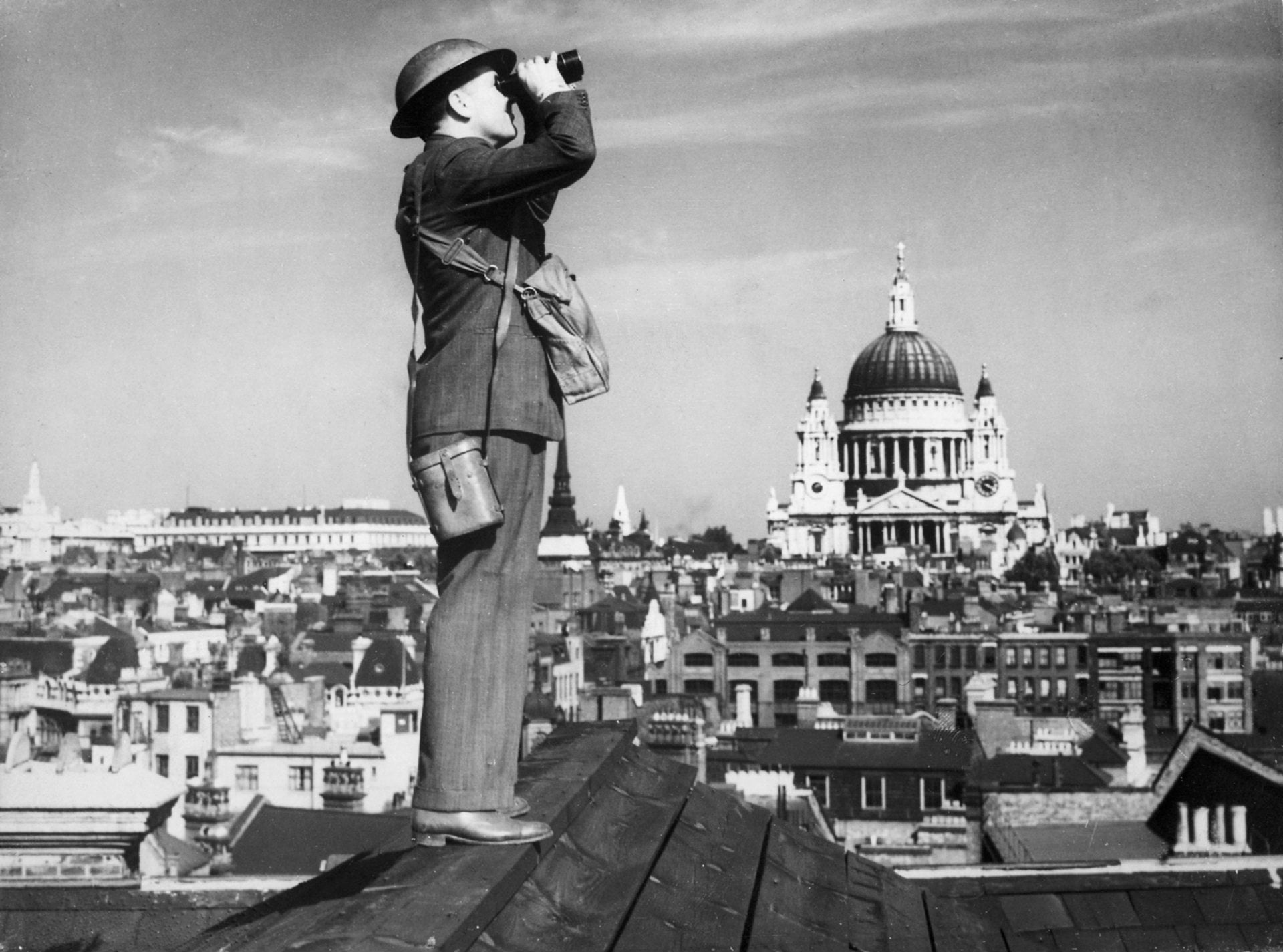
On July 10, 1940, the Battle of Britain began, opening one of the most important air campaigns of the Second World War. After the fall of France, Nazi Germany aimed to gain control of the skies over Britain as a step toward possible invasion. What followed was a long struggle between the German Luftwaffe and the British Royal Air Force. At the time, the battle mattered because Britain stood as a major center of resistance in Western Europe. Its outcome also shaped the wider war by preventing German control of the English Channel and keeping Britain in the fight. It still matters today because it showed how air power, radar, industrial production, and civilian endurance could influence the course of modern conflict.
Get The Latest News!
Don't miss our top stories and need-to-know news everyday in your inbox.
July 10, 1553, brought a short and uncertain change in England’s monarchy when Lady Jane Grey was proclaimed queen. She had been named successor after the death of Edward VI in an effort by powerful nobles to keep the country firmly Protestant. Yet her rule lasted only nine days before support moved to Mary Tudor, later Mary I. The episode revealed how unstable royal succession could be in Tudor England and how closely religion and political power were linked. Even though Jane’s reign was brief, her story remains one of the most famous succession crises in English history.
Science and innovation also shaped this date. On July 10, 1856, inventor Nikola Tesla was born in Smiljan, then part of the Austrian Empire. Tesla would later become one of the central figures in the development of alternating current electrical systems. His work on motors, transformers, and wireless ideas helped influence modern power distribution and electrical engineering. Although many of his projects were not fully appreciated in his lifetime, his name is now closely tied to the age of electricity and technological imagination.
Another major scientific milestone came on July 10, 1962, when Telstar 1 was launched. It became the first active communications satellite to relay television signals, telephone calls, and data through space. The launch showed that real-time global communication was moving from theory into everyday possibility. Telstar did not create the communications age by itself, but it demonstrated how satellites could shrink distances between continents. Modern live broadcasts, satellite networks, and much of global media infrastructure grew from early breakthroughs like this one.
The same date in 1973 brought a striking event in the history of the Bahamas, which became fully independent after centuries of British colonial rule. Independence reflected a broader twentieth-century pattern in which many territories in the Caribbean, Africa, Asia, and the Pacific moved toward self-government. For the Bahamas, the moment meant control over domestic affairs and a stronger national identity on the world stage. For world history more broadly, it stands as part of the long dismantling of colonial empires.
Culture and media added their own landmark to July 10 in 1985, when the French government’s agents were later tied to the sinking of the Greenpeace ship Rainbow Warrior in Auckland, New Zealand. The vessel had been preparing to protest French nuclear testing in the Pacific. The attack killed photographer Fernando Pereira and caused international outrage. It exposed how environmental activism, state security concerns, and nuclear politics could collide in dramatic ways. The incident remains an important case in the history of protest movements, intelligence operations, and international diplomacy.
July 10 has also seen moments of tragedy that led to reform. In 1985, the Greenpeace bombing drew attention to state violence beyond open warfare, but another disaster from a different era is also remembered on this date: in 1913, California’s Death Valley recorded 56.7°C, often cited as the highest air temperature ever measured on Earth. While scientists have debated aspects of historic weather records, the date remains part of the story of how people began systematically documenting climate and extreme environmental conditions. Such records matter because they help societies understand natural limits, human settlement, and the challenge of living in severe environments.
Among notable births, Nikola Tesla stands out for the reasons already mentioned: his ideas and inventions helped define the electrical age. The same date in 1871 saw the birth of Marcel Proust, the French novelist best known for In Search of Lost Time. His writing explored memory, time, and social life with unusual depth, influencing literature far beyond France. Also born on July 10, in 1920, was Owen Chamberlain, the American physicist who shared the Nobel Prize in Physics for the discovery of the antiproton. His work added to scientific understanding of matter and the structure of the universe. From the world of sport, Arthur Ashe, born in 1943, remains widely remembered not only as a major tennis champion but also as a figure of dignity and public influence. He broke racial barriers in a sport long marked by exclusion and later became an important voice in public health and social awareness.
This date also marks the births of figures from popular culture and performance. Ronnie James Dio, born in 1942, became one of rock music’s most recognized vocalists, known for his work with Rainbow, Black Sabbath, and his own band Dio. His influence on heavy metal music was lasting and international. In cinema, Jessica Simpson, born in 1980, became a widely recognized singer, television personality, and business figure, reflecting the growing overlap between entertainment, celebrity culture, and branding in the late twentieth and early twenty-first centuries.
Notable deaths on July 10 include Omar Sharif, the Egyptian actor whose performances in films such as Lawrence of Arabia and Doctor Zhivago made him an international star. Sharif’s career mattered not only for his talent, but also because he became one of the most visible Arab actors in global cinema during a period when such representation was rare. His success connected film audiences across languages and regions.
Taken together, the events of July 10 show how one date can hold war and invention, independence and art, political struggle and personal achievement.
More like this:



- Most Popular



- Top Stories



- Most Recent

- Sign In
- Home
- Video
- News
-
Weather
 Sponsored by Michael Ryan Exteriors - Roofing Professionals
 - Sports
- Obits
- Events
- Radio
- AP News
- Shop Local
- Classifieds
- Autos
- Real Estate
- Directory
Get the RiverBender App


Follow Us
Copyright © 2026 RiverBender.com All rights reserved.
primary