


How Summer Camp Grew From Fears of Modern Life Weakening Children
The tradition grew from late-19th-century concerns that urban life, formal schooling, and too much time indoors were softening children, especially boys.
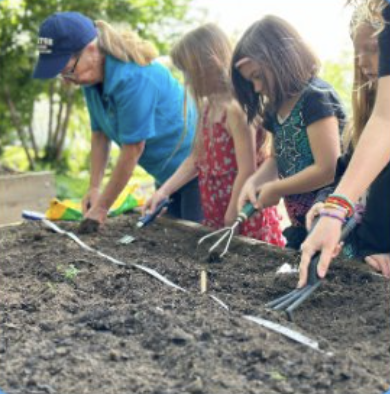
Summer camp began, in part, because of adults worried that modern life was making children weak.
Get The Latest News!
Don't miss our top stories and need-to-know news everyday in your inbox.
That idea may sound dramatic, but it helps explain why camps first appeared and why they spread so quickly. What started as a small effort to get boys out of crowded towns and into fresh air grew into a major tradition. Over time, summer camps became places for hiking, crafts, songs, sports, friendship, and independence. They also became a mirror of what each generation thought children needed most.
How the first summer camps began
The earliest organized summer camps took shape in the United States in the late 1800s. At that time, cities were growing fast. More families were living in crowded neighborhoods. Schools were becoming more formal. Adults began to worry that children, especially boys, spent too much time indoors and not enough time building strength, character, and practical skills.
One of the first well-known camps was started in 1861 by Frederick W. Gunn, a schoolteacher from Connecticut. He took his students on outdoor trips, mixing education with hiking, rowing, and camping. His idea was simple: boys could learn better and grow stronger through direct experience in nature.
A few decades later, organized camps became more common. By the 1880s and 1890s, camps were being created across the northeastern United States. Many followed a similar pattern. They offered outdoor exercise, simple living, group routines, and moral guidance. Camp was seen as a corrective to city life.
That early purpose still echoes today. When parents send children to camp to “unplug,” gain confidence, or “get out of the house,” they are repeating concerns that are more than a century old.
The fears and ideals behind the movement
In the late 19th century, industrialization changed daily life. More people worked in offices, factories, and shops instead of on farms. Cities became louder, denser, and less connected to open land. At the same time, childhood itself was being redefined. Children were spending more years in school and fewer hours doing adult work.
Some reformers believed this new lifestyle made young people too soft, too dependent, or too disconnected from the natural world. Outdoor life was presented as the answer. Camping promised stronger bodies, better discipline, and a deeper sense of responsibility.
There was also a moral side to the idea. Camp leaders often believed that nature encouraged honesty, self-control, teamwork, and respect. The woods were not just a backdrop. They were treated almost like a teacher.
This helps explain a common camp phrase that still survives in many places: “character building.” People may use it casually now, but it comes from a long tradition of seeing camp as a place where personality and values are shaped through challenge.
Why camps first focused on boys
Early summer camps were mainly designed for boys, which reflected the beliefs of the time. Many adults thought boys needed rough outdoor activity to become strong men. They worried that school and city life were too structured and too “soft.”
Camps often included rowing, swimming, woodcraft, military-style drills, and team games. The goal was not just fun. It was training, even if that word was not always used directly.
This early focus also reveals the limits of the movement. Access to camp was shaped by class, race, and gender. Many children were excluded. Some camps were expensive. Others openly discriminated.
Over time, that changed, though slowly and unevenly. Camps for girls also developed in the late 1800s and early 1900s. These camps often promoted health, outdoor life, and friendship, but they were shaped by different expectations. Some encouraged independence. Others still focused on traditional ideas of femininity.
Today, many camps present themselves as open to a wide range of children and interests. But the history matters. It shows that camps have always reflected larger social values, not just recreational choices.
The role of scouting, religion, and reform
Summer camps grew even more popular in the early 20th century because other movements supported the same values.

Scouting played a major role. Organizations like the Boy Scouts and Girl Scouts encouraged outdoor skills, service, teamwork, and self-reliance. Camping became a natural part of their programs. Skills such as tying knots, building fires, reading maps, and cooking outdoors became familiar parts of youth culture.
Religious groups also helped expand camp life. Churches and faith-based organizations created camps where children could mix recreation with spiritual teaching. For many families, camp became a place where children could grow socially and morally at the same time.
Social reformers added another layer. Settlement houses, charities, and community groups sometimes organized camp experiences for poor or urban children. The goal was often to give them clean air, safe play, and relief from difficult living conditions.
This is one reason camp can mean very different things to different people. For one child, camp was a lake, cabins, and songs by a fire. For another, it was a rare chance to leave a crowded city block and sleep somewhere quiet.
How camp traditions took shape
Many classic camp traditions came from practical needs, but they stayed because they created belonging.
Cabins made supervision easier and built small group identity. Campfires gave people a place to gather at night. Songs helped groups bond and pass the time. Nicknames, color wars, badges, bunks, mess halls, and canoe races all helped turn a temporary stay into a shared culture.
Even the phrase “happy camper” points back to this world. Today people use it jokingly, often in the negative, as in “I’m not a happy camper.” But the saying depends on a common image: camp as a place where people are supposed to be cheerful, busy, and part of the group.
Another common idea tied to camp is the “rites of passage” feeling. For many children, camp is the first time away from home for more than a night or two. Making a bed, finding the dining hall, dealing with homesickness, and learning to live with strangers can feel small from an adult’s view. For a child, these moments can feel huge.
From rustic camps to specialized programs
As the 20th century went on, summer camps expanded far beyond their original form.
Some stayed close to the old model of cabins, lakes, and outdoor adventure. Others became highly specialized. Camps appeared for music, theater, science, coding, sports, language learning, weight loss, leadership training, and children with specific medical needs.
This shift reflects a change in what families expect from camp. Early camps were often about toughening children up or protecting them from urban life. Modern camps are more likely to be sold as a way to build skills, explore interests, and boost confidence.
Even so, the old roots are still visible. A soccer camp or robotics camp may look very different from a 19th-century wilderness program, but the promise is familiar: children will grow by stepping outside their usual routine.
You can see this in daily life. Parents often talk about camp as a place where children become “more independent.” That may mean learning to manage time, try new food, talk to unfamiliar people, or handle small problems without immediate adult rescue. The setting has changed, but the basic appeal has not.
What the history of camp tells us now
The story of summer camps is really a story about what adults think children need.
At first, camp was a response to fears about city life, schooling, health, and character. Later, it became tied to religion, scouting, reform, and recreation. In more recent decades, it has become part of a larger world of child development, enrichment, and family planning.
That history can help people read camp culture more clearly. The emphasis on teamwork, resilience, fresh air, screen-free time, and “finding yourself” did not come out of nowhere. These ideas have deep roots.
It can also help families ask better questions. What is a camp really offering? Is it adventure, supervision, education, tradition, status, or personal growth? Often it is some mix of all of them.
Summer camp did not begin simply as a fun break for children. It began as a serious answer to serious worries about growing up in a changing world. That is part of why it has lasted. Beneath the songs, games, and cabins is a bigger idea: children sometimes grow most when they are allowed to leave ordinary life for a while and return a little more capable than before.
More like this:




- Most Popular



- Top Stories


- Most Recent

- Sign In
- Home
- Video
- News
-
Weather
 Sponsored by Michael Ryan Exteriors - Roofing Professionals
 - Sports
- Obits
- Events
- Radio
- AP News
- Shop Local
- Classifieds
- Autos
- Real Estate
- Directory
Get the RiverBender App


Follow Us
Copyright © 2026 RiverBender.com All rights reserved.
primary