


Why August 20 Still Resonates, From Trotsky’s Attack to Voyager 2’s Launch
The date links pivotal moments in politics, science, war, culture and sport, including the attack on Leon Trotsky, the Prague Spring crackdown and the launch of Voyager 2.
 On August 20, one of the most significant events in modern world history took place in 1940, when Leon Trotsky, a leading figure in the Russian Revolution, was fatally attacked in exile in Mexico. The assault, carried out by a Soviet agent, reflected the bitter internal struggle that followed the rise of Joseph Stalin in the Soviet Union. At the time, Trotsky’s death marked the end of the last major revolutionary rival to Stalin. It still matters because it showed how political conflict in the 20th century could reach across borders, silence opposition, and shape the course of global communism for decades.
Trotsky had helped lead the Bolshevik Revolution of 1917 and played a major role in building the Red Army during the Russian Civil War. After Vladimir Lenin’s death, however, he lost a power struggle to Stalin and was forced into exile. By 1940, Trotsky was living in Coyoacán, near Mexico City, where he continued to criticize Stalin’s rule and write about the future of socialism. On August 20, he was attacked with an ice axe by Ramón Mercader, who had gained access to his home. Trotsky died the next day. The killing was not simply personal revenge; it was part of a larger effort by the Soviet state to eliminate dissent. Historians still view the attack as a clear example of how authoritarian systems try to control not only territory, but ideas.
Get The Latest News!
Don't miss our top stories and need-to-know news everyday in your inbox.
Another major event came in 917, when the Battle of Acheloos was fought between the First Bulgarian Empire and the Byzantine Empire. The Bulgarians won a decisive victory, weakening Byzantine influence in the Balkans for years. At the time, the battle reshaped the balance of power in southeastern Europe. In the long run, it helped establish medieval Bulgaria as one of the leading states of the region. The conflict is a reminder that Europe’s political map was shaped not only by western kingdoms, but also by powerful states in the east and southeast.
On this date in 1866, U.S. President Andrew Johnson formally declared the American Civil War over. Fighting had effectively ended the year before, but this proclamation helped signal the legal closing of a conflict that had transformed the United States. The war had preserved the union and led to the abolition of slavery, yet it also left deep political and social divisions. Its formal end on this date is important because it marked the beginning of Reconstruction, a period that raised fundamental questions about citizenship, freedom, and federal power.
Mid-20th-century conflict returned to the foreground in 1968, when Warsaw Pact forces completed their invasion of Czechoslovakia after entering the country overnight to crush the Prague Spring reform movement. Czechoslovak leaders had tried to create a more open form of socialist government, but Soviet leaders feared that these reforms would weaken their control in Eastern Europe. The invasion ended that experiment and signaled the limits of independence within the Soviet bloc. Its long-term significance reached beyond the Cold War, as it influenced later dissident movements and remains a key example of the tension between state control and demands for reform.
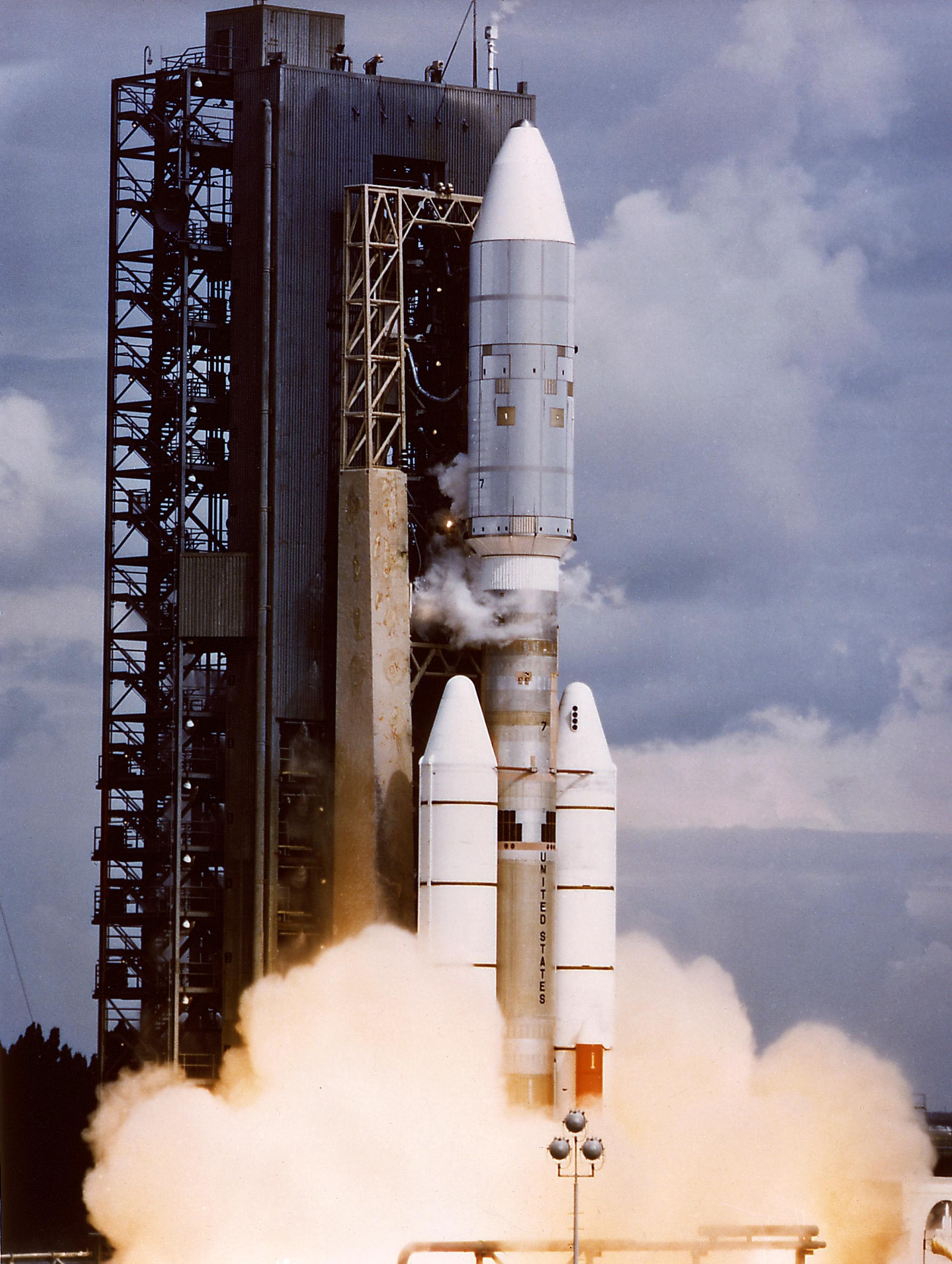
A very different kind of milestone arrived in 1977, when the Voyager 2 spacecraft was launched by the United States. Although Voyager 1 would later overtake it on a faster path, Voyager 2 became the only spacecraft to visit Uranus and Neptune. The mission transformed knowledge of the outer planets, their moons, and their magnetic fields. Decades later, Voyager 2 continues to send back data from interstellar space. Its journey still matters because it represents a rare achievement in long-term scientific planning and international curiosity about the wider universe.

In sports and modern culture, 2008 brought a memorable Olympic moment when Usain Bolt of Jamaica won the men’s 200-meter race at the Beijing Games in world-record time. Bolt had already captured the 100-meter title, and this second victory confirmed his place as the leading sprinter of his era. His performances brought global attention to track and field and highlighted Jamaica’s remarkable influence in sprinting. Sporting achievements do not reshape governments or borders, but they often create shared international memories, and Bolt’s run became one of them.
Among notable births on August 20, H.P. Lovecraft, born in 1890 in the United States, remains influential in literature. His stories of cosmic horror introduced a style in which fear comes not from simple monsters, but from the idea that human beings are small in a vast and uncaring universe. His writing shaped later horror, fantasy, and science fiction, even though many readers today also recognize the prejudices present in parts of his work and life.
A different kind of public figure arrived in 1941, when Slobodan Miloševic was born in Serbia. As president of Serbia and later the Federal Republic of Yugoslavia, he became a central figure in the violent breakup of Yugoslavia during the 1990s. His career is remembered for its role in nationalism, war, and international justice, including his trial at The Hague.
In music and performance, Robert Plant, born in England in 1948, became famous as the lead singer of Led Zeppelin. His voice and stage presence helped define hard rock in the 1970s, and his later solo work showed a willingness to explore different musical traditions.
This day also marks the death of Ethiopian Prime Minister Meles Zenawi, who died in 2012 after leading his country for more than two decades. His time in office was associated with major state-building efforts, economic growth, and regional influence, along with continuing debate over political freedoms and the character of his rule. His death marked the end of an important period in modern Ethiopian politics.
Seen together, the events of August 20 stretch from medieval battlefields to space exploration, from paintings in Paris to political struggle across the globe.
More like this:

- Most Popular



- Top Stories



- Most Recent


