

August 29 in Music History: The Beatles Play Their Final Ticketed Concert
This date also marks milestones for Cliff Richard, Dexter Gordon, Edwin Starr, punk’s early rise, Los Lobos and the musical legacy threatened by Hurricane Katrina.
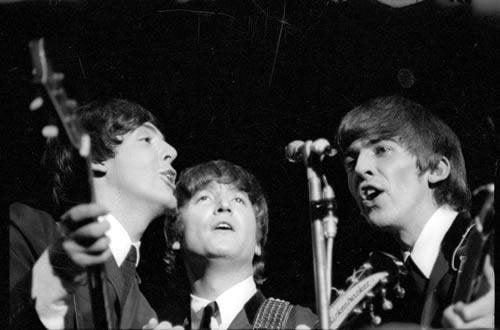
August 29 in Music History: The Beatles End Their Touring Era
On Aug. 29, 1966, the Beatles played their final concert before a paying audience at San Francisco’s Candlestick Park, closing the touring chapter of the most consequential popular-music group of its era. The show was the last date of the band’s 1966 U.S. tour and came after years in which Beatlemania had turned concert halls, stadiums and airports into scenes of overwhelming noise and security pressure. The Beatles would make one more public appearance together, the unannounced rooftop performance in London in January 1969, but Candlestick was their last conventional ticketed concert. Their decision to stop touring mattered because it left them free to concentrate on recordings that expanded what a rock album could be, from Sgt. Pepper’s Lonely Hearts Club Band to Abbey Road. August 29 therefore marks not merely an ending, but a decisive shift from the touring pop act to the studio-centered artists whose work reshaped late-1960s music.
Get The Latest News!
Don't miss our top stories and need-to-know news everyday in your inbox.
The road to that moment can be traced through an earlier British rock breakthrough. On Aug. 29, 1958, Cliff Richard released his first single, “Move It.” Backed by the Drifters, the group that would soon take the name the Shadows, Richard took the record to No. 2 on the British charts. At a time when American performers dominated youthful rock ’n’ roll tastes in Britain, “Move It” demonstrated that a homegrown singer and band could deliver a forceful, guitar-led record with comparable urgency. Richard became one of Britain’s first major rock stars, and the record helped establish a path for the beat groups who would follow in the next decade.
Four years later, tenor saxophonist Dexter Gordon returned to Rudy Van Gelder’s studio in Englewood Cliffs, New Jersey, on Aug. 29, 1962, to record A Swingin’ Affair for Blue Note Records. Gordon was joined by pianist Sonny Clark, bassist Butch Warren and drummer Billy Higgins, the same exceptional quartet heard two days earlier on Gordon’s better-known album Go! The session moved through Gordon originals, including “Soy Califa” and “McSplivens,” alongside standards such as “Don’t Explain.” It captured hard bop at a moment when jazz was branching in many directions, with Gordon’s broad tone, unhurried phrasing and deep command of melody at the center. Although released later, A Swingin’ Affair became an enduring document of a major jazz musician working with one of the era’s most admired rhythm sections.
By the time the Beatles reached Candlestick Park in 1966, the practical limits of stadium rock were becoming clear. Amplification technology of the day was not designed to let a band compete with the screaming that greeted the Beatles at nearly every stop. The group played an 11-song set that night, ending with “Long Tall Sally,” before leaving the stage for the final time in front of a ticket-buying crowd. The choice to quit the road did not signal a retreat from music. It redirected the group’s ambition toward the recording studio, where layered arrangements, tape experimentation and careful production could be heard without being buried beneath a stadium audience. Their final ticketed concert is thus also a landmark in the growing importance of recorded albums as an artistic form.
On Aug. 29, 1970, Edwin Starr’s “War” reached No. 1 on the Billboard Hot 100, beginning a three-week run. Written by Norman Whitfield and Barrett Strong and issued by Motown’s Gordy label, the record transformed a song first associated with the Temptations into Starr’s defining performance. Starr delivered its central question with a blunt, urgent vocal that made the record inseparable from the public anger surrounding the Vietnam War. The lyrics do not name Vietnam, but the single arrived during a period of widespread protest and gave radio listeners a concise, powerful antiwar statement. Its success showed that a politically direct soul record could reach the center of American popular culture.
London’s emerging punk scene gathered at the Screen on the Green in Islington on Aug. 29, 1976, for a showcase featuring the Sex Pistols, the Clash and Buzzcocks. The event took place before any of those bands had released the recordings that would define their public reputations. It was only the Clash’s third performance, and the earliest known recording of the group comes from that night. The bill also brought together musicians from London and Manchester who would become central to punk’s rapid spread. Its significance rests less on polish than on possibility: a small, unconventional venue briefly became a meeting point for artists who favored short songs, direct language, independent organization and a sharp challenge to rock’s established rules.
On Aug. 29, 1987, Los Lobos reached No. 1 on the Billboard Hot 100 with their recording of “La Bamba,” the title song from the Ritchie Valens biographical film. The East Los Angeles band recorded several Valens songs for the soundtrack at the request of his family, bringing its own roots-rock, blues and Mexican folk influences to the material. “La Bamba,” sung in Spanish and built from a traditional Mexican folk song that Valens had transformed into rock ’n’ roll in 1958, held the top spot for three weeks. The hit introduced Los Lobos to a far larger national audience and returned attention to Valens’ legacy, while showing the commercial reach of a song deeply connected to Mexican American musical culture.
Aug. 29, 2005, brought a very different kind of turning point when Hurricane Katrina made landfall near Buras, Louisiana, and the catastrophic flooding that followed devastated New Orleans. The human loss was immense, and the disaster also endangered a living musical ecosystem built in neighborhoods, churches, clubs, parade routes, radio stations and family traditions. Musicians, sound engineers, venue workers and other cultural workers were displaced, while organizations including community station WWOZ had to find ways to continue serving audiences. In the years afterward, benefit recordings, preservation work and returning festivals became part of the recovery, but the damage underscored how closely New Orleans music is tied to place and community. Remembering Katrina in music history means recognizing that songs and recordings do not exist apart from the cities and people who create, sustain and pass them on.
More like this:


- Most Popular
- Top Stories



- Most Recent