This Day In Sports History: Aug. 29-Aug.31: Lavender, Hicks and King Make Names On These Dates In History
A look at historical moments that are still remembered in sports history.
 This Day in Sports History: August 31
On Aug. 31, 1881, the first U.S. National Singles Championship for men opened at the Newport Casino in Newport, Rhode Island, beginning the event that developed into today’s U.S. Open. The tournament was a major step in organizing competitive tennis in the United States. It gave the young U.S. Lawn Tennis Association a national championship and helped establish an annual showcase that would eventually become one of the sport’s four Grand Slam tournaments. Richard Sears won the inaugural singles title and went on to win the first seven championships, setting an early standard for American tennis. The tournament’s later moves, including its 1978 arrival at Flushing Meadows in New York, changed its setting and scale, but its roots reach directly to that first August day in Newport.
Get The Latest News!
Don't miss our top stories and need-to-know news everyday in your inbox.
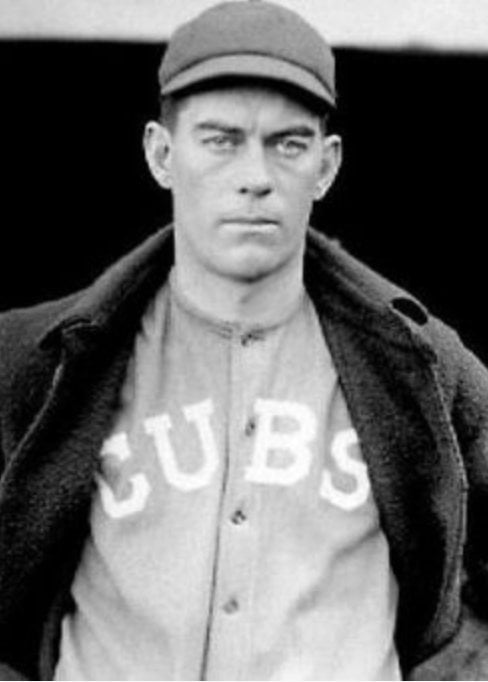
Baseball added a Chicago chapter to the date on Aug. 31, 1915, when Cubs right-hander Jimmy Lavender no-hit the New York Giants in a 2-0 victory. Lavender struck out eight and walked one. It was the Cubs’ first no-hitter of the modern era and the first by the franchise after it adopted the Cubs name in 1903. No-hitters are rare in any period, but Lavender’s accomplishment stood alone in Cubs history for four decades; Sam Jones did not throw the club’s next one until 1955. For a team whose history has included generations of standout pitchers, Lavender’s performance remains a defining early entry in its record book.
Chicago was also the site of a football first on Aug. 31, 1934. The defending NFL champion Bears met a team of leading college players in the first Chicago College All-Star Game at Soldier Field. The game ended in a scoreless tie before 79,432 spectators. The crowd and the matchup mattered as professional football sought broader acceptance during the 1930s. The contest placed established NFL players against the most celebrated newcomers from the college game and became an annual summer tradition. The College All-Star series continued through 1976, usually pairing college stars with the reigning NFL champion. Its beginning in Chicago demonstrated the growing public interest in pro football long before the Super Bowl era.
On Aug. 31, 1950, Brooklyn Dodgers first baseman Gil Hodges delivered one of baseball’s greatest single-game power displays. Hodges hit four home runs, went 5-for-6 and drove in nine runs as Brooklyn beat the Boston Braves 19-3. He homered off future Hall of Famer Warren Spahn in the second inning, then added blasts against Normie Roy, Bob Hall and Johnny Antonelli. Hodges produced what was then the fourth four-home-run game of the modern era. The feat remains one of the most exclusive accomplishments in major league hitting. It also foreshadowed the stature Hodges would build as a key player for the Dodgers and, later, as the manager of the 1969 World Series champion New York Mets.
Chicago racing fans saw an anticipated rematch on Aug. 31, 1955, when Nashua defeated Kentucky Derby winner Swaps by 6 1/2 lengths in a $100,000 match race at Washington Park. Nashua, ridden by Eddie Arcaro, had finished second to Swaps in the Derby that spring but had since won the Preakness Stakes, Belmont Stakes and Arlington Classic. Swaps, ridden by Bill Shoemaker, arrived as the leading California star. Their meeting was more than a race between celebrated 3-year-olds; it was a rare head-to-head test that captured the public’s attention across regional racing rivalries. Nashua’s victory helped secure Horse of the Year honors in 1955. Questions about Swaps’ soundness persisted afterward, but both horses retained lasting places among racing’s great champions.
Heavyweight boxing changed hands on Aug. 31, 1984, when Pinklon Thomas defeated Tim Witherspoon by decision in Las Vegas to win the World Boxing Council heavyweight title. Thomas entered the bout unbeaten and used his reach and left jab to earn his first world championship. The victory placed him among the leading heavyweights of an era shaped by Larry Holmes, Mike Tyson and a deep group of contenders. Thomas held the WBC belt until 1986, when he lost it to Trevor Berbick. His win over Witherspoon remains the high point of a career that brought Thomas through difficult personal struggles and onto the sport’s biggest stage.
The date returned to Cubs history on Aug. 31, 2015, when Jake Arrieta threw a 2-0 no-hitter against the Los Angeles Dodgers at Dodger Stadium. Arrieta struck out 12 and walked one while facing a lineup that included several established stars. The dominant outing was a major moment in a remarkable second half for both Arrieta and the Cubs. He finished the 2015 season 22-6 with a 1.77 earned run average and won the National League Cy Young Award. Chicago reached the National League Championship Series that fall, helping announce the arrival of the club’s new contender. Arrieta’s no-hitter, exactly a century after Lavender’s, connected two exceptional pitching performances across 100 years of Cubs baseball.
This Day in Sports History: August 30
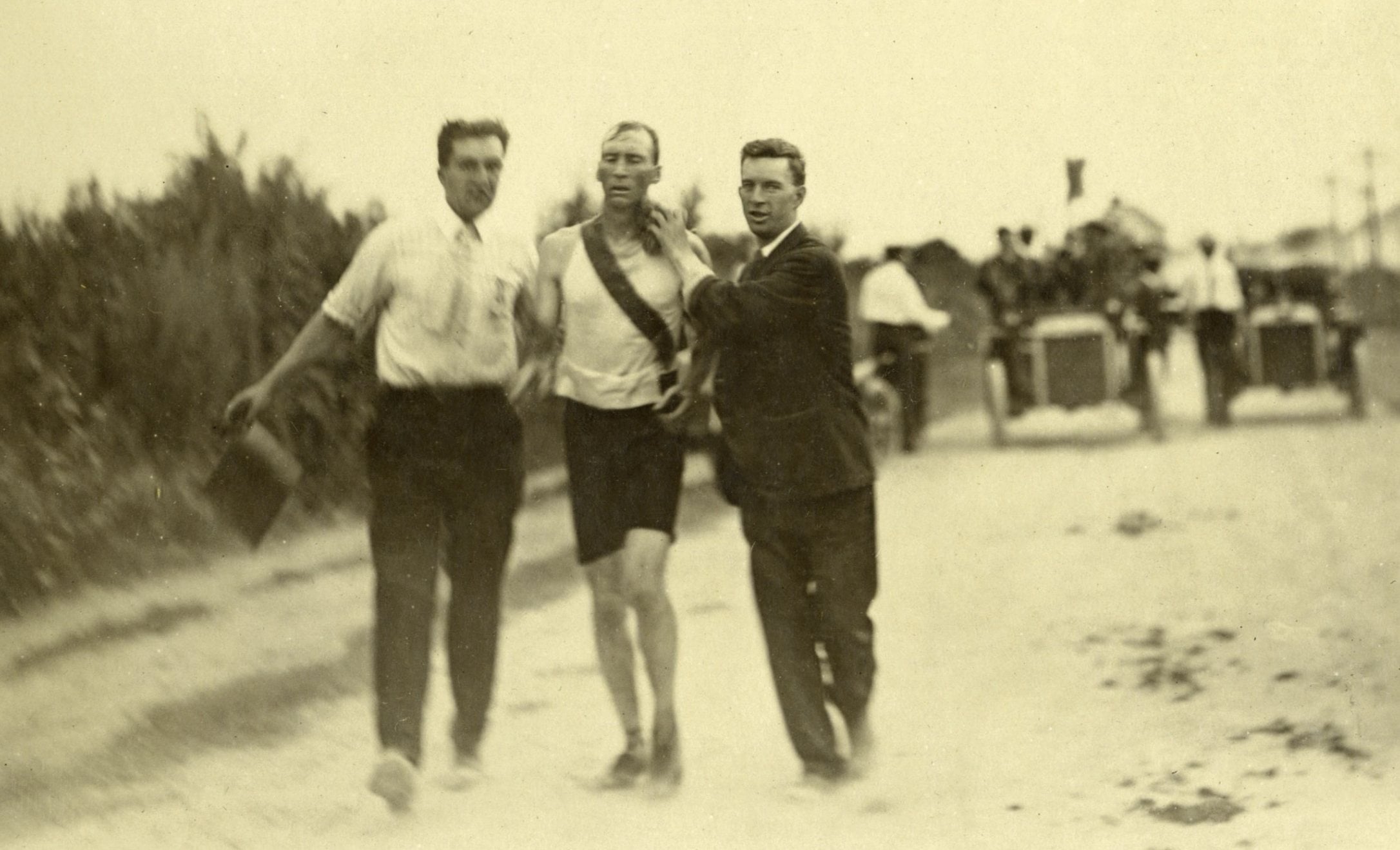
St. Louis occupies a singular place in Olympic history on this date. On Aug. 30, 1904, Thomas Hicks was officially declared the winner of the Olympic marathon at the St. Louis Games, an event that became one of the most memorable and cautionary endurance contests in sports history. The race was held during the city’s World’s Fair and followed a roughly 25-mile course, before the modern marathon distance was standardized. Thirty-two runners started, but only a small group finished. Fred Lorz crossed the line first, only to be disqualified after officials learned he had ridden in an automobile for much of the route. Hicks, who finished in 3 hours, 28 minutes, 53 seconds, received the gold medal. The outcome and the difficult conditions captured the improvised character of the 1904 Games, which unfolded over months alongside the fair. More than a century later, the marathon remains a defining River Bend-area chapter in Olympic lore.
The August 30 sports calendar had already produced a landmark in American tennis. In 1887, Richard “Dick” Sears won the U.S. National Men’s Singles Championship for the seventh consecutive year at Newport, Rhode Island. The tournament eventually developed into today’s U.S. Open, making Sears the event’s first great champion. He retired from the championship undefeated after winning each of its first seven editions, from 1881 through 1887. Only William Larned and Bill Tilden have also won seven U.S. national singles crowns, but Sears remains the only man to win all seven in succession. His run helped establish a national tournament tradition at a time when lawn tennis was still gaining a foothold in the United States.
In 1905, baseball saw the first major league appearance of another athlete whose name would become inseparable from the game’s early history. Eighteen-year-old Ty Cobb debuted for the Detroit Tigers on Aug. 30 against the New York Highlanders at Bennett Park. Cobb doubled in his first major league at-bat, helping Detroit to a 5-3 victory. The moment was modest compared with what followed, but it began a career that included 3,033 games for the Tigers and a place among baseball’s most accomplished hitters. Cobb played 22 seasons in Detroit and finished his major league career after the 1928 season. His debut is a reminder that many of baseball’s towering careers began in ordinary late-summer games, far from the attention that later surrounded their records.
Joe Louis added an important early defense of his heavyweight championship on Aug. 30, 1937, when he defeated Britain’s Tommy Farr by unanimous decision in 15 rounds at Yankee Stadium. It was Louis’ first defense after winning the title from James J. Braddock two months earlier. Farr lasted the distance and pushed the champion through all 15 rounds, but Louis won clearly on the official scorecards. The victory helped establish the stability of Louis’ reign at a time when the heavyweight title held exceptional cultural weight. Known as the “Brown Bomber,” Louis held the championship from 1937 until his retirement in 1949, building one of boxing’s most celebrated records. The Farr fight did not provide a knockout, but it confirmed that the new champion could prevail in a demanding championship test.
On Aug. 30, 2012, Andy Roddick chose his 30th birthday and the U.S. Open in New York to announce that the tournament would be the final event of his professional tennis career. The setting fit the American star’s story. Nine years earlier, Roddick had won the U.S. Open men’s singles title, his only Grand Slam singles championship, and he returned to the final in 2006. His powerful serve and energetic style made him one of the leading American players of his era. By announcing his decision at the event where he had achieved his greatest success, Roddick placed a clear finishing point on a career that had carried American men’s tennis deep into the sport’s global era. He would play one more match at the tournament before his retirement became official.
Chicago Cubs right-hander Jake Arrieta produced a performance for the record books on Aug. 30, 2015, throwing a no-hitter in a 2-0 win over the Los Angeles Dodgers at Dodger Stadium. Arrieta struck out 12, walked one and completed the game by striking out the side in the ninth inning. Kris Bryant’s two-run home run in the first inning supplied all the offense Arrieta needed. It was the first no-hitter of Arrieta’s career and the Cubs’ first since Carlos Zambrano in 2008. The outing came during a spectacular second half that carried Arrieta to the National League Cy Young Award. He threw another no-hitter the following April, but the August night in Los Angeles announced his arrival as the dominant pitcher of the 2015 season and gave Cubs fans a signature memory on the road to the club’s championship breakthrough a year later.
Women’s soccer made its own August 30 history in 2020, when Lyon defeated Wolfsburg 3-1 in San Sebastián, Spain, to win the UEFA Women’s Champions League. Eugénie Le Sommer and Saki Kumagai scored in the first half, Wolfsburg’s Alex Popp pulled one back, and Sara Björk Gunnarsdóttir added Lyon’s late third goal. The victory delivered Lyon’s record seventh European title and fifth in a row. That five-title streak matched the celebrated run by Real Madrid’s men in the early years of the European Cup, underscoring the scale of Lyon’s dominance. The final also completed a pandemic-disrupted competition and gave women’s club soccer a defining achievement: a team that did not simply win repeatedly, but set a standard for sustained excellence on Europe’s biggest stage.
From Newport’s grass courts and Detroit’s Bennett Park to the Olympic grounds of St. Louis, Yankee Stadium, Dodger Stadium and a European final in Spain, Aug. 30 has repeatedly marked beginnings, conclusions and displays of dominance. The date’s most distinctive entry remains the 1904 St. Louis marathon: a local Olympic event whose strange finish still carries a lasting place in the history of endurance sports.
This Day in Sports History: August 29
On Aug. 29, 1968, tennis took a defining step into its modern age when the first U.S. Open began at the West Side Tennis Club in Forest Hills, N.Y. The tournament was the first U.S. national championship in which professionals and amateurs could compete together. Billie Jean King, already the reigning Wimbledon champion, played the first stadium match and defeated alternate Dr. Vija Vuskalns 6-1, 6-0. The score was routine; the setting was not. For years, many of the world’s strongest players had been barred from the major championships because they had accepted money to play. Open tennis ended that division, brought the best players into the same draws and set the structure that remains central to professional tennis. King’s place in that opening program also previewed the larger role she would play in advancing women’s sports and equal opportunity.
The date’s earlier history includes the beginning of one of amateur golf’s enduring international competitions. On Aug. 29, 1922, the United States completed an 8-4 victory over Great Britain and Ireland in the inaugural Walker Cup at the National Golf Links of America in Southampton, N.Y. The team event had been promoted by George Herbert Walker, a St. Louis investment banker and former U.S. Golf Association president who donated the trophy. The American side was loaded with leading amateurs, including Francis Ouimet, Bobby Jones, Chick Evans and Jess Sweetser. What began as a post-World War I gesture of sporting friendship became the premier team competition for male amateur golfers from the United States and Great Britain and Ireland. Its alumni eventually included major champions from Jack Nicklaus and Tiger Woods to Rory McIlroy.
Thirty years later, Aug. 29 marked an important barrier-breaking moment at the U.S. National Championships at Forest Hills. Reginald Weir and George Stewart became the first Black men to compete in the tournament, which later became the U.S. Open. Their appearances did not erase the broader inequalities that Black players faced in American tennis, but they opened a door at one of the country’s most visible events. Stewart already had helped make history in college tennis and would win seven American Tennis Association national singles titles. Their breakthrough followed Althea Gibson’s trailblazing entry into the national championships and added another important chapter to the long fight for access in the sport.
The arrival of the U.S. Open in 1968 made the day especially significant for tennis. Before the Open Era, top professionals had to play separate tours while amateurs contested the traditional Grand Slam events. The new format immediately increased the value of the major championships because titles now required navigating fields that included the strongest eligible players. King’s opening-day victory was only one match, but it came at the start of a permanent transformation. The event would later move to Flushing Meadows and the facility would be named the USTA Billie Jean King National Tennis Center, an acknowledgment of the player whose career reached far beyond her results on court.
For baseball fans in the St. Louis area, Aug. 29 is inseparable from Lou Brock’s place in the record book. In 1977, the 38-year-old Cardinals left fielder stole two bases against the San Diego Padres at San Diego Stadium. The first tied Ty Cobb’s long-standing major league career record of 892. Brock then stole second again in the seventh inning for No. 893, even though the Cardinals lost 4-3. Cobb’s mark had stood for nearly a half-century. Brock retired two years later with 938 steals, a total later surpassed by Rickey Henderson, but the moment captured the value of a player who made speed a game-changing weapon. Brock led the majors in stolen bases eight times, helped the Cardinals win World Series titles in 1964 and 1967, and finished with more than 3,000 hits.
Olympic history on this date was shaped by a race remembered as much for courage as for the medal order. On Aug. 29, 2004, Italy’s Stefano Baldini won the men’s marathon at the Athens Olympics in 2 hours, 10 minutes, 55 seconds. Brazil’s Vanderlei de Lima had built a substantial lead late in the race when a spectator ran onto the course and shoved him toward the crowd. De Lima resumed running but was passed by Baldini and by American Meb Keflezighi, who took silver in 2:11:29. De Lima held on for bronze and later received the Pierre de Coubertin Medal for sportsmanship. Baldini’s victory became Italy’s first Olympic men’s marathon gold medal, while Keflezighi’s finish gave the United States its first medal in the event since 1976.
On Aug. 29, 2015, Jamaica closed the World Athletics Championships in Beijing with another relay triumph. Nesta Carter, Asafa Powell, Nickel Ashmeade and Usain Bolt won the men’s 4x100-meter relay in a world-leading 37.36 seconds. Jamaica’s fourth straight world title in the event gave Bolt his 11th World Championships gold medal, extending his record total at the meet. China took silver after the United States was disqualified for an exchange outside the takeover zone, and Canada earned bronze. The result completed Bolt’s Beijing sweep of the 100 meters, 200 meters and relay, reinforcing the dominance that made him the defining sprinter of his generation.
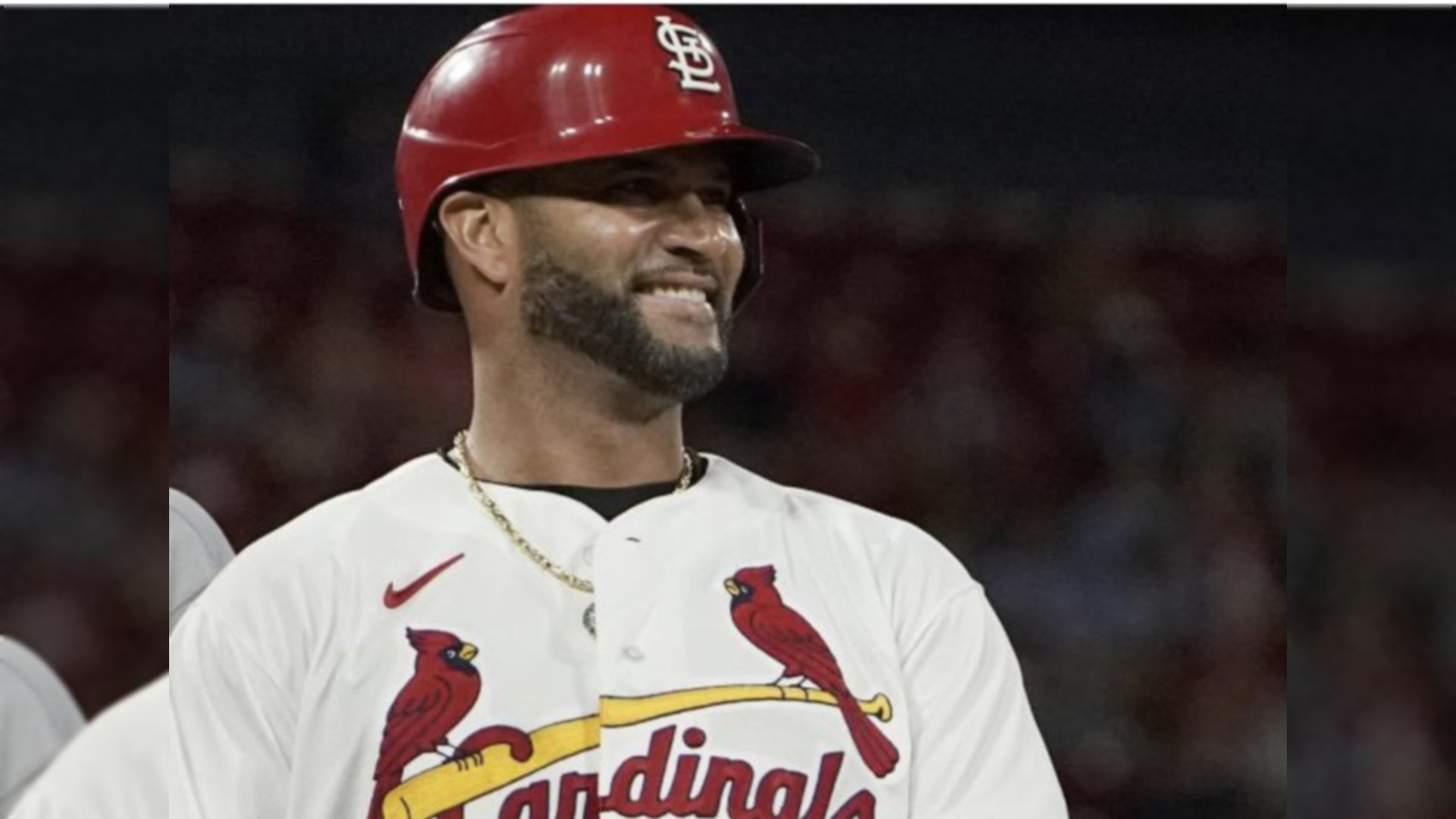
Another Cardinals great added to his remarkable final season on Aug. 29, 2022. Albert Pujols hit the 694th home run of his career, connecting against Cincinnati left-hander Ross Detwiler at Great American Ball Park. The homer came during Pujols’ return to St. Louis and off the 450th different pitcher he had taken deep, underscoring both his longevity and the breadth of his production. He finished the 2022 season with 703 home runs, joining Barry Bonds, Hank Aaron and Babe Ruth as the only players to reach 700. Brock’s stolen-base record and Pujols’ power milestones came in different eras, but both remain defining parts of Cardinals history and of the region’s connection to baseball’s biggest stages.
More like this:
- Most Popular


- Top Stories


- Most Recent