

Sept. 28 in Sports History: Black Sox Scandal, Williams’ .406 and Olympic Gold
The date marks the indictment of eight White Sox players, Ted Williams’ .406 season finale, Paul Henderson’s Summit Series winner and landmark achievements in tennis and marathon running.
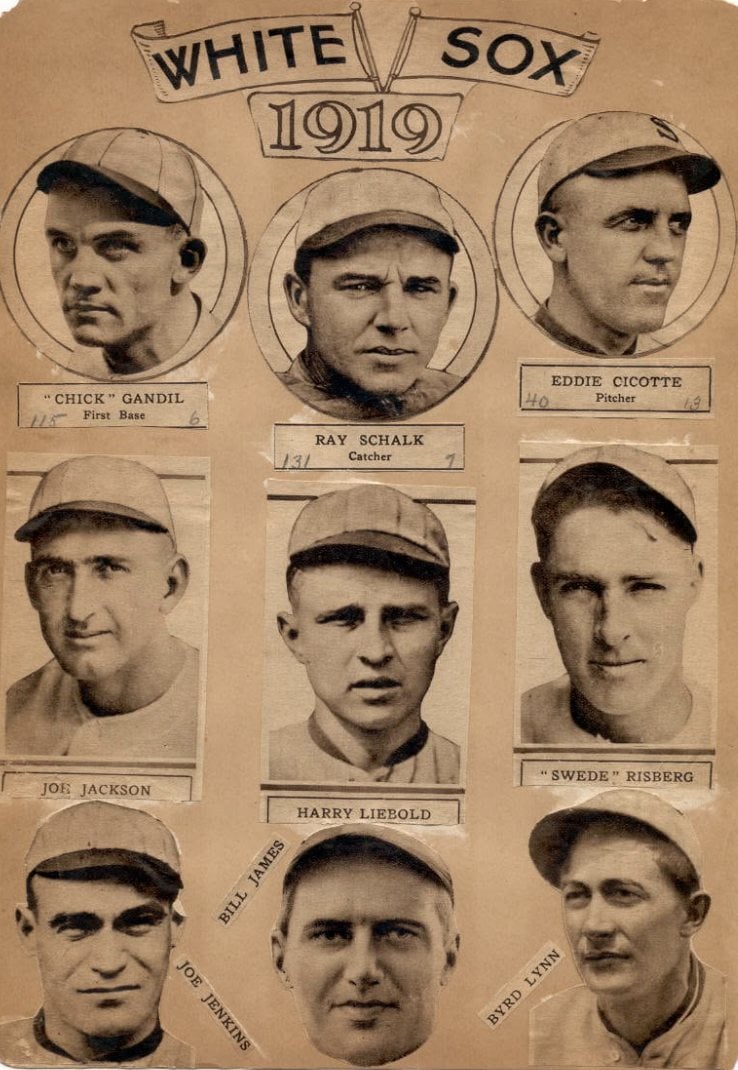 A crisis centered on an Illinois baseball team changed the way the sport governed itself. On Sept. 28, 1920, a Chicago grand jury indicted eight White Sox players on charges of fixing the 1919 World Series. The Black Sox scandal threatened public confidence in baseball and helped bring about the appointment of its first commissioner, Kenesaw Mountain Landis, with sweeping authority over the game.
The accused included “Shoeless” Joe Jackson, Eddie Cicotte, Claude “Lefty” Williams, George “Buck” Weaver, Arnold “Chick” Gandil, Oscar “Happy” Felsch, Charles “Swede” Risberg and Fred McMullin. The allegations put the integrity of baseball’s championship at the center of a criminal investigation, making the scandal much larger than a dispute over one team’s performance.
Get The Latest News!
Don't miss our top stories and need-to-know news everyday in your inbox.
The players were later acquitted in court, but Landis barred them from baseball. His action established a sharp distinction between a criminal verdict and the standards baseball’s commissioner could enforce. For Chicago, the scandal dismantled a talented club. For the sport, it helped establish a powerful central office charged with protecting public trust, a consequence that reached far beyond the White Sox.
Twenty-one years later, Sept. 28 produced a very different baseball landmark. On the final day of the 1941 season, Boston Red Sox outfielder Ted Williams entered a doubleheader against the Philadelphia Athletics with a batting average of approximately .3995. That figure would round to .400, but Williams played both games rather than protect his average from the bench.
He made the decision count. Williams went 4 for 5 in the opener and 2 for 3 in the second game, finishing the season at .406. Six hits in eight at-bats turned a narrow statistical margin into an emphatic achievement. His final afternoon became inseparable from the number itself: Williams had put the milestone at risk and improved it.
The performance also capped a season of power and production, not simply singles. Williams finished with 37 home runs and 120 RBIs. His .406 average remains one of baseball’s defining measures of sustained hitting excellence, with the closing doubleheader providing an unusually dramatic finish to a season-long pursuit.
On Sept. 28, 1960, Williams supplied another memorable ending. Playing his final major league game at Fenway Park, the 42-year-old hit a home run off Baltimore Orioles pitcher Jack Fisher in his last at-bat. It was the 521st home run of his career, giving his farewell a finish few retiring players could hope to arrange.
Boston trailed 4-2 when Williams came to the plate in the eighth inning and drove the ball into the Red Sox bullpen in right-center field. He had already decided not to accompany the club to its season-ending series in New York, making the Fenway appearance his final game rather than merely his last home game. Nineteen years to the day after securing .406, he closed his playing career with one more demonstration of the swing that had defined it.
Hockey’s turn came Sept. 28, 1972, when Paul Henderson scored with 34 seconds remaining to give Canada a 6-5 victory over the Soviet Union in Moscow. The result decided the eight-game Summit Series, which Canada won with four victories, three losses and a tie.
Canada had trailed 5-3 after two periods before Phil Esposito and Yvan Cournoyer tied the game. Henderson then converted his own rebound against Soviet goaltender Vladislav Tretiak. It was his third consecutive game-winning goal, completing Canada’s recovery in the final three games. The series challenged expectations of an easy Canadian victory and brought Soviet players’ abilities into sharp focus for North American fans. The deciding game drew such attention in Canada that schools interrupted classes so students could watch.
On Sept. 28, 2000, Venus and Serena Williams won Olympic women’s doubles gold in Sydney, defeating the Netherlands’ Kristie Boogert and Miriam Oremans 6-1, 6-1. The sisters allowed only two games in a final that lasted 50 minutes, adding an Olympic championship to their success together at major tennis tournaments.
For Venus, the victory completed a singles-and-doubles sweep after she won the singles championship the previous day. She became the first Olympic tennis player to win both titles at the same Games since Helen Wills in 1924. The sisters had already won doubles titles at the 1999 French Open and U.S. Open and at Wimbledon in 2000; Sydney carried that partnership onto the Olympic stage.
On Sept. 28, 2008, Ethiopia’s Haile Gebrselassie pushed marathon running through another barrier. He won the Berlin Marathon in 2 hours, 3 minutes, 59 seconds, becoming the first runner to break 2:04 for the distance and lowering his own world record by 27 seconds.
The 35-year-old had also set the previous record in Berlin. Kenya’s James Kwambai finished second in 2:05:36, well behind the record-setting winner. Gebrselassie’s achievement gave Sept. 28 another enduring sporting image: a finish-line clock displaying a time no marathoner had previously reached, turning years of preparation into a new standard for the event.
More like this:



- Most Popular



- Top Stories



- Most Recent