
Sports History Oct. 5-6, 2026: Jordan Announces Retirement In 1993, Ruth Clubs Three Home Runs Against Cards
The Oct. 6 sports-history timeline also includes Jim Palmer’s World Series shutout, Alain Prost’s first Formula One title and two Rugby World Cup quarterfinal upsets.
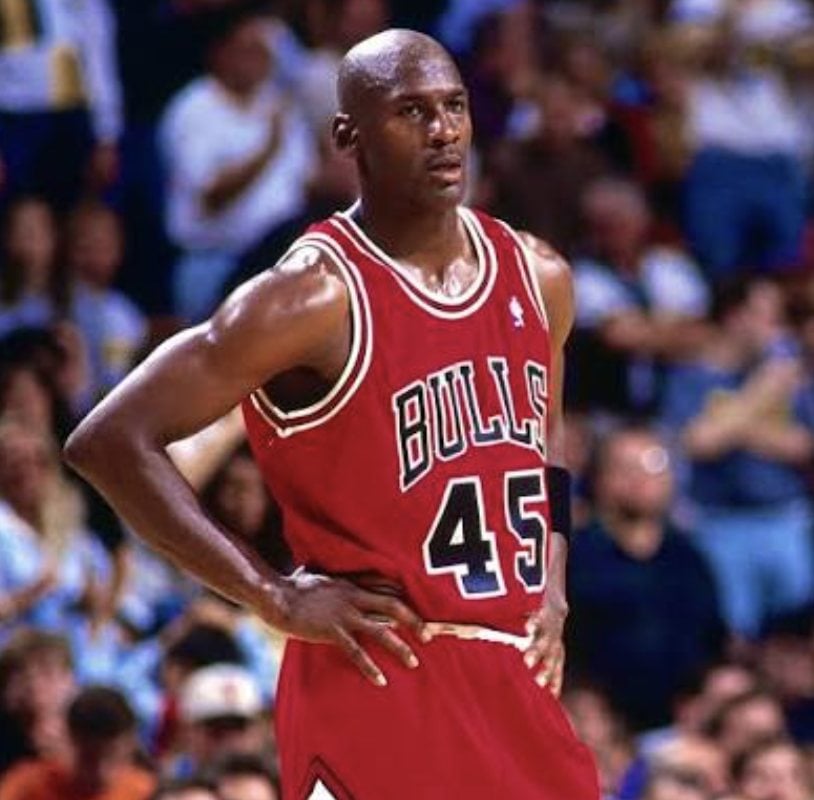
On Oct. 6, 1993, Michael Jordan retired after three consecutive championships and Finals MVP awards with Chicago. At 30, he stepped away at the height of his success. The Bulls’ championship run had ended with a victory over Phoenix.
Get The Latest News!
Don't miss our top stories and need-to-know news everyday in your inbox.
Jordan returned to basketball in March 1995. Chicago subsequently won three more titles, in 1996, 1997 and 1998, making the retirement a dividing line between two championship runs rather than a final farewell.
On Oct. 6, 1926, Babe Ruth turned Sportsman’s Park in St. Louis into the setting for a World Series first. The New York Yankees slugger hit three home runs in Game 4 against the Cardinals, powering a 10-5 victory that tied the series at two games apiece. A century later, the performance remains a defining example of the power Ruth brought to baseball’s biggest stage.
Ruth’s achievement opens an Oct. 6 history that includes a young pitcher’s breakthrough, two milestones in the same Formula One race, Michael Jordan’s departure from the Chicago Bulls and a pair of Rugby World Cup upsets. Each changed the direction of a championship race or marked a turning point in an athlete’s career.
The Yankees entered that 1926 game trailing the series 2-1. Ruth homered in the first and third innings against Cardinals starter Flint Rhem, then added his third in the sixth against reliever Hi Bell. No player had previously hit three home runs in a World Series game. His performance gave New York an immediate answer to the pitching that had helped St. Louis take the series lead.
For St. Louis, however, the loss was a setback rather than the end of its championship hopes. The Cardinals ultimately won the series in seven games. Ruth’s historic afternoon and the Cardinals’ eventual triumph belong to the same story: An individual performance could reshape a game without deciding the entire championship.
Forty years later, on Oct. 6, 1966, Baltimore Orioles right-hander Jim Palmer delivered a very different World Series breakthrough. Palmer pitched a four-hit shutout against the Los Angeles Dodgers in Game 2, winning 6-0 and giving Baltimore a 2-0 series lead. At 20, just nine days before his 21st birthday, he became the youngest pitcher to throw a World Series shutout.
Palmer struck out six and walked three while opposing Sandy Koufax. The Dodgers helped Baltimore with six errors, including three by center fielder Willie Davis in the fifth inning, when the Orioles broke a scoreless tie. But Palmer still had to finish the job, and Los Angeles never scored. The game also proved to be Koufax’s final major league appearance, placing a young pitcher’s arrival alongside the close of an established star’s career.
Baltimore completed a four-game sweep for its first World Series championship. Palmer’s contribution was more than a promising outing by a young player. His complete-game shutout put the Orioles halfway to the title before the series moved to Baltimore and demonstrated that their pitching could match the Dodgers’ celebrated staff.
On Oct. 6, 1985, Alain Prost secured his first Formula One drivers’ championship at the European Grand Prix at Brands Hatch in England. Driving for McLaren, Prost finished fourth, collecting the points he needed to clinch the title. He became the first French driver to win the championship, reaching a national milestone without needing to win that afternoon’s race.
The result suited the measured approach that earned Prost the nickname “The Professor.” His style emphasized managing the car, preserving its brakes and tires, and choosing when to attack. The 1985 championship began a collection of four world titles, with further championships in 1986, 1989 and 1993. Brands Hatch supplied the first decisive championship result in that career.
The same race produced another important first: Nigel Mansell earned his maiden Formula One victory. The Williams driver finished ahead of Ayrton Senna and teammate Keke Rosberg. After 71 previous Grand Prix starts without a victory, Mansell finally reached the top step of the podium. His breakthrough shared the afternoon with Prost’s championship, giving the race significance beyond the title standings.
On Oct. 6, 2007, England kept its Rugby World Cup title defense alive by beating Australia 12-10 in a quarterfinal in Marseille, France. Jonny Wilkinson kicked four penalties to account for all of England’s points. A team that had lost 36-0 to South Africa earlier in the tournament was suddenly back in the semifinals, with its championship hopes restored.
Later that day, France defeated New Zealand 20-18 at Millennium Stadium in Cardiff, Wales. Thierry Dusautoir and Yannick Jauzion scored France’s tries, and Jean-Baptiste Elissalde converted Jauzion’s score to provide the winning margin. France held on through the closing minutes, eliminating the All Blacks and joining England in the semifinals. Together, the two narrow victories transformed the tournament’s knockout bracket in a single afternoon.
Sports History On Oct. 5
On Oct. 5, 1921, the World Series reached beyond the ballpark in a new way: over the radio. The New York Yankees and New York Giants opened their championship matchup at the Polo Grounds, but the lasting breakthrough was the opportunity for listeners elsewhere to follow the action as it unfolded. It was an early step toward making championship sports a shared experience for people who could not attend.
Tommy Cowan delivered the action on WJZ in Newark, New Jersey, working from a studio rather than a seat overlooking the field. A newspaperman at the Polo Grounds relayed information by telephone, and Cowan turned those reports into a broadcast. The setup was basic, but it established a method that would become familiar to generations of baseball listeners.
The Yankees won that first game 3-0 behind Carl Mays, earning a victory in their first World Series appearance. The Giants ultimately won the best-of-nine series five games to three. All eight games were played at the Polo Grounds, which the clubs shared. The championship stayed in New York, while radio had begun carrying the experience beyond the stadium’s boundaries.
That broadcasting milestone also has a connection to St. Louis baseball history. Re-created broadcasts remained common for years. Harry Caray and Gabby Street did not begin traveling to Cardinals road games until 1947; before then, they described distant action from a studio using information supplied by a Western Union operator.
Twenty years after the first radio World Series, Oct. 5 produced one of the championship’s most painful reversals. In Game 4 of the 1941 World Series at Ebbets Field, the Brooklyn Dodgers led the Yankees 4-3 with two outs in the ninth inning. Pitcher Hugh Casey got Tommy Henrich to swing and miss for strike three, apparently securing a victory that would have tied the series.
But catcher Mickey Owen could not hold the pitch, and Henrich reached first base. Joe DiMaggio followed with a single, Charlie Keller doubled home two runs, and Joe Gordon later added another two-run double. The Yankees won 7-4, turning what had looked like a Brooklyn victory into a commanding three-games-to-one series lead.
New York finished the championship the next day. Owen’s missed catch became the defining image of the game, although the Yankees still needed four runs after it to complete their comeback. For Brooklyn, the first World Series title would not arrive until 1955, when the Dodgers finally beat the Yankees.
On Oct. 5, 1984, the Detroit Tigers secured the American League pennant with a 1-0 victory over the Kansas City Royals, completing a three-game sweep of the AL Championship Series. The clincher was a pitching contest: Both teams finished with three hits, and Detroit’s second-inning run was enough to send the Tigers to the World Series.
Milt Wilcox worked eight shutout innings and struck out eight. Willie Hernandez closed the ninth, retiring Darryl Motley for the final out.
The pennant confirmed that Detroit’s extraordinary spring had been more than a fast start. Manager Sparky Anderson’s club opened the season 35-5 and finished with 104 victories. After dispatching Kansas City, the Tigers defeated the San Diego Padres in five World Series games. Their October performance completed a championship season that had announced itself almost from opening day.
On Oct. 5, 2001, Barry Bonds moved past a home run standard established in St. Louis. The San Francisco Giants slugger hit his 71st home run of the season against the Los Angeles Dodgers, surpassing the 70 Mark McGwire had hit for the Cardinals in 1998. Bonds then added his 72nd homer in the same game.
The individual breakthrough came with a stark team disappointment. Los Angeles won 11-10, eliminating San Francisco from postseason contention. A night that changed baseball’s record book also ended the Giants’ playoff hopes, illustrating the distance that can separate an individual accomplishment from a team’s immediate goal.
On Oct. 5, 2005, all 30 NHL teams played on the same night for the first time. The league was returning after the lockout that erased the 2004-05 season.
Alex Ovechkin scored twice in his Washington Capitals debut, helping beat Columbus 3-2. Sidney Crosby debuted with an assist in Pittsburgh’s 5-1 loss to New Jersey.
Ovechkin’s opening night began a rookie season of 52 goals and 106 points, followed by the Calder Trophy. Nearly two decades later, on April 6, 2025, he scored his 895th career regular-season goal to surpass Wayne Gretzky’s NHL record. The two goals from that October debut were the first steps toward a milestone that would reshape hockey history.
More like this:
- Most Popular



- Top Stories

- Most Recent