

Oct. 22 in Music: The Met Opens, the Supremes Make History and Landmark Albums Arrive
This date links the Metropolitan Opera’s 1883 opening with milestones by the Supremes, Led Zeppelin, Pearl Jam, Kendrick Lamar and Taylor Swift.
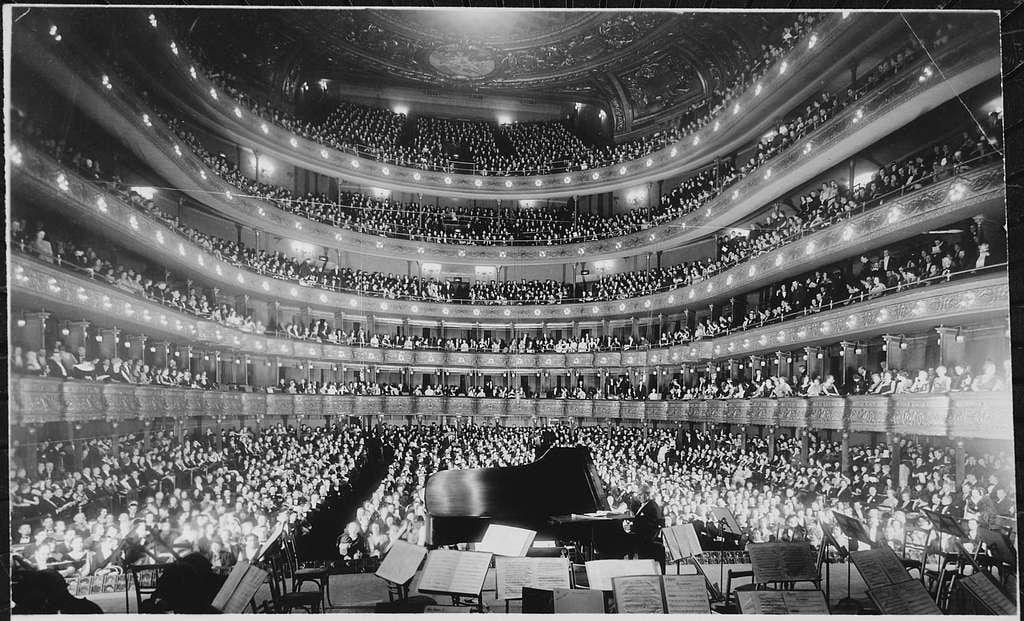
On Oct. 22, 1883, a performance of Charles Gounod’s “Faust” opened New York’s Metropolitan Opera House, launching an institution that would help shape American musical life for generations. The anniversary leads a date that also brought a historic breakthrough for the Supremes, a defining Led Zeppelin album, Pearl Jam’s concert debut and two very different landmark releases in 2012. Looking back on Oct. 22, 2026, these milestones show how a single evening or record can become the beginning of something much larger.
The original Metropolitan Opera House stood at Broadway and 39th Street, not at the company’s later Lincoln Center home. Wealthy businessmen financed the theater because they wanted an opera house of their own. Its opening production featured soprano Christine Nilsson and tenor Italo Campanini, bringing prominent European singers to the new American stage. The event established both a performance venue and a company whose ambitions extended well beyond one opening night.
Get The Latest News!
Don't miss our top stories and need-to-know news everyday in your inbox.
Although “Faust” was a French opera, the opening performance was sung in Italian, reflecting the Met’s initial practice of presenting its repertoire in that language. The company later experimented with German before generally embracing works in their original languages. “Faust” remained central to its early identity, becoming its most frequently performed opera well into the 20th century. That first night began a lasting relationship between American audiences and an international operatic tradition.
On Oct. 22, 1966, the Supremes made a different kind of institutional history. “The Supremes A’ Go-Go” reached No. 1 on Billboard’s pop album chart, making the trio the first all-female group to top the ranking now known as the Billboard 200. Diana Ross, Mary Wilson and Florence Ballard displaced the Beatles’ “Revolver,” turning an already remarkable run of hit singles into an album-market breakthrough.
The record included “You Can’t Hurry Love” and “Love Is Like an Itching in My Heart,” alongside songs associated with other Motown performers and pop acts. Its selections connected the Supremes to the broader dance-floor sound of the moment rather than limiting them to their own singles. For Motown, the result demonstrated that its success could carry over into full-length records. For women in popular music, the chart achievement established a new precedent at the summit of the American album business.
Three years later, on Oct. 22, 1969, Led Zeppelin released “Led Zeppelin II.” The quartet’s second album sharpened its combination of blues-based singing, forceful rhythms and amplified guitar into a powerful statement. Guitarist Jimmy Page handled production, with engineer Eddie Kramer contributing to the recording’s sound. The band assembled the album while touring, working in multiple studios rather than retreating for one uninterrupted recording session.
“Whole Lotta Love,” “Heartbreaker,” “Ramble On” and “Moby Dick” displayed different sides of that approach, from commanding riffs to acoustic contrast and instrumental showcases. The album eventually reached No. 1 in the United States, displacing the Beatles’ “Abbey Road” in December. Its significance went beyond that commercial contest: The record became a cornerstone of hard rock, offering an enduring example of how production and instrumental interplay could give heavy music both weight and variety.
On Oct. 22, 1990, the musicians who became Pearl Jam played their first show at Seattle’s Off Ramp Cafe. The band’s official concert archive preserves the date and a set list beginning with “Release,” followed by “Alone,” “Alive,” “Once,” “Even Flow,” “Black” and “Breath.” It was a small-scale beginning for a group that would become closely associated with Seattle’s rise as a major rock center.
What makes the performance especially revealing is how much recognizable material was already in place. Several songs from that night would appear on “Ten,” released in August 1991. The concert offers a view of an important band before its breakthrough, when songs later heard by a vast audience were still being introduced from a club stage. The foundation of Pearl Jam’s recorded identity was already taking shape in its live repertoire.
On Oct. 22, 2012, Kendrick Lamar released his major-label debut, “good kid, m.A.A.d city,” through Top Dawg Entertainment, Aftermath Entertainment and Interscope Records. The album brought his accounts of growing up in Compton, California, to a wider audience, using connected scenes and voices to build a sustained narrative rather than simply a sequence of unrelated songs.
Its storytelling helped make Lamar a major presence beyond rap’s underground. The album subsequently earned Grammy nominations for album of the year and best rap album, while “Swimming Pools (Drank)” received a best rap performance nomination. Its breakthrough demonstrated the reach of a deeply local story told with an ambitious album-length structure.
That same day, Taylor Swift released her fourth album, “Red.” Its country elements stood beside increasingly prominent pop production, with “We Are Never Ever Getting Back Together” and “I Knew You Were Trouble” pointing toward a broader musical direction. “All Too Well” offered a contrasting showcase for detailed, emotionally direct songwriting. The album made stylistic variety part of its identity instead of keeping Swift within a single established sound.
“Red” became Swift’s first No. 1 album in Britain, and its experiments helped prepare the way for her fuller turn toward pop. Alongside Lamar’s release, it made Oct. 22, 2012, a notable day for artists expanding their reach without abandoning distinctive storytelling. From the Met’s inaugural curtain to those two albums, the date’s milestones trace different routes toward the same goal: finding a larger stage for a musical voice.
More like this:
- Most Popular



- Top Stories


- Most Recent