
This Day in History: November 4 — From Iran Hostage Crisis, Hungary’s Revolution to the Paris Agreement
From the suppression of Hungary’s 1956 uprising to the Paris Agreement’s entry into force, November 4 spans political turning points, discoveries and cultural preservation.
 This Day in History: November 4, 2026
On November 4, 1956, Soviet forces launched a major assault on Budapest and other parts of Hungary to crush an uprising against Soviet-backed rule. Hungarians had demanded political freedoms, the withdrawal of Soviet troops, and greater national independence. The intervention ended the revolutionary government’s attempt to break from Moscow’s control and led to thousands of deaths and the flight of about 200,000 refugees. It became a defining event of the Cold War, showing the limits of independence within the Soviet bloc. Seventy years later, it remains an important chapter in the history of sovereignty, political reform, and resistance.
November 4 also connects medical discovery, archaeological exploration, cultural preservation, and international cooperation. The following events trace those connections across time.
Get The Latest News!
Don't miss our top stories and need-to-know news everyday in your inbox.
Major Historical Events
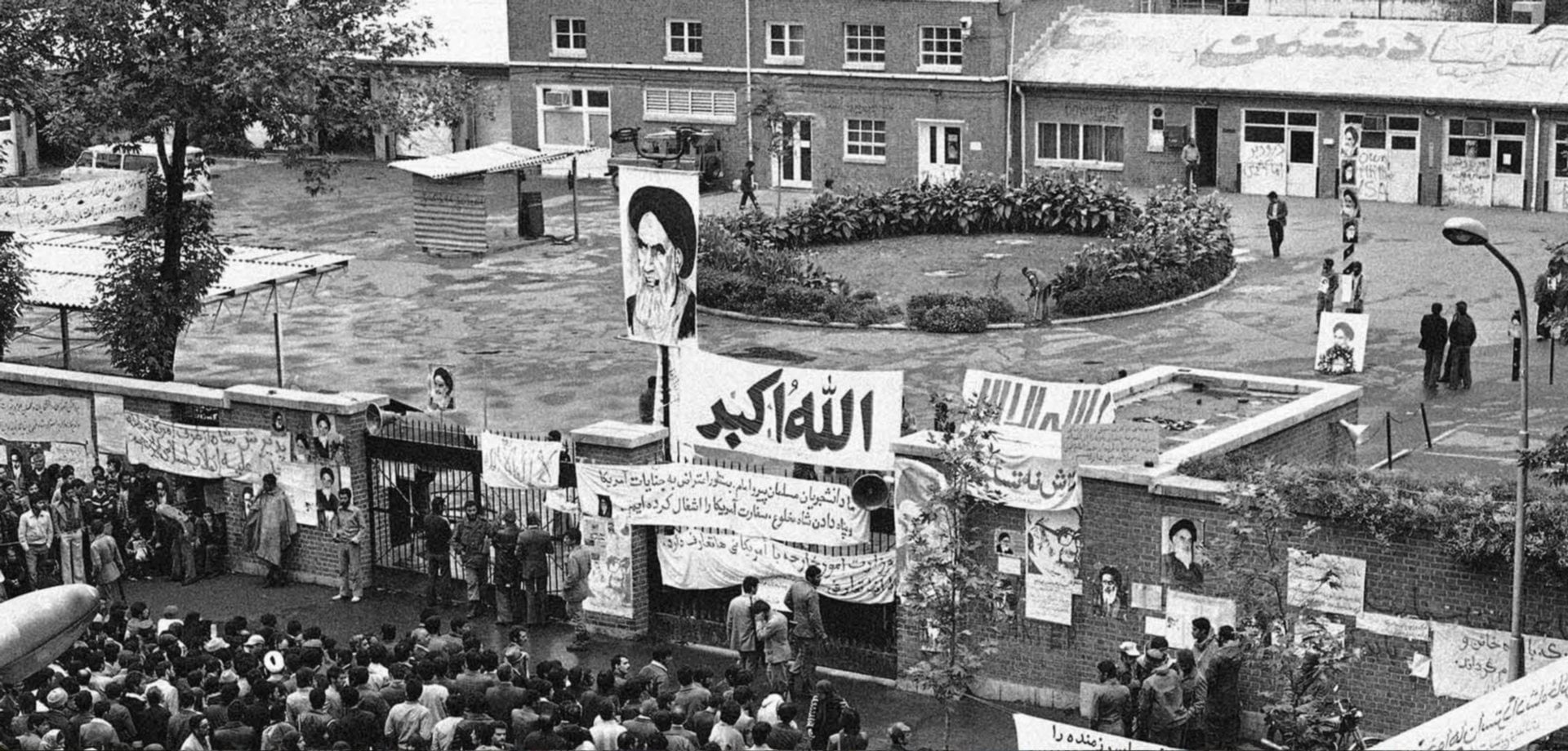
1979: The Iran hostage crisis begins
Iranian students seized the United States embassy in Tehran, taking diplomats and other personnel hostage. The occupation followed months of upheaval after Iran’s revolution and the admission of the deposed shah to the United States for medical treatment.
The hostage-takers feared renewed American intervention, drawing on memories of the 1953 coup supported by the United States and Britain. The embassy seizure nevertheless violated established diplomatic protections.
Fifty-two Americans remained captive for 444 days, until January 20, 1981. The crisis severed diplomatic relations and became a lasting source of distrust between Iran and the United States.
1847: James Young Simpson experiments with chloroform
At his home in Edinburgh, Scottish physician James Young Simpson and two colleagues tested chloroform by inhaling its vapor. They lost consciousness, demonstrating its potential as an anesthetic.
Surgery without effective pain relief could be agonizing, and ether anesthesia had only recently entered medical practice. Simpson soon promoted chloroform, particularly in childbirth. Its use helped expand public acceptance of anesthesia, although chloroform could cause fatal heart and liver complications. Safer drugs eventually replaced it. The experiment belongs to a wider transformation that made pain control a central part of medicine.
1922: A step leads to Tutankhamun’s tomb
An excavation team working under British archaeologist Howard Carter uncovered a step in Egypt’s Valley of the Kings. It led to the tomb of Tutankhamun, a pharaoh who had ruled more than 3,000 years earlier.
Funded by Lord Carnarvon and supported by Egyptian workers, the excavation revealed an unusually well-preserved royal burial. Carter did not enter the inner rooms that day; the discovery unfolded over the following weeks and months.
The tomb’s objects provided extensive evidence about royal burial practices, craftsmanship, and religious beliefs. Worldwide reporting also transformed Tutankhamun into a cultural phenomenon. The discovery remains closely connected to discussions about how archaeological finds are studied, displayed, and cared for.
1946: UNESCO formally comes into existence
The constitution of the United Nations Educational, Scientific and Cultural Organization entered into force on November 4, 1946.
Created after the Second World War, UNESCO rested on the idea that lasting peace required more than diplomatic agreements. Education, scientific exchange, and cultural understanding could also help countries cooperate.
Its work later included literacy initiatives, scientific programs, and the protection of cultural and natural heritage. UNESCO’s creation marked an effort to make the exchange of knowledge a permanent part of international relations.
1956: The Hungarian Revolution is suppressed
The uprising had begun on October 23 with demonstrations that grew into a nationwide challenge to Hungary’s government. Reform-minded prime minister Imre Nagy announced political changes and Hungary’s intention to leave the Warsaw Pact.
Soviet leaders responded with a large military intervention on November 4. Armed resistance continued in some places, but the revolutionary government was displaced by a Soviet-backed administration led by János Kádár. Nagy was later arrested and executed in 1958.
International condemnation did not bring military assistance. The outcome strengthened Soviet control in the short term while leaving a lasting mark on Hungarian society and communist movements abroad.
1966: Floodwaters devastate Florence
After heavy rainfall, the Arno River overflowed, flooding Florence, Italy. Residents lost their lives, homes and businesses were damaged, and water mixed with mud and fuel swept through libraries, churches, and museums.
Volunteers from Italy and abroad arrived to rescue books, manuscripts, and artworks. Often called “mud angels,” they worked alongside specialists under difficult conditions.
The disaster encouraged improvements in conservation methods and emergency planning. Its legacy extended beyond Florence by demonstrating how quickly cultural collections could be endangered—and how international cooperation could help save them.
2008: Barack Obama wins the U.S. presidency
Barack Obama defeated Republican candidate John McCain, becoming the first African American elected president of the United States.
The election took place during a severe financial crisis and amid wars in Iraq and Afghanistan. Its historical significance also reflected the country’s long struggle over slavery, segregation, citizenship, and voting rights.
Obama’s victory drew attention around the world. It represented a major milestone in American political representation, while the economic and international challenges facing the incoming administration remained substantial.
2016: The Paris Agreement enters into force
The Paris Agreement on climate change became legally effective after enough countries ratified it to meet its participation and emissions thresholds.
Adopted in 2015, the agreement established a shared framework for limiting global warming, with countries submitting their own climate commitments and strengthening them over time. It also addressed adaptation and support for developing countries.
Its entry into force did not mean its goals had been achieved. It created an ongoing international process for coordinating national action on a problem that crosses borders.
Notable Births
Will Rogers, born in 1879, became an American humorist, performer, and widely read newspaper commentator. A citizen of the Cherokee Nation, he moved from rope-trick performances into theater, film, and radio. His observations about politics and everyday life made him an influential voice in early mass media.
Charles K. Kao, born in 1933, helped establish the scientific basis for transmitting information through optical fibers. His research showed that sufficiently pure glass could carry signals over long distances. This work helped make modern telecommunications possible and earned him a share of the 2009 Nobel Prize in Physics.
Tabu, born in 1971, became a prominent Indian actor known for performances across mainstream and independent cinema. Working in Hindi and several other Indian languages, she earned recognition for complex roles that expanded the range of women’s characters on screen.
Luís Figo, born in 1972, became one of Portugal’s leading footballers. Known for his creative wing play, he represented major European clubs and his national team, winning the Ballon d’Or in 2000.
Notable Deaths
Felix Mendelssohn died in 1847, aged 38. The German composer, pianist, and conductor left works including the Italian Symphony and music for A Midsummer Night’s Dream. He also helped renew public interest in Johann Sebastian Bach’s music.
Wilfred Owen died in 1918, one week before the First World War armistice. Killed while serving in France, the British poet left writing that described soldiers’ suffering with unusual directness. Much of his reputation developed after his death.
Yitzhak Rabin died in 1995, assassinated by an Israeli extremist opposed to the peace process. A former military leader and serving Israeli prime minister, Rabin had shared the 1994 Nobel Peace Prize for efforts toward Israeli-Palestinian peace. His killing deeply affected Israeli society and regional diplomacy.
Across November 4’s history, discovery and creativity stand beside conflict and loss. Medical experiments, rescued manuscripts, political struggles, and individual lives each reveal different ways people shape their world. Together, they show how history develops through both large public events and work whose full importance becomes clear only later.
More like this:




- Most Popular



- Top Stories



- Most Recent