


This Day in History: November 17 Marks Opening of Suez Canal
November 17 marks the opening of the Suez Canal, the launch of the Velvet Revolution, and milestones in politics, culture and exploration.
This Day in History: November 17, 2026
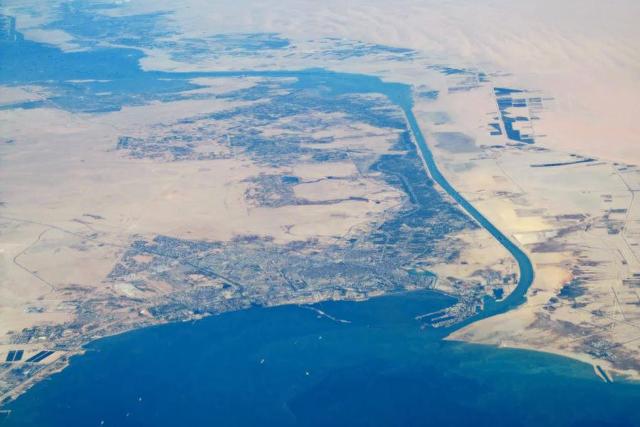
On November 17, 1869, the Suez Canal officially opened in Egypt, creating a direct shipping route between the Mediterranean and Red seas. Ships traveling between Europe and Asia could now avoid the long voyage around southern Africa. The canal changed international trade, increased Egypt’s strategic importance, and became a focus of competition among powerful countries. More than 150 years later, it remains a vital passage for world commerce—and a reminder that a single engineering project can reshape connections between continents.
Major Historical Events
The opening of the Suez Canal stands out among November 17’s milestones. The date’s wider history also includes royal succession, resistance to occupation, advances in space exploration, and the beginning of major political change.
Get The Latest News!
Don't miss our top stories and need-to-know news everyday in your inbox.
1558: Elizabeth I becomes queen of England
Following the death of her half-sister Mary I, Elizabeth I inherited an England divided by religious conflict and under financial pressure. Her government established a Protestant religious settlement while retaining some traditional forms of worship.
Elizabeth’s reign lasted more than 44 years. It brought an expansion of overseas ventures, conflict with Spain, and a flourishing of English literature and theater. Religious tensions remained, but her long rule gave the monarchy greater continuity after years of rapid change.
1869: The Suez Canal opens
Ceremonies at Port Said marked the opening of the approximately 100-mile canal, built across the Isthmus of Suez under a company led by French diplomat Ferdinand de Lesseps. Egyptian laborers supplied much of the workforce, including through compulsory labor during the project’s early years.
The new route shortened many journeys between European and Asian ports. Its construction also burdened Egypt’s finances, contributing to circumstances that increased European influence. Control of the canal later became central to British strategy and Egyptian demands for sovereignty, most visibly during the Suez Crisis of 1956.
1933: Duck Soup reaches American cinemas
The Marx Brothers’ comedy Duck Soup received its general American release on November 17. Set in the fictional country of Freedonia, it used absurd dialogue, physical comedy, and a senseless war to mock authority and national rivalry.
Its reputation grew over time. Today, the film is widely remembered for showing how popular entertainment can question public life without abandoning its main purpose: making people laugh.
1939: Nazi authorities attack Czech universities
After demonstrations connected to the funeral of Czech student Jan Opletal, Nazi authorities closed Czech universities in the occupied Czech lands. Nine student leaders and activists were executed, and more than 1,000 students were sent to Sachsenhausen concentration camp.
The crackdown targeted institutions that had become centers of national identity and opposition to occupation. November 17 subsequently became International Students’ Day, commemorating the victims and the importance of students’ rights and access to education.
1969: Strategic arms talks begin in Helsinki
Representatives of the United States and the Soviet Union opened the Strategic Arms Limitation Talks, known as SALT, in Finland. Both countries had built large nuclear arsenals, raising fears about the consequences of an uncontrolled arms race.
The negotiations eventually produced the 1972 Anti-Ballistic Missile Treaty and an interim agreement limiting certain strategic missile launchers. These measures did not end nuclear competition, but they established an important framework for negotiated restraint and verification.
1970: Lunokhod 1 begins exploring the Moon
The Soviet spacecraft Luna 17 landed on the Moon carrying Lunokhod 1, the first remotely controlled rover to operate successfully on another celestial body.
Guided from Earth, the eight-wheeled vehicle photographed the landscape, studied lunar soil, and traveled more than 10 kilometers during roughly ten months of operation. Its success demonstrated that mobile robots could carry out extended exploration beyond Earth, helping establish an approach later used on Mars.
1989: A student march helps launch the Velvet Revolution
A student demonstration in Prague, held on the anniversary of the 1939 crackdown, became a turning point in Czechoslovakia’s history. Riot police attacked demonstrators, prompting wider protests against the Communist government.
The movement expanded through mass gatherings, student action, and a general strike. Within weeks, the Communist Party surrendered its monopoly on political power. The largely peaceful transition became known as the Velvet Revolution, and playwright and dissident Václav Havel was elected president in December.
Notable Births
Vespasian, born in 9 CE
The future Roman emperor emerged victorious from the civil wars of 69 CE and founded the Flavian dynasty. He restored government finances and began construction of the Colosseum. His reign helped stabilize the empire after a period of violent struggles over succession.
Nicolas Appert, born in 1749
French food-preservation pioneer Nicolas Appert developed a method of heating food in sealed containers to keep it from spoiling. Although he worked before scientists understood the role of microorganisms, his experiments laid the foundations for commercial canning and changed food storage, transport, and military provisioning.
Soichiro Honda, born in 1906
Japanese engineer and industrialist Soichiro Honda co-founded the Honda Motor Company in 1948. Starting with motorized bicycles and motorcycles, the company expanded into automobiles and other engines. His work helped make Japan a major force in global vehicle manufacturing.
Martin Scorsese, born in 1942
American filmmaker Martin Scorsese became known for films including Taxi Driver, Raging Bull, and Goodfellas. His influence extends beyond directing: through film-preservation efforts, he has helped protect works from many countries and encouraged audiences to explore cinema’s history.
Nani, born in 1986
Portuguese footballer Luís Carlos Almeida da Cunha, known as Nani, built a prominent career with Sporting CP, Manchester United, and other clubs. He also helped Portugal win the 2016 European Championship, the country’s first major senior men’s international football title.
Notable Deaths
Mary I of England, died in 1558
England’s first crowned queen regnant sought to restore Roman Catholicism after the religious changes introduced under her father and brother. Her reign included the execution of hundreds of Protestants for heresy. Her death brought Elizabeth I to the throne and another lasting change in England’s religious direction.
Catherine II of Russia, died in 1796
Often called Catherine the Great, she ruled Russia for 34 years. Her reign expanded the empire, supported education and the arts, and strengthened Russia’s international position. It also preserved serfdom and extended Russian control over neighboring territories.
Auguste Rodin, died in 1917
French sculptor Auguste Rodin helped move sculpture away from polished idealization toward expressive bodies and textured surfaces. Works such as The Thinker and The Burghers of Calais influenced generations of artists.
Audre Lorde, died in 1992
American poet and essayist Audre Lorde examined race, gender, sexuality, illness, and the uses of language. Her writing became influential in literature and in movements addressing overlapping forms of discrimination.
Across November 17’s history, people have changed the world by building routes, preserving food, creating art, exploring unfamiliar ground, and challenging established power.
More like this:


- Most Popular



- Top Stories



- Most Recent


