Local Doctor Offers Non-Opioid Pain Intervention at Associated Physicians Group
Associated Physicians Group offers pain care in Alton, Edwardsville, O’Fallon and Swansea. Meet Dr. Hamed Sadeghipour and learn what guides his approach to helping patients manage pain.

Interventional Pain Management: Nerve Blocks, Injections and Physical Therapy
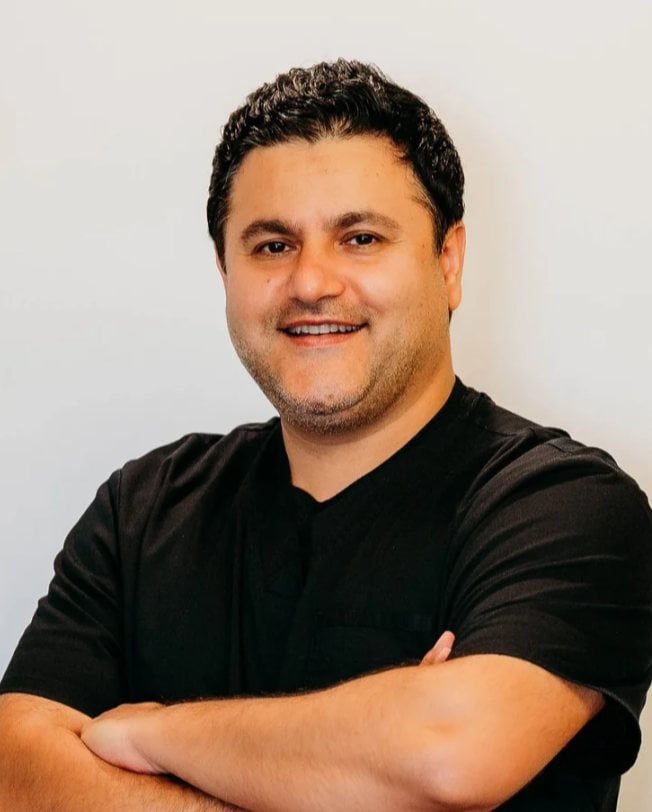
ALTON/EDWARDSVILLE/O’FALLON/SWANSEA - Dr. Hamed Sadeghipour is focused on mitigating pain.
Get The Latest News!
Don't miss our top stories and need-to-know news everyday in your inbox.
Sadeghipour is an interventional pain doctor with Associated Physicians Group. Trained as an anesthesiologist, he has gone on to study pain management and now helps people manage their pain at APG. With offices in Alton, Edwardsville, O’Fallon and Swansea, APG aims to help patients live their healthiest lives, and Sadeghipour’s work is part of that mission.
“My practice is built on helping patients with pain from head to toe,” he said. “If the patient gets there earlier to us, we can actually stop that process of the inflammation and what's going on with the pain cycle earlier, and the outcome will be much better.”
Sadeghipour noted that the U.S. is currently in an “opiate pandemic.” He explained that, 20 years ago, most doctors prescribed opioids to manage pain. These days, there are other ways to manage pain that aren’t medication-based.
Sadeghipour offers non-opioid medication management, but his main focus is pain intervention. He treats pain at the source by identifying the nerve that is “angry,” or the nerve that is sending the pain signal to the brain.
He can block the nerve by numbing it with an injection or performing a nerve ablation, during which he burns and kills the nerve temporarily. The nerve will eventually grow back, and Sadeghipour can repeat the procedure to bring pain relief.
Both of these procedures take only minutes and are noninvasive. Sadeghipour noted that the goal is to avoid surgery or more serious pain by addressing the patient’s concern early.
“Basically, we treat the pain as we go,” he explained. “Nationwide, the most common pain comes from the lower back. The majority of my patients are dealing with that lower back pain, and my goal is to basically give the pain relief that they want and prolong the surgery time so they don’t get to the surgery. That’s what we’re doing.”
APG also offers in-house physical therapy. Sadeghipour can personally vouch for the effectiveness of the physical therapy team; he recently tore his ACL, and after being treated at APG, he was able to avoid surgery. He shared that he has been playing soccer with his kids again, and he credits the APG physical therapy team for his recovery.
He provides the same relief to patients through his pain intervention strategies. If you’re experiencing pain, Sadeghipour encourages you to reach out earlier rather than later. The long-term effects of pain can affect your mental and physical health, and he would rather help you avoid these problems.
“The fact is that many people actually suffer from pain, and they just try to ignore it over time, which is not a good fix,” he said. “The more you ignore it, the pain will be there still, and it eventually will get to your brain. When it gets to your brain, I call it when you get to the hole. It’s very difficult to get you out of that hole. So before you get to that repeating cycle where the pain is there, it’s not helping, it moves to the brain, now your life is different, you’re angry at yourself, your attitude is bad — no. Let’s just solve everything by addressing it at an earlier time before we get to that.”
Associated Physicians Group is happy to answer any questions you might have about pain management or other concerns. For more information, visit their official website.
This featured article is sponsored by Associated Physicians Group. To get your business or organization featured on www.RiverBender.com, conatact us at sales@riverbender.com.
More like this:



- Most Popular


- Top Stories


- Most Recent