This Day in History: November 20 Sees Nuremberg Trials Begin
This date marks the start of the Nuremberg trials and significant milestones in children’s rights, computing and space exploration.
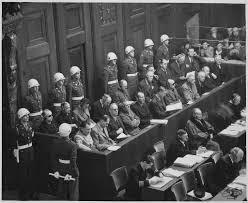
November 20 also marks turning points in diplomacy, revolution, children’s rights, computing, and space exploration. The events below trace those developments in chronological order.
Get The Latest News!
Don't miss our top stories and need-to-know news everyday in your inbox.
Major Historical Events
1815: A second Treaty of Paris reshapes post-Napoleonic Europe
France and the victorious allied powers signed the second Treaty of Paris on November 20, following Napoleon Bonaparte’s defeat at Waterloo. Its terms were stricter than those imposed after his first abdication in 1814. France lost territory, owed a large indemnity, and had to support a temporary allied occupation.
The settlement formed part of the wider effort to restore stability after more than two decades of revolutionary and Napoleonic warfare. Alongside arrangements made at the Congress of Vienna, it helped establish a European diplomatic system intended to manage disputes and prevent another continent-wide conflict.
1910: The Mexican Revolution reaches its declared starting date
November 20 is traditionally recognized as the beginning of the Mexican Revolution. Opposition leader Francisco I. Madero had called for an uprising on that date after challenging the reelection of President Porfirio Díaz, whose long rule combined economic development with political repression and deep social inequality.
The initial response was uneven, and fighting had already broken out in some places. Nevertheless, the date became a national milestone. Díaz resigned in 1911, but rival visions of land reform, labor rights, and political authority prolonged the struggle. The revolution eventually produced the Constitution of 1917, which included significant provisions on land ownership and workers’ rights.
1945: The Nuremberg trial begins
Inside Nuremberg’s Palace of Justice, judges and prosecutors from Britain, France, the Soviet Union, and the United States began the main trial of major Nazi leaders. Twenty-two defendants were ultimately tried, one in absentia.
Prosecutors presented extensive documentary evidence and testimony about aggressive war, forced labor, persecution, and mass murder. The judgments delivered in 1946 included convictions and acquittals, with sentences ranging from imprisonment to death. Although the tribunal’s structure and jurisdiction prompted legal debate, its lasting contribution was to demonstrate that holding state office did not automatically shield an individual from responsibility for international crimes.
1959: The United Nations adopts a declaration on children’s rights
The UN General Assembly adopted the Declaration of the Rights of the Child on November 20, 1959. Its ten principles addressed children’s needs for education, health care, protection, and opportunities to develop in safe conditions.
The declaration was not legally binding. Its importance lay in setting out a shared international standard: children required specific protections, rather than being treated only as dependents within families. It built on earlier work, including the 1924 Geneva Declaration, and helped prepare the ground for a later treaty.
1969: Native American activists occupy Alcatraz
A group identifying itself as Indians of All Tribes began occupying Alcatraz Island in San Francisco Bay. The former federal prison became the focus of a protest over Native American land rights, federal policies, and the preservation of Indigenous cultures.
The occupation lasted until June 1971. Although the activists did not secure permanent control of the island, they attracted international attention and strengthened a growing movement for Native American self-determination. Alcatraz became an enduring symbol of Indigenous political organizing.
1985: Microsoft releases Windows 1.0
Microsoft released the first retail version of Windows on November 20. Running on top of MS-DOS, Windows 1.0 offered a graphical environment with menus, windows, and mouse support, making some computer tasks less dependent on typed commands.
It was neither the first graphical interface nor an immediate commercial breakthrough. Its historical importance is clearer in hindsight: it began a software product line that would become widely used in homes and workplaces. The release belonged to a broader shift toward making personal computers more accessible to nonspecialists.
1989: Children’s rights become the basis of an international treaty
Exactly thirty years after the declaration, the UN General Assembly adopted the Convention on the Rights of the Child. It entered into force in 1990.
Unlike the earlier declaration, the convention created legal obligations for countries that became parties to it. It addressed survival, development, protection from abuse, and children’s participation in decisions affecting their lives. The treaty became one of the world’s most widely ratified human rights agreements, although putting its commitments into practice has remained an ongoing challenge.
1998: The first International Space Station module launches
A Russian Proton rocket launched Zarya, the first component of the International Space Station, from the Baikonur Cosmodrome in Kazakhstan. Built in Russia with American funding, the module initially supplied electrical power, propulsion, and other essential functions.
Zarya’s arrival in orbit began the assembly of a station developed through cooperation among the United States, Russia, European partners, Japan, and Canada. The ISS later supported continuous human habitation and research in fields ranging from human health to materials science.
Notable Births
Born on November 20, 1750, Tipu Sultan became ruler of Mysore in southern India. He is remembered for resisting the expansion of the British East India Company and supporting military innovation, including iron-cased rockets. His reign also involved regional warfare and religious policies whose effects remain subjects of historical study.
Swedish writer Selma Lagerlöf, born in 1858, combined folklore, imaginative storytelling, and close observation of rural life. In 1909, she became the first woman awarded the Nobel Prize in Literature. Her work helped bring Swedish writing to a wider international audience.
Astronomer Edwin Hubble was born in 1889. His observations helped establish that galaxies exist beyond the Milky Way. He also demonstrated a relationship between galaxies’ distances and their apparent recession speeds, providing major observational support for an expanding universe.
Born in South Africa in 1923, Nadine Gordimer explored the effects of apartheid on private lives and public relationships. Her novels and stories reached readers worldwide, and she received the Nobel Prize in Literature in 1991.
American gymnast Dominique Dawes, born in 1976, competed at three Olympic Games. At Atlanta in 1996, she helped the United States win the women’s team title and earned an individual bronze medal on floor exercise, becoming the first African American to win an individual Olympic gymnastics medal.
Notable Deaths
Russian pianist and composer Anton Rubinstein died on November 20, 1894. A celebrated performer, he founded the Saint Petersburg Conservatory in 1862, helping establish professional musical education in Russia.
Leo Tolstoy died in 1910. The Russian author of War and Peace and Anna Karenina examined family life, social change, war, and moral responsibility. His later writings on nonviolence also influenced reformers, including Mohandas Gandhi.
Spain’s longtime ruler Francisco Franco died in 1975. His authoritarian government had followed the Nationalist victory in the Spanish Civil War and restricted political opposition for decades. After his death, Spain began a transition toward parliamentary democracy under King Juan Carlos I.
Across these anniversaries, November 20 brings together efforts to define responsibility, protect rights, expand knowledge, and reshape society.
More like this:





- Most Popular



- Top Stories


- Most Recent