

This Day in History: November 25 — Einstein’s Relativity, Suriname’s Independence and More
This date marks Einstein’s presentation of general relativity, Suriname’s independence, the Mirabal sisters’ deaths and other milestones in history.
This Day in History: November 25, 2026
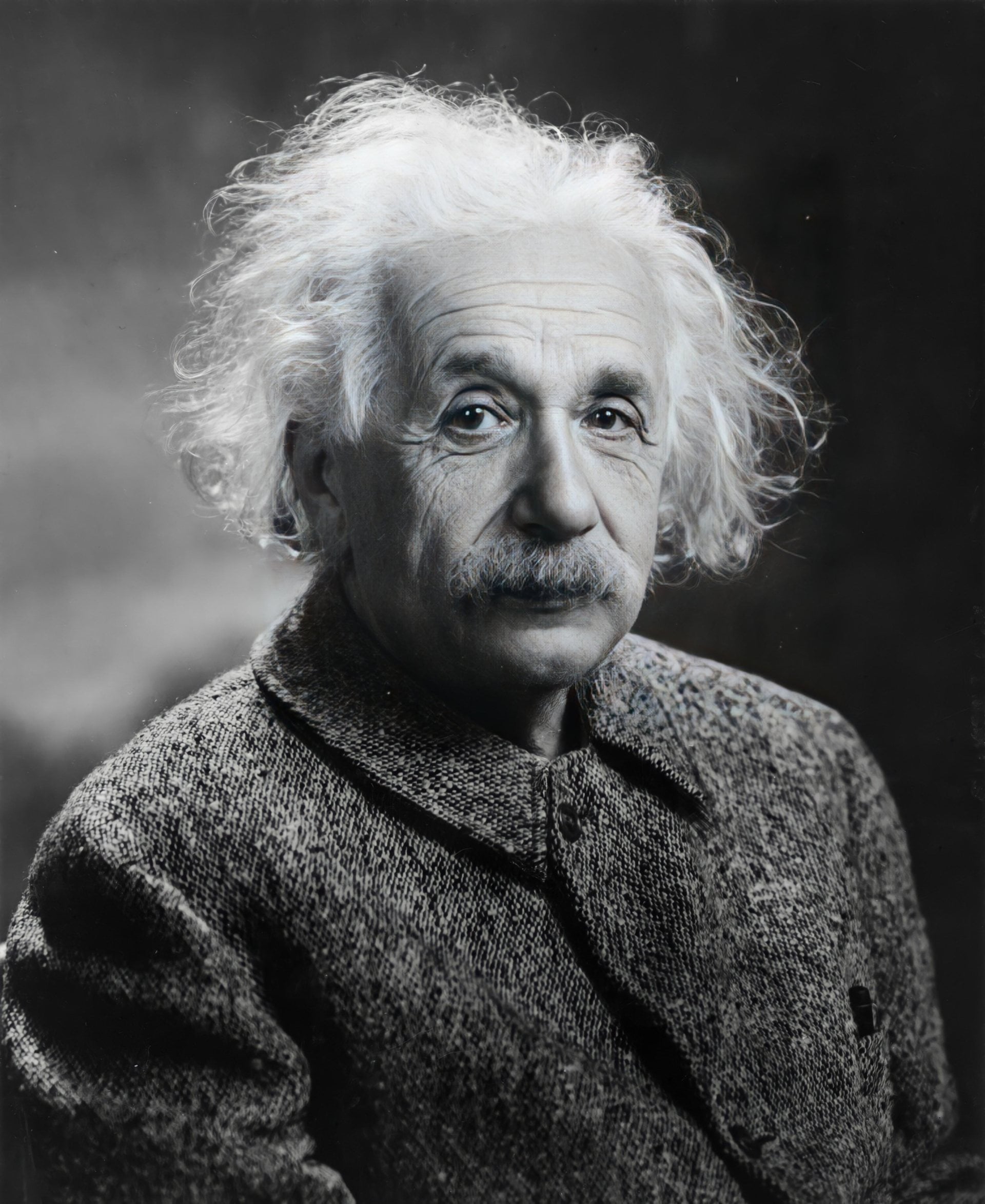
On November 25, 1915, Albert Einstein presented the final form of the equations at the heart of his general theory of relativity to the Prussian Academy of Sciences in Berlin. His work offered a new explanation of gravity: matter and energy bend space and time, and that curvature shapes how objects move. It helped resolve problems that older physics could not fully explain and changed scientists’ understanding of the universe. More than a century later, general relativity remains essential to studying black holes, explaining the expansion of the universe, and keeping satellite navigation systems accurate.
November 25 also marks turning points in diplomacy, independence, culture, and social change. Viewed in chronological order, these anniversaries show how individual decisions and larger historical forces have shaped lives across the world.
Major Historical Events
1120: The White Ship sinks
A ship carrying William Adelin, the only legitimate son of England’s King Henry I, sank after leaving Barfleur in Normandy. William and most of those aboard died. His death disrupted Henry’s plans for the succession and helped create the conditions for a prolonged struggle over the English crown.
After Henry died in 1135, his daughter Matilda and his nephew Stephen contested the throne during the conflict commonly called the Anarchy. The disaster illustrates how closely medieval government depended on family succession—and how one unexpected death could affect an entire kingdom.
1491: Terms are agreed for Granada’s surrender
Representatives of the Muslim ruler of Granada and the Catholic monarchs, Isabella of Castile and Ferdinand of Aragon, agreed to terms for the city’s surrender. Granada was the last Muslim-ruled state on the Iberian Peninsula. Its formal transfer followed on January 2, 1492.
The agreement initially promised protections for Muslim religious practice, property, and customs. Those guarantees were later undermined by policies of forced conversion and repression. Granada’s surrender ended centuries of Muslim political rule in parts of Iberia and became a major turning point in Spanish history.
1783: British forces leave New York City
The last British troops departed New York City, which they had occupied for much of the American Revolutionary War. George Washington and American forces entered afterward, making “Evacuation Day” a visible sign that British military control had ended.
The departure followed the peace settlement recognizing United States independence. For Loyalists and many formerly enslaved people who had sought protection behind British lines, evacuation also meant relocation and uncertain futures.
1915: Einstein completes general relativity
Einstein’s November 25 presentation brought years of work to a decisive point. His equations replaced the idea of gravity as simply a force acting across space with a description of curved spacetime.
The theory accounted for a puzzling feature of Mercury’s orbit and predicted that gravity would bend light. Observations during a 1919 solar eclipse helped bring Einstein international recognition. Later discoveries, including gravitational waves, provided further tests of the framework he completed that day.
1936: Germany and Japan sign the Anti-Comintern Pact
Nazi Germany and Imperial Japan signed an agreement directed against the Communist International, the organization associated with promoting international communist revolution. Secret provisions also addressed their relations with the Soviet Union.
The pact reflected shared strategic concerns, although the two governments had different regional ambitions. Italy joined in 1937. It became an important step in the alignment of powers later associated with the Axis, though it was not yet the full wartime alliance established in 1940.
1952: The Mousetrap opens in London
Agatha Christie’s murder mystery The Mousetrap opened at London’s Ambassadors Theatre after a provincial tour. Its enclosed setting, shifting suspicions, and surprise ending helped make it a lasting attraction.
The production became the world’s longest-running play. Its original uninterrupted run ended when theaters closed during the COVID-19 pandemic in 2020; performances resumed in 2021. Its history reflects both the appeal of detective fiction and the place of live theater in cultural life.
1960: The Mirabal sisters are murdered
Patria, Minerva, and María Teresa Mirabal were killed in the Dominican Republic by agents of Rafael Trujillo’s dictatorship. The sisters had participated in resistance to his government, and their deaths became a powerful symbol of its repression.
Their memory later helped inspire the observance of November 25 as a day opposing violence against women. In 1999, the United Nations formally designated the date as the International Day for the Elimination of Violence against Women.
1975: Suriname becomes independent
Suriname gained independence from the Netherlands, becoming a sovereign republic on South America’s northeastern coast. Johan Ferrier became its first president, while Henck Arron continued as prime minister.
Independence followed negotiations over the country’s political future. It also came amid substantial migration to the Netherlands, as many residents faced uncertainty about citizenship and economic prospects. The anniversary remains central to Suriname’s national history and its relationship with its former colonial ruler.
Notable Births
1562: Lope de Vega
Born in Madrid, Lope de Vega became one of the leading playwrights of Spain’s Golden Age. His plays mixed humor, romance, questions of honor, and social conflict in ways that appealed to broad audiences. His enormous output helped shape Spanish-language theater for generations.
1844: Carl Benz
German engineer Carl Benz was born in Mühlburg, now part of Karlsruhe. His gasoline-powered automobile, patented in 1886, was a landmark in the development of practical motor transport. Working alongside other early inventors—and supported by Bertha Benz’s pioneering long-distance drive—he helped establish the foundations of the automobile industry.
1914: Joe DiMaggio
Joe DiMaggio was born in Martinez, California, to an Italian immigrant family. As a New York Yankees center fielder, he became one of baseball’s most recognized players. His 56-game hitting streak in 1941 remains a Major League Baseball record and a lasting measure of sporting consistency.
Notable Deaths
1970: Yukio Mishima
Japanese novelist and playwright Yukio Mishima died by suicide after an unsuccessful attempt to rally members of Japan’s Self-Defense Forces behind his nationalist aims. His fiction explored beauty, identity, desire, and mortality. His literary achievements and political activities remain distinct but closely examined parts of his legacy.
2016: Fidel Castro
Fidel Castro died in Havana at age 90. A leader of the Cuban Revolution, he governed Cuba for nearly five decades and made the country a major participant in Cold War affairs. His rule combined expanded education and health services with one-party government, restrictions on political freedoms, and extensive state control of the economy.
2020: Diego Maradona
Argentine footballer Diego Maradona died at age 60. He led Argentina to victory in the 1986 World Cup and helped transform Napoli’s fortunes in Italian football. His exceptional skill, public prominence, and personal struggles made him one of the most widely recognized athletes of his era.
Across these anniversaries, November 25 connects scientific discovery with political change, artistic achievement, and individual lives.
More like this:


- Most Popular



- Top Stories



- Most Recent