
Illinois Officials, Organizations Respond As Pritzker Declines Trump School Voucher Program
The governor said Illinois will not join the Federal Scholarship Tax Credit program, arguing it lacks state oversight and could divert resources from public schools.
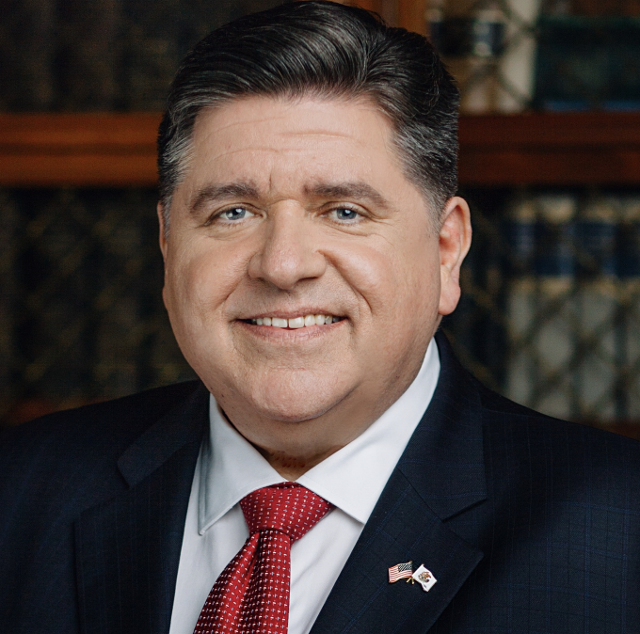 Gov. Pritzker Prioritizes Public Education and Declines Trump Administration’s Voucher Program
Federal Scholarship Tax Credit lacks accountability measures and taxpayer protections
CHICAGO – Governor JB Pritzker announced today that Illinois will not opt in to the Trump Administration’s Federal Scholarship Tax Credit (FSTC) school voucher program, reaffirming the Governor’s commitment to strengthening the state’s public schools and ensuring federal taxpayer resources remain accountable to the students and communities they are intended to serve.
President Trump created this voucher program to lure states into allowing individual donors to benefit from contributions to Scholarship Granting Organizations (SGOs). Participation in the voucher program would divert vital attention and resources away from Illinois students attending public schools, without guaranteeing equitable access or oversight of voucher beneficiaries.
“At a time when public school education needs investments more than ever, we should not siphon money from public schools for private education – especially as the Trump Administration's policies decimate education,” said Governor JB Pritzker. “We have a responsibility to do right by all of our students. Taxpayer funding should not subsidize donations to private schools that could discriminate based on religion, sexual orientation, or other characteristics.”
This voucher program must be evaluated in the broader context of the Trump Administration’s agenda: dismantling the U.S. Department of Education, withholding federal funds for public education, and uprooting essential protections for vulnerable students. While Trump touts the program as a win for students, his federal government is actively working against their success.
Following a comprehensive review of the Department of Treasury and Internal Revenue Service’s program guidance, the Governor’s Office determined the following critical flaws in the Trump Administration’s plan:
Zero State Discretion
Federal regulations explicitly prohibit states from setting strict guidelines and standards on the organizations handing out scholarships. States are not given any discretionary power after opting in to the program, meaning that federal resources are likely to mostly subsidize donations to SGOs supporting children enrolled in private schools without appropriate oversight, while public education needs remain unmet. The federal regulations prohibit states from imposing requirements on SGOs that are more restrictive than H.R.1, forbid states from restricting the type of schools that can benefit from the program, and prevent states from narrowing what scholarship funding can be used for.
Limited Benefits for Public School Students, Teachers, and Classrooms
The FSTC is promoted as a national school choice program. While the federal program allows public schools to potentially benefit from funding and services offered by SGOs, the federal regulations constrain the discretion of governors to shape the program and limit opportunities for public schools to benefit from the support offered by SGOs. The voucher program is intended to incentivize the privatization of education. By officially opting in for this program, Illinois is given no certainty of resources for the 1.8 million Illinois students that attend public schools.
Uncapped Drain on Federal Revenue
This tax credit diverts funds from federal revenue. The FSTC is estimated to divert anywhere from $2.7 to $6.1 billion in federal revenue annually. The federal government should be using these taxpayer dollars to improve reading and math scores in public schools.
Subsidizing Private Tuition with Public Dollars
The FSTC is unlikely to help vulnerable student populations, instead bolstering well-resourced households. The scholarship eligibility margin – including students from households that earn within three times of the area’s median income – means that the primary benefactors of this program will not include children from under-resourced households. This is not free money; this is forgone federal revenue being redirected, in many cases, to families to fund the private education they’ve already chosen and tuition bills they’re already paying.
ILLINOIS FIGHTS FOR ALL STUDENTS
Rather than signing on to a false premise, the Pritzker Administration remains focused on direct and accountable investments for the futures of Illinois public school students. This includes the historic, targeted investments of more than $2.5 billion in evidence-based funding and other programs made throughout the Governor’s tenure that have helped schools expand opportunities for students and strengthen academic outcomes statewide in public education.
In “Fighting for Illinois: Day One Agenda,” Governor Pritzker outlined nearly 200 policy proposals for the new Congress to take up in 2027 – including several measures to deliver on public education. This includes restoring the Department of Education to full capacity, resuming federal special education oversight and support, and other actions to repair the damage to our education system by H.R. 1.
ILLINOIS LEADERS SUPPORTING PUBLIC SCHOOLS
U.S. Congressional Leaders
“First, congressional Republicans used the so-called One Big Beautiful Bill Act to drastically gut Medicaid and cut off Illinoisans’ access to SNAP. Now with the same legislation, a president known for his scams and failed businesses is trying to sell us on the idea of a voucher program that would gut resources from public schools,” said U.S. Senator Dick Durbin. “Illinois won’t fall for it. Our students deserve better than Trump’s unregulated, short-sighted voucher program.”
“The strength of our public education system helps determine the future of our children, our workforce, and our entire state,” said U.S. Senator Tammy Duckworth. “We will not allow a federal voucher program created by a failed businessman jeopardize that by draining resources from our public schools. Every child in Illinois deserves a quality education no matter their zip code or their family's income. Illinois will protect the public school system our kids rely on from Trump’s plan to put private schools ahead of public classrooms.”
“As a former public school teacher, I know how important a strong public education is to a child's future. Every student deserves the opportunity to learn, grow, and succeed,” said U.S. Congresswoman Jan Schakowsky. “Are we really going to let the Trump administration dictate what our students' futures look like? We must keep fighting for the resources our students, teachers, and schools need to succeed. I applaud Governor Pritzker for standing up for public education and putting Illinois students first.”
“Access to the highest quality of public education feasible should be the goal for every child in our state. There should be no winners and no losers,” said U.S. Congressman Danny K. Davis. “Equal opportunity should be the goal. I applaud Governor Pritzker for looking out for all of our children. He knows that education is the key and that public education deserves our highest level of support.”
Illinois General Assembly Leaders
“Ultimately, diverting public funds to private schools without protections for students is bad public policy,” said State Representative Kelly Cassidy (D-Chicago). “Under this program, a school that teaches that humans and dinosaurs existed at the same time or that women should submit to their husbands and should not be protected from domestic violence could receive tax dollars. While there are limited options to allow public schools to access these funds, the lack of oversight afforded to states over how the programs operate is deeply concerning. Given how earlier versions of these programs at state levels showed the vast majority of ‘scholarship’ recipients were already private school students before accessing the quasi-voucher program, that lack of oversight is reason enough to opt out of yet another handout to wealthy private schools.”
“I applaud Governor Pritzker's decision to reject this federal voucher program, which would pull tax dollars out of our public schools to subsidize private tuition and widen the inequities we've worked hard to close,” said State Representative Mary Beth Canty (D-Arlington Heights). “The federal government should follow Illinois' lead and invest in quality public schools for every student in every zip code. I look forward to working with the Governor, my colleagues in the General Assembly, and education advocates to keep building a world-class public education system for every child in Illinois.”
“Illinois' responsibility is to ensure that every child, regardless of their zip code, family income or circumstances, has access to a high-quality education. We cannot support an approach that risks diverting resources away from the public education system that serves all students,” said Senate Majority Leader Kimberly A. Lightford (D-Maywood). “Educational opportunity should not come at the expense of equity. Our priority must remain investing in strong public schools, supporting the students with the greatest needs, and ensuring that every community has the resources to help its children succeed.”
“Every child deserves access to a quality education, regardless of their ZIP code, family income or background,” said State Senator Graciela Guzmán (D-Chicago). “I support Illinois' decision to forgo participation in the Federal Scholarship Tax Credit program because our priority must be strengthening the public schools that serve our communities. We must remain focused on addressing longstanding educational inequities, supporting our educators, and ensuring every student has the resources and opportunities they need to thrive.”
“As a former public school teacher and chair of the Senate Higher Education Committee, I understand how important it is for our public schools to have the resources they need,” said State Senator Mary Edly-Allen (D-Grayslake). “Illinois' decision to forgo participation in the Federal Scholarship Tax Credit program reflects our commitment to supporting public education and ensuring every student has the opportunity to succeed, no matter where they live or how much money their family makes.”
“In an age where we are seeing the federal Department of Education be stripped of funding and resources, it is crucial that we continue to ensure our public schools receive the funding they need,” said State Senator Meg Loughran Cappel (D-Shorewood). “This decision was not made lightly. After speaking with stakeholders in public and private education, it was clear that in order to provide the most equitable education possible for students, we could not participate in the Federal Scholarship Tax Credit program. Public tax dollars should go to our public schools.”
Education Leaders
“I applaud Governor Pritzker for deciding to keep Illinois out of the Federal Scholarship Tax Credit program,” said Dr. Tony Sanders, State Superintendent of Education. “The federal government should be in the business of strengthening public schools, not using scarce resources to promote school choice. I am proud to live in a state that invests in public schools that open their doors to every child.”
“Public money should stay in public schools – period. We are thrilled Gov. JB Pritzker agrees,” said Karl Goeke, President of the Illinois Education Association. “The Illinois Education Association will continue to work with the Governor to ensure our public schools are more adequately funded, and on things that improve the lives of our students and dedicated educators.”
“Illinois PTA applauds Governor Pritzker’s decision to opt Illinois out of the Education Freedom Tax Credit program,” said Les Malloy, President of the Illinois Parent Teacher Association. “Public funding carries a responsibility to provide public access, governance, and accountability. Public dollars belong in public education, supporting schools that serve all children and are essential to our communities.”
“Illinois Families for Public Schools is pleased that Governor Pritzker is standing with public schools and public school students by saying no to this harmful Trump administrative initiative,” said Cassie Creswell, Executive Director of Illinois Families for Public Schools. “Public dollars should go to public schools that serve all kids, not private schools that discriminate, as we know from our now defunct state voucher program. Under resourced public schools in Illinois need sustainable funding, including full federal funding for students with disabilities promised decades ago—not tax code gimmickry designed to subsidize wealthy families. We look forward to continued advocacy with public schools supporters across Illinois for policy that strengthens the public schools that are the heart of our communities.”
“PEER Illinois applauds Governor Pritzker and his administration for taking this critical step to protect public education and affirm Illinois’s position that public dollars belong in public schools,” said Beatriz Diaz-Pollack, Director of the Partnership for Equity and Education Rights (PEER) Illinois. “Parents, youth, and community members across Illinois love their neighborhood schools and understand that harmful voucher schemes are not a pathway to a thriving and equitable public education system. We celebrate this decision to resist federal education policy that will exacerbate disinvestment and deepen inequities in public schools, and we look forward to the collective work ahead to make excellent educational opportunities a reality for all.”
Disability Advocacy Leaders
“School voucher programs do not provide students with disabilities with the educational legal protections they are guaranteed under federal law,” said Karen Tamley, President and Chief Executive Officer of Access Living. “It leaves these families with fewer school options, not more and would harm students with disabilities in Illinois.”
“The Federal Scholarship Tax Credit would reduce the legal rights of students with disabilities,” said Beverly H. Johns, President of the Learning Disabilities Association of Illinois. “The Learning Disabilities Association of Illinois commends the Governor of our State for rejecting this tax credit and for putting the needs of students and their families first. All students have the right to a free appropriate public education. It is critical that our priority should be meeting the needs of all of our students, including those with specific learning disabilities. Working together we can achieve needed resources for students and educators within the public schools.”
Civil Rights Leaders
“We are proud to stand alongside Governor Pritzker and his decision to opt Illinois out of the harmful federal voucher program,” said Venu Gupta, Executive Director of the Chicago Lawyers’ Committee for Civil Rights. “Our communities, students, and families deserve a strong public education system that serves all students. At a time when the Department of Education is being dismantled at the federal level, it is the responsibility of the states to preserve our most foundational public good – our public schools. Voucher programs have a long history rooted in resistance to school integration, raise concerns about civil rights protections, and impede our efforts to build an inclusive, multiracial democracy. Illinois is standing on the right side of history with this decision.”
“Our focus should be on increasing federal support for public education, not diverting taxpayer money to support unaccountable, unregulated private schools,” said Becky Simon, President of the League of Women Voters of Illinois. “The proposed rules do not allow Governor Pritzker to impose even basic quality and safety standards for the private schools accepting the vouchers, or to ensure equitable distribution of these dollars across the state. Waste, fraud, and abuse of taxpayer dollars spent on school voucher programs is rampant in many states with universal vouchers, but this program has only minimal federal guardrails– and worse, it prohibits state oversight to reduce misuse of public dollars. The LWVIL believes that a strong, well-funded public education system is not only mandated by our state constitution but is also a basic prerequisite for a thriving democracy. The Governor’s choice to opt out of the federal school voucher program will strengthen democracy and provide a stronger future for Illinois communities and children.”
“Private school voucher programs undermine the civil rights protections that Asian American and immigrant students rely on to access the education they deserve,” said Grace Pai, Executive Director of Asian Americans Advancing Justice Chicago. “Public resources should strengthen public education. We are glad to see Gov. Pritzker reject this attempt to siphon funding away from public schools.”
Community Leaders
“Community Organizing and Family Issues (COFI) and the parent leaders of POWER-PAC IL thank the Governor for standing up to the federal administration and opting out of this destructive federal tax program,” said Ellen Schumer, President of COFI and Rosazlia Grillier, Board President of COFI. “With public schools in desperate need of increased funding, this is no time to divert tax funds from our public school system, which serves 90% of Illinois students.”
“Governor Pritzker made the right decision to opt-out of the Federal Scholarship Tax Credit, which is one of many misguided initiatives the Trump Administration embedded in H.R. 1,” said Ralph Martire, Executive Director of the Center for Tax and Budget Accountability. “Among other things, the FSTC creates a federal voucher-like system to use taxpayer dollars to subsidize private school tuition. The Trump Administration estimates it’ll cost around $26 billion per year by 2030, making it the largest federal expenditure on education, and fully $7.7 billion, or 42% more than what the feds invest annually in educating students from low-income households under Title 1. It would be far better—and do significantly more to improve student academic outcomes, if instead of squandering taxpayer dollars on the FSTC, the feds invested more in programs like Title 1 that actually benefit low-income children.”
Religious Leaders
“The federal voucher program breaches the wall of separation between church and state,” said Reverend Gerald R. Phillips of Central Baptist Church in Springfield. “Without that wall, our public schools will be severely weakened.”
“Governor Pritzker, I am grateful for your decision to opt out of the Federal Voucher Program,” said Reverend David Anderson of Community Baptist Church in Warrenville. “Opting out is a clear affirmation of public education, available to all Illinois children, and of the significance of personal choice regarding freedom of religion, unencumbered by government involvement.”
“I support Governor Pritzker’s decision for Illinois to opt out of the federal school voucher program because I believe public dollars should strengthen the public schools that serve all our children,” said Reverend Karen E.K. Atkins, Executive Pastor of Immanuel Church Unusual in Chicago. “This choice affirms the commitment to giving every student, in every neighborhood, a well-resourced school where they can learn and thrive. Thank you.”
“Thank you, Governor Pritzker, for defending religious freedom, honoring the separation of church and state, and affirming our shared responsibility to provide quality public education for every child in Illinois,” said Reverend Georgia McKee of Glencoe Union Church in Glencoe.
“Governor Pritzker, thanks for standing up for public schools, of which I'm both a proud graduate and parent,” said Reverend Jillian Westerfield of Lake Street Church of Evanston in Evanston. “As a minister, I believe we are at our best when we find common ground across differences and show up for one another rather than divide ourselves."
“Governor Pritzker, thank you for ensuring that public money will go to public schools in Illinois where children of all faiths and no faith will benefit,” said Reverend Carol McVetty and Reverend Douglas Harris, American Baptist Church of Metro Chicago. “Thank you for protecting the religious freedom of all Illinoisans.”
Governor Rejects Federal School Voucher Program
Submitted by the Illinois Education Association
SPRINGFIELD – Gov. JB Pritzker announced Tuesday that Illinois will not take part in a federal school voucher plan touted by the Trump administration.
Vouchers take tax dollars away from public education and give it to private schools, further depriving already-underfunded public schools and harming students of color and those who live in rural areas.
“Public money belongs in public schools, end of story,” said Karl Goeke, president of the Illinois Education Association. “Illinois’ 1.6 million public school students, their parents and educators across Illinois counted on Governor Pritzker to reject vouchers and protect public education, and he did. We are thrilled and thankful.”
IEA called on the governor not to participate in the federal voucher scheme, and IEA members sent hundreds of emails and made phone calls urging the governor to make this move.
More than 60 percent of public schools in Illinois are underfunded. The federal plan, much like the state’s failed “Invest in Kids” voucher plan, drains money from public schools. In Illinois, it drained up to $75 million in state money from schools that educate 86 percent of students.
“Our public schools are full of opportunity, serve as places for communities to gather, and provide space for students to learn, grow and thrive. We should be investing in them at every turn,” Goeke said.
In Illinois, we learned that vouchers:
Benefit more white students than students of color;
Fund schools that are not subject to the same testing standards as those in public schools;
Do not hold private school teachers to the same professional standards as those in public schools;
Fail to show how many students actually switched from public schools to private schools, or whether public money funded students who had been in private schools all along;
Sent public money to private schools, which can and DO discriminate based on physical or emotional special needs, gender identity, their moral values and religion.
IEA knows from its own bipartisan polling that 69 percent of residents in Illinois support increasing funding to public schools and that 85 percent believe ALL students are entitled to a public education.
“Study after study shows that voucher programs do not benefit students. They are a scam. Our children deserve more than this. Illinois students should be able to count on a thriving public education system no matter where they live, the color of their skin or how much money their families have. We look forward to working with the governor to secure more funding for public schools as we go forward.”
The 135,000 member Illinois Education Association (IEA-NEA) is the state’s largest union. IEA represents Pre K-12 teachers outside the city of Chicago and education support staff, higher education faculty, retired education employees and students preparing to become teachers, statewide.
STATEMENT ON GOVERNOR PRITZKER’S DECISION TO KEEP ILLINOIS OUT OF FEDERAL SCHOOL VOUCHER PROGRAM
Submitted by the League of Women Voters of Illinois and Illinois Families for Public Schools
Chicago, IL — The League of Women Voters of Illinois (LWVIL) and Illinois Families for Public Schools (IL-FPS) applaud Governor Pritzker’s well-considered decision today to opt Illinois out of a deeply flawed federal school voucher program.
Rejecting federal vouchers is the right call for many reasons, as recognized by a broad coalition of organizations, including civil rights organizations, good government advocates, labor unions and community organizations, who have stood with us on this issue since Congress passed the law to create the program in July 2025.
As a state, Illinois is now further from fully funding our public schools than we were just a few years ago. There is a pressing need to provide schools with the resources they need to welcome all students who come in their doors and whom they are obligated to educate.
LWVIL and IL-FPS believe that a strong, well-funded public education system is not only mandated by our state constitution but is also a basic prerequisite for a thriving democracy. A well-educated citizenry ultimately benefits all of us in a democracy.
The federal voucher program, however, would not have provided a solution to bring us closer to fully funding our public schools. This voucher program was designed to greatly increase the amount of federal tax dollars flowing to private schools, primarily to subsidize the costs of students whose families were already paying for them to attend private schools.
At the same time, federal funding for public education still falls far below what was promised for special education more than half a century ago, and key federal public education support is disappearing at a rapid pace as the Department of Education is dismantled.
Both the underlying law and the regulations to implement the voucher program make it clear that states will have no room to exercise oversight in how tax dollars are spent or to shape the program to serve the public good.
The proposed rules do not allow states to impose even basic quality standards for the private schools accepting the vouchers. Nor do the rules allow the state to ensure equitable distribution of these dollars. As demonstrated consistently in state voucher programs, wealthier families with students already attending private schools would benefit most.
Even with the possibility of vouchers for public school students to use outside the regular school day, our lowest-funded schools would find it hardest to shoulder the additional administrative burdens needed to solicit funds and choose vendors and scholarship recipients. Local public school districts would be enticed to chase the chimera of uncertain, unstable dollars from the federal vouchers while also dealing with underfunding from the state for Evidence-Based needs.
Waste, fraud, and abuse of public funds is rampant in many state voucher programs, but Congress created this program with only minimal guardrails—and worse, it prohibits any additional state oversight to reduce misuse of public dollars.
While public schools welcome and serve all students, many private schools can and do discriminate against students with disabilities, different religious beliefs, and other characteristics. The federal voucher program will not constrain such practices.
LWVIL and IL-FPS will continue to advocate for full, fair funding for our public schools in Illinois, and we urge the General Assembly to take action to support the governor’s decision by passing legislation to keep our state out of the program for good.
We further urge the governor to ask our Congressional representatives to repeal this legislation and send more funding through long-established and proven channels to support public schools.
Our public schools are one of our most precious public resources. We understand that equitable access to a quality K-12 public school education is the foundation on which opportunities for our kids are built. We firmly believe that an educated electorate is essential to individual and community prosperity, and to active and informed citizenship in the years to come. And therefore, we believe that the governor’s choice to opt out of the federal school voucher program will strengthen democracy and provide a stronger future for our communities and our children.
Further Background on the Federal Program
In the federal voucher program, federal tax dollars will be funneled through private scholarship granting organizations (SGOs). Taxpayers can direct a portion of their federal tax bill to go to a specific SGO, which will issue vouchers to pay for out-of-pocket costs of education for individual students. Children may apply for a voucher to any of the SGOs on a state list, whether they attend private school, public school, or no formal school at all. The SGO decides who will receive a voucher, the amount of the voucher, and where the voucher can be used.
Under this scheme, taxpayers receive a 100% credit for their payments to the SGO, and the federal government then has less money for all its operations, including federal funding for public education. The Treasury estimate is that the program will cost $26 billion, mostly flowing to private schools.
Ever since the passage of the federal school voucher program in July 2025, and the October 2026 release of proposed regulations, we, along with many other public school advocates, have closely followed the debate about whether the program would help or harm our Illinois public education system, and whether Governor Pritzker should exercise his discretion to join the program or take a pass.
The regulations clarify that any state that participates must include every SGO that applies on its state list that meets the few basic requirements stated in the federal tax code. Schools and programs funded by the SGO vouchers will not be required to follow state and federal civil rights laws protecting access to education, no matter a student’s disability status, gender identity, home language, religion, or income. Children receiving vouchers, and those denied vouchers, will have no enforceable rights. The regulations expressly prohibit states from placing any stronger requirements on SGOs’ operations.
Because private schools already charge families for all programs and services, funneling tax dollars to cover those costs through SGOs will be straightforward. In addition, the private school industry already has infrastructure to solicit contributions from wealthy individuals, and parents of private school students are accustomed to writing tuition checks.
Public schools are not set up to solicit dollars from individuals and charge families for providing children with education, and, crucially, they should not be doing so. The design of the federal voucher program means that it will surely increase inequity, even within the public school system, with funds disproportionately going to wealthy schools and communities. Underresourced schools will get crumbs, and even those crumbs will require an administrative apparatus that does not exist and for which the federal government has allocated no resources.
A case study of the likely fiscal impact of the voucher program on three Illinois school districts by IL-FPS and the Institute for the Public Good released earlier this fall demonstrated that public schools are more likely to be losers than winners financially and that, when funding does flow to public schools students, it is likely to go to schools with higher-income families, increasing already existing inequities across school districts.
Meanwhile, public school budgets will be further drained as some portion of their students use vouchers to leave for private school or homeschool. If students were enticed to leave the public system, and were accepted by a private school, the public schools they left would receive less funding from the state and federal sources, even as the concentration of students with greater needs increases. The possibility of vouchers for public school students for services outside the school day would not outweigh this loss of funding.
The federal school voucher program would undermine the state’s constitutional duty to provide a free high quality education for all persons to the limits of their capacities through the secondary level, and to bear the primary responsibility for financing the public education system.
About the League of Women Voters of Illinois
The League of Women Voters of Illinois is a nonpartisan organization that encourages informed and active participation in government. It influences public policy through education and advocacy and does not support or oppose any political parties or candidates. With over 100 years of experience and more than 800 local and state affiliations, the League is one of America’s most trusted grassroots organizations. For further information, visit lwvil.org.
About Illinois Families for Public Schools
Illinois Families for Public Schools (IL-FPS) is a statewide, grassroots, non-profit 501c4 advocacy group founded in 2016. IL-FPS is the voice of public school families in Springfield and across the state, advocating to defend and improve Illinois public schools. More at ilfps.org.
IFT and CTU Applaud Gov. Pritzker's Decision to Keep Illinois Out of Trump's Voucher Scheme
Educators say rejecting vouchers is the floor, not the ceiling, and call on the governor and lawmakers to make a down payment on the $7 billion owed to Illinois schools this veto session
Submitted by the Illinois Federation of Teachers
CHICAGO – The Illinois Federation of Teachers (IFT) and the Chicago Teachers Union (CTU) today applauded Gov. JB Pritzker's decision not to opt Illinois into the Trump administration's federal voucher tax credit program.
Educators, parents and students pushed for this decision all year. In January, IFT joined a statewide coalition letter asking the governor to keep Illinois out. In April, the Chicago Board of Education passed a resolution urging him to reject the program. In June, IFT and CTU President Stacy Davis Gates joined educator union presidents from across the country in calling on Democratic governors to say no to Trump's voucher scheme.
"Public dollars belong in public schools," said Davis Gates. "Trump's voucher scheme was built to pull money out of public education with zero oversight and zero educational benefit for students. Illinois' 1.8 million public school students deserve better, and today they got it. Gov. Pritzker did the right thing in rejecting Trump’s voucher program."
"And to be clear, saying no to vouchers is the floor, not the ceiling," Davis Gates continued. "Look at Texas. Gov.-elect Gina Hinojosa won by promising to end the voucher program there and fully fund public schools. She's going all in for Texas students. Students from Chicago to Cairo deserve the same from Gov. Pritzker. Our schools are $7 billion short of what the law mandates for our students. Keeping vouchers out stops our schools from losing more. Fully funding them is how we make them whole. On Wednesday, Dec. 2, educators from across Illinois will be back at the Capitol to ask lawmakers and the governor to make a down payment on their past-due balance this veto session. If the governor and the General Assembly can figure out how to benefit a billion-dollar sports corporation, they can figure out how to pay down their past-due balance to the state’s young people. Our students are the home team."
On Wednesday, Dec. 2, CTU members will board buses at 6:15 a.m. at the Chicago Teachers Union, 1901 W. Carroll Ave., to join IFT members at the Capitol for a second veto session Lobby Day, with a press conference at 11 a.m. in the Blue Room. Illinois lawmakers ended the state's own private school tax credit program, Invest in Kids, in 2023. In Texas, Gov.-elect Gina Hinojosa defeated Gov. Greg Abbott this month after campaigning to end the state's $1 billion voucher program and fully fund public schools.
The Illinois Federation of Teachers (IFT) represents 105,000 teachers and paraprofessionals in pre-K-12 school districts throughout Illinois, faculty and staff at Illinois' community colleges and universities, public employees under every statewide elected constitutional officer, and retirees.
The Chicago Teachers Union (CTU) represents more than 30,000 educators and school professionals working in Chicago's public schools.
AFC Responds to Governor Pritzker’s Decision to Deny K-12 Scholarships to 1.9M Illinois Students
Submitted by American the Federation for Children
Dallas, TX – The American Federation for Children condemns Illinois Governor JB Pritzker’s refusal to opt in to the Education Freedom Tax Credit (EFTC), denying 1.9 million Illinois public and private school students scholarship opportunities. These scholarships can be used for tutoring, special needs services, before and after school care, and more.
AFC research shows that if just 10% of Illinois taxpayers participate, that would generate nearly $743 million to support Illinois families and students. Because of Governor Pritzker’s decision, Illinois taxpayers will still be able to contribute, but they will be forced to send their dollars to SGOs in states that have opted in, like neighboring Indiana, Missouri, or Iowa.
Governors from both parties have opted in, recognizing that this opportunity will bring life-changing new education resources to students and families without taking a single dollar from public schools or state or local budgets.
Statement from Tommy Schultz, CEO, American Federation for Children:
“It is a remarkably tone-deaf moment from Governor Pritzker, just before Thanksgiving, to deny 1.9 million K-12 students in Illinois access to life-changing educational resources, as families are faced with rising costs and an affordability crisis. Sadly, unlike Democratic governors in Colorado, New Mexico, and New York, Governor Pritzker is playing politics with children’s opportunities, blocking a historic new opportunity that could have unlocked millions in scholarship support for students in public and private schools, at no cost to the state. Make no mistake: the Education Freedom Tax Credit could have unlocked needed resources for families and students, but Governor Pritzker chose to let those resources go to other states. We will continue to stand with families asking for opportunity.”
More like this:


- Most Popular


- Top Stories

- Most Recent