
Army-Navy Rivalry Began on Nov. 29, 1890, in a Day of Sports Milestones
The date also marks the Montreal Forum’s opening, Detroit’s first Thanksgiving home game, Scotty Bowman’s first NHL coaching win and other sports milestones.
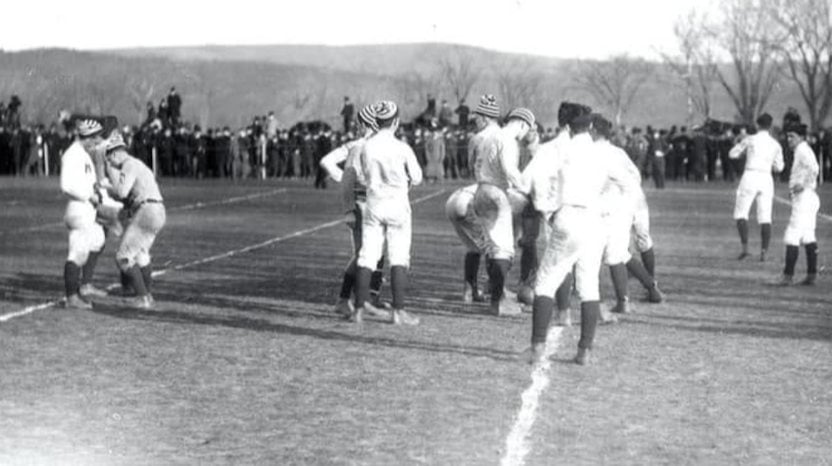 A 24-0 shutout at West Point on Nov. 29, 1890, began a college football rivalry that would become a national tradition. Navy defeated Army in the academies’ first meeting, establishing a contest whose importance would extend well beyond the scoreboard. The game connected football with the identity and pride of the two service academies, giving generations of cadets and midshipmen a common competitive stage.
For this Nov. 29, 2026, look back, the historical trail also includes the opening of the Montreal Forum, Chicago’s role in launching Detroit’s Thanksgiving football tradition, a coaching breakthrough in St. Louis, a consequential baseball signing and the announcement of a basketball farewell. Each illustrates a different kind of turning point: the start of a rivalry, the creation of a sports landmark or a decision that helped define a career.
Get The Latest News!
Don't miss our top stories and need-to-know news everyday in your inbox.
Army’s first game against Navy required more than finding an opponent. Cadet Dennis Mahan Michie, who had learned football at Lawrenceville Preparatory School, pushed to introduce the sport at West Point. Navy already had a team. Michie helped arrange a challenge from Annapolis and won support from academy leaders who persuaded a reluctant academic board to permit the contest, provided it was played at West Point. Navy won decisively, but Army had secured the beginning of something lasting.
On Nov. 29, 1924, hockey gained one of its defining venues when the Montreal Forum opened with the Canadiens defeating the Toronto St. Patricks 7-1. The game inaugurated an arena that would become closely associated with the Canadiens and with the history of professional hockey in Canada. It also came during a period of NHL growth: Boston and a second Montreal franchise joined the league for the 1924-25 season.
The Forum’s connection to the Canadiens was not as straightforward as its later reputation might suggest. The building was originally constructed for the Montreal Maroons, not the Canadiens. The Canadiens made it their home in 1926 and remained until 1996. That long association helped transform a new professional sports building into an enduring symbol of the game, eventually recognized as a National Historic Site of Canada.
Football supplied another lasting institution on Nov. 29, 1934, when the Chicago Bears defeated the Detroit Lions 19-16 in Detroit’s first Thanksgiving Day home game. About 26,000 fans filled University of Detroit Stadium for a matchup against the undefeated, defending NFL champions. Chicago took the victory, while Detroit gained the foundation of a holiday tradition that became central to the franchise’s identity.
Lions owner George A. Richards had moved the franchise from Portsmouth, Ohio, earlier that year. In a city where the baseball Tigers commanded attention, he needed a way to put his football team in the spotlight. Richards arranged for NBC radio to carry the Bears game across 94 stations. The Pro Football Hall of Fame identifies it as the first nationally broadcast NFL game, making the afternoon significant for the league as well as its two teams.
On Nov. 29, 1967, Scotty Bowman earned his first NHL coaching victory when the St. Louis Blues beat the Los Angeles Kings 3-2.
The milestone came during the Blues’ inaugural season. Bowman had taken over behind the bench that November, beginning a head-coaching career that continued through 2002. His teams eventually recorded 1,244 regular-season victories and 223 playoff victories, and he coached nine Stanley Cup champions. The modest one-goal win in St. Louis was the first entry in that extraordinary career total. For River Bend hockey followers, it places a major coaching career’s starting point close to home.
Baseball’s balance of power shifted on Nov. 29, 1976, when free-agent outfielder Reggie Jackson signed a five-year contract with the New York Yankees.
Jackson’s arrival gave the Yankees an established star as the club sought to turn its return to the World Series into a championship. The signing became one of the defining moves of baseball’s early free-agent era. Its payoff was especially clear the following October: Jackson hit three home runs in the clinching sixth game of the 1977 World Series against the Los Angeles Dodgers. A November transaction had helped set the stage for one of the sport’s signature postseason performances.
Finally, on Nov. 29, 2015, Kobe Bryant announced that he would retire after the season, sharing his decision through a poem titled “Dear Basketball.”
The announcement established an endpoint for a 20-year NBA career. Bryant completed it April 13, 2016, scoring 60 points as the Lakers defeated the Utah Jazz 101-96. The five-time champion’s final performance gave the farewell a remarkable competitive finish. Nov. 29 marked the announcement, not his last game — an important distinction on a date remembered for both beginnings and the first steps toward an ending.
More like this:
- Most Popular

- Top Stories

- Most Recent