
This Day in Music History: Nov. 29, From the Beatles’ Breakthrough to a Tribute for George
On November 29, 2026, an anniversary revisits the Lennon and McCartney record that helped carry Beatlemania across the Atlantic and reshape American popular music.
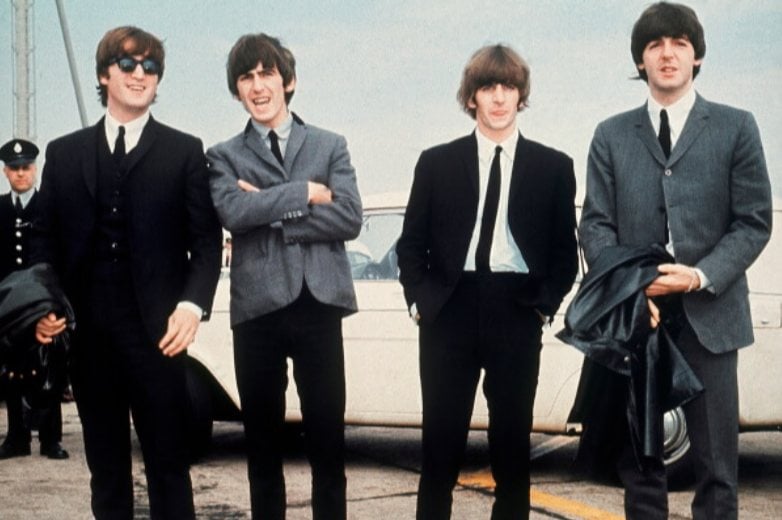 On Nov. 29, 1963, the Beatles released “I Want to Hold Your Hand” in Britain, putting into circulation the record that would become their first American No. 1. Written by John Lennon and Paul McCartney, the single helped turn a British phenomenon into an international force and opened the way for the British Invasion of American popular music. Its anniversary on Sunday, Nov. 29, 2026, anchors a date that also connects Italian opera’s arrival in New York, the Grammys’ television debut, an early Metallica performance and a tribute to George Harrison.
The broader story begins on Nov. 29, 1825, when a company led by Spanish tenor Manuel García performed Gioachino Rossini’s “The Barber of Seville” at New York’s Park Theatre. The production opened the first Italian opera season in the United States. García’s company presented the work in its original Italian, giving American audiences a different experience from the English-language adaptation previously staged in New York.
Get The Latest News!
Don't miss our top stories and need-to-know news everyday in your inbox.
Among the performers was García’s 17-year-old daughter, who later became internationally celebrated as Maria Malibran. The family’s appearance was more than a visiting attraction: It helped establish a lasting place for foreign-language opera in New York. Columbia University traces that development forward to the Metropolitan Opera’s founding in 1883. The milestone was not America’s first encounter with musical theater or opera, but a turning point in how European operatic works reached audiences here.
On Nov. 29, 1959, another musical institution reached a new audience when the Grammy Awards appeared on television for the first time. NBC aired a taped “Sunday Showcase” associated with the second Grammy presentation, hosted by Meredith Willson, the composer and writer behind “The Music Man.” It was an early step in taking the recording industry’s honors beyond private dinners and into American homes.
The program’s performers reflected an unusually broad musical field: Ella Fitzgerald, Duke Ellington, Nat King Cole and Bobby Darin shared the lineup with classical pianist Van Cliburn, the Kingston Trio and others. Darin’s “Mack the Knife” won record of the year, while Frank Sinatra’s “Come Dance With Me!” took album of the year. The broadcast introduced viewers to an awards institution that treated jazz, pop, classical and folk recordings as parts of the same larger industry, even while recognizing them in separate categories.
Four years later, “I Want to Hold Your Hand” arrived on Parlophone in Britain with “This Boy” on the reverse side. Produced by George Martin, the single was also a recording milestone for the Beatles: It was their first record made with four-track equipment. Behind its direct romantic message was a group beginning to gain access to greater studio flexibility.
The song’s British success preceded its American breakthrough. It replaced the Beatles’ own “She Loves You” atop the British singles chart and stayed at No. 1 for five weeks. Capitol released it in the United States on Dec. 26, 1963; it reached No. 1 on the Billboard Hot 100 on Feb. 1, 1964. The Nov. 29 anniversary marks the British release, not the American release or the later chart victory — distinct steps in the record’s journey across the Atlantic. On Nov. 29, 1982, Metallica played the Old Waldorf in San Francisco on a bill that also included Exodus and Vicious Rumors. The band’s official concert archive documents a set packed with titles that would become central to its early identity, including “Hit the Lights,” “Seek & Destroy,” “Whiplash” and “Metal Militia.” The record of the show captures those songs in a club setting rather than on a distant arena stage.
The set also included “The Mechanix,” “Phantom Lord,” “Jump in the Fire” and “No Remorse,” with “The Prince” listed as the encore. Looking back through that running order offers a concrete picture of the young band’s repertoire. Rather than reducing Metallica’s beginnings to a later success story, the date preserves a specific night, venue and collection of songs from its formative performing years.
On Nov. 29, 2002, London’s Royal Albert Hall hosted Concert for George, marking the first anniversary of Harrison’s death. Olivia Harrison and Eric Clapton organized the tribute, which brought together Paul McCartney, Ringo Starr, Tom Petty, Billy Preston, Jeff Lynne, Dhani Harrison, Ravi Shankar, Anoushka Shankar and other performers. Its scope embraced both Harrison’s songs and music he loved.
One especially personal moment came when McCartney began “Something” alone on ukulele before the performance expanded into a full-band arrangement. The evening made remembrance an act of performance: Friends and collaborators carried Harrison’s music back onto the stage. On a date associated with the Beatles’ expanding reach in 1963, the 2002 concert offered a different measure of musical influence — the artists willing to gather and play together in a colleague’s honor.
This Day in Music History: Nov. 28, From the Opry’s First Broadcast to Lennon’s Last Major Concert
A Nashville radio broadcast on Nov. 28, 1925, helped change the future of American music. That evening, George D. Hay launched the WSM Barn Dance with fiddler Uncle Jimmy Thompson, beginning the program that became the Grand Ole Opry. As Nov. 28, 2026, marks its 101st anniversary, that modest beginning stands as the date’s most consequential musical milestone: a new meeting place for rural traditions and modern broadcasting.
WSM itself was only weeks old, having first gone on the air Oct. 5. Its owner, National Life and Accident Insurance Co., operated the station from its downtown Nashville offices. Hay arrived with experience from the National Barn Dance at Chicago’s WLS. His new program brought old-time music to listeners through a medium capable of carrying performances far beyond a local dance or gathering.
The familiar Grand Ole Opry name came later, in December 1927. Over the following decades, the program became a central showcase for country music, with performers including Hank Williams, Patsy Cline, Loretta Lynn and Dolly Parton becoming part of its history. Its importance was larger than any single appearance: The broadcast helped establish Nashville as a place where country musicians could reach audiences and build careers.
On Nov. 28, 1944, another kind of musical showcase reached New York audiences when “Meet Me in St. Louis” opened there. The distinction matters for a film with such strong regional ties: Its world premiere had already taken place in St. Louis on Nov. 22. Directed by Vincente Minnelli and starring Judy Garland, the MGM musical drew on Sally Benson’s stories about family life in St. Louis.
The film’s musical legacy extended well beyond its theatrical run. Garland sang “The Trolley Song” and “Have Yourself a Merry Little Christmas,” the latter becoming a holiday standard. At the time of the film’s release, her Christmas recording was being shipped to American troops overseas. The movie’s blend of domestic life, separation and song gave its music an emotional setting that listeners could carry away from the theater.
Its St. Louis setting was more than a title or backdrop. The story followed the Smith family through changing seasons and the possibility of leaving home, making familiar places central to its emotional stakes. “The Trolley Song” received an Academy Award nomination, one of four nominations for the film. The New York opening helped bring that distinctly St. Louis musical world to a broader audience.
Twenty years later, the Billboard Hot 100 dated Nov. 28, 1964, placed the Shangri-Las’ “Leader of the Pack” at No. 1. The Red Bird single displaced the Supremes’ “Baby Love,” putting an unusually theatrical teenage tragedy at the top of American pop. Rather than simply describing heartbreak, the record staged it through spoken exchanges, dramatic singing and motorcycle sound effects.
Written by producer George “Shadow” Morton, Jeff Barry and Ellie Greenwich, the song follows a romance challenged by parental disapproval and ended by a fatal crash. Mary Weiss’ lead vocal made the narrator’s grief the center of the production. The record helped define the Shangri-Las’ musical identity: compact dramas in which young women confronted authority, desire and consequences. Its chart triumph showed how much storytelling a pop single could contain.
The same date brought a major country breakthrough. Connie Smith’s debut single, “Once a Day,” reached No. 1 on Billboard’s country singles chart on Nov. 28, 1964, beginning an eight-week stay. Written by Bill Anderson, the recording introduced a singer whose commanding delivery could turn a straightforward lyric about lingering heartache into a powerful statement. This was not simply another successful release; it established Smith’s national career with her first single.
Smith recorded the song at RCA Studio B with producer Bob Ferguson. The breakthrough was followed by Grand Ole Opry membership in 1965 and a sustained run of country hits. Her success demonstrated the impact of a distinctive voice working within direct, traditional country arrangements, without needing to soften the emotional weight of the material.
Also on Nov. 28, 1964, Willie Nelson became a Grand Ole Opry member. He had already helped shape country music through songs other performers made famous, including Patsy Cline’s “Crazy” and Faron Young’s “Hello Walls.” His arrival connected an accomplished songwriter with one of the genre’s most important performance institutions, adding another significant chapter to the broadcast’s anniversary date.
Finally, on Thanksgiving night, Nov. 28, 1974, John Lennon joined Elton John at Madison Square Garden in New York. Their appearance fulfilled an agreement: Lennon would perform with John if “Whatever Gets You Thru the Night,” featuring John’s contributions, reached No. 1. It did, and Lennon kept his promise.
They performed that hit along with “Lucy in the Sky With Diamonds” and “I Saw Her Standing There,” linking Lennon’s solo work with his Beatles past. The occasion became his last major concert appearance, though not his final public performance of any kind. What began as a friendly challenge became a lasting concert memory — a brief, celebratory collaboration whose historical weight grew afterward.
This Day in Music History: Nov. 27, From Strauss to George Harrison
George Harrison stepped into a larger musical role on Nov. 27, 1970, when “All Things Must Pass” was released in the United States. The triple album gave his songwriting an expansive setting after the Beatles’ breakup, pairing deeply personal material with an ensemble that included Ringo Starr, Eric Clapton and Billy Preston. It became a defining statement of Harrison’s independent career and a major commercial success.
That release anchors a Nov. 27 music history that also includes an orchestral premiere, a confrontation over modern dance theater, Billie Holiday’s recording debut and an unusually durable American Beatles album. Looking back from Nov. 27, 2026, these events show several ways music can acquire a life beyond its first performance or release. Their stories begin in a German concert hall, long before the recording studio became central to popular music.
On Nov. 27, 1896, Richard Strauss conducted the first performance of “Also sprach Zarathustra” in Frankfurt, Germany, with the Orchestra of the Museum Concerts. Drawing inspiration from Friedrich Nietzsche’s book of the same name, Strauss created a large-scale orchestral work rather than a literal musical retelling. Its broad emotional contrasts and substantial instrumental forces demonstrated the expressive range of the symphonic poem, a form that connects orchestral music with ideas or subjects outside music itself. ?
The opening rises from the orchestra’s depths into a three-note trumpet call and a brilliant climax reinforced by the organ. That passage eventually became familiar to listeners who might never have attended a Strauss concert. Stanley Kubrick used it in his 1968 film “2001: A Space Odyssey,” carrying music first heard on this date into a new era of cinema. The complete composition, however, travels far beyond that introduction, moving through contrasting episodes of searching, conflict and dance.
Thirty years later, on Nov. 27, 1926, another orchestral innovator faced a very different reception. Béla Bartók’s “The Miraculous Mandarin” received its full stage premiere at the Cologne Opera House in Germany, conducted by Eugen Szenkar. Based on a scenario by writer Melchior Lengyel, the dance pantomime presented an unsettling urban story of exploitation, robbery and violence. Its harsh orchestral colors and driving rhythms rejected any expectation that a dance production should offer only graceful entertainment.
The production provoked boos and moral outrage, and Cologne Mayor Konrad Adenauer banned further performances. Yet the rejection did not end the music’s history. Bartók prepared a shortened orchestral suite in 1927, allowing much of the score to reach audiences without the stage action. Its survival illustrates the difference between a troubled premiere and a work’s lasting musical value. Bartók’s combination of folk-influenced musical thinking and European modernism remained audible even when the controversial theater piece became a concert work.
On Nov. 27, 1933, Billie Holiday entered the recording studio for her first record, “Your Mother’s Son-in-Law,” accompanied by a nine-piece band associated with clarinetist Benny Goodman. Producer and talent scout John Hammond had heard her singing in New York and helped arrange the opportunity with Goodman. The session marked the beginning of a recording career that would carry Holiday’s voice well beyond the clubs where she had developed her audience.
The record itself was not an immediate breakthrough. Holiday continued performing in clubs and later recorded songs including “What a Little Moonlight Can Do” and “Miss Brown to You.” Her emotionally direct delivery became central to her appeal, even as she confronted racism and segregated audiences. The distance between that modest first recording and her later interpretation of the anti-lynching song “Strange Fruit” gives the 1933 session its deeper importance: It opened a recorded legacy that joined musical expression with a powerful witness to American life.
On Nov. 27, 1967, Capitol Records released the Beatles’ “Magical Mystery Tour” album in the United States. The British soundtrack was designed as a double EP, with six songs spread across two small records. Capitol instead placed those six tracks on one side of an LP and filled the other with songs released on singles during 1967, including “Strawberry Fields Forever,” “Penny Lane” and “All You Need Is Love.”
That practical packaging decision had lasting artistic consequences. American listeners received a broader collection of the Beatles’ work from a year of studio experimentation, rather than only the television film’s soundtrack. The album reached No. 1 in the United States in early January 1968 and remained there for eight weeks. Its configuration later appeared in other countries, including Britain, and joined the Beatles’ core catalog when their albums arrived on CD in 1987.
Three years after that Beatles release, Harrison’s “All Things Must Pass” offered a different kind of expansive listening experience. Co-produced with Phil Spector, it brought together songs including “My Sweet Lord,” “What Is Life” and the title track. Bob Dylan co-wrote the opening song, “I’d Have You Anytime,” and supplied “If Not for You.” The album spent seven weeks atop Billboard’s album chart, while “My Sweet Lord” made Harrison the first former Beatle with a solo No. 1 single in the United States. What began on Nov. 27 became a clear demonstration that his musical identity could stand apart from the band that introduced him to the world.
More like this:


- Most Popular



- Top Stories

- Most Recent