Attorney General Raoul Opposes Minnesota’s Voting Restrictions For Formerly Incarcerated Citizens
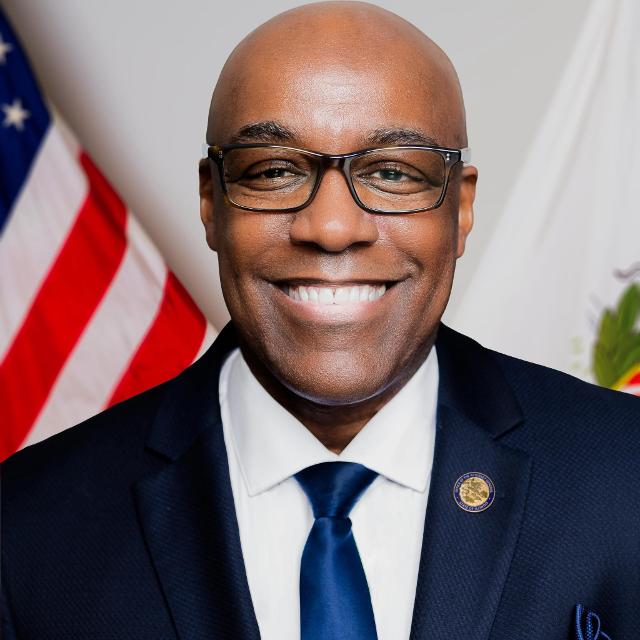
 CHICAGO – Attorney General Kwame Raoul, as part of a coalition of 17 attorneys general, today filed an amicus brief opposing a discriminatory Minnesota law that bars individuals convicted of felonies from voting until they have completed the terms of their parole, probation, or supervised release.
In an amicus brief filed in Schroeder v. Simon before the Minnesota Supreme Court, the coalition argues that allowing returning citizens to vote after they leave prison helps them reintegrate and strengthen ties with their communities, supports rehabilitation, and reduces recidivism, which promotes public safety. Raoul and the coalition also assert that the law harms Minnesota’s Black, Latino, and Native American citizens by disenfranchising them at disproportionately high rates. Raoul previously joined a coalition opposing this law before the Minnesota Court of Appeals. The plaintiffs in Schroeder v. Simon are seeking to restore the right to vote to individuals still serving terms of criminal supervision in their communities.
“Denying individuals on parole, probation, or supervised release the right to participate in the democratic process denies them the ability to have a voice in their communities, and it disproportionally harms minority communities,” Raoul said. “Restoring the right to vote to individuals who have completed their prison sentences gives them the second chance they deserve and allows them to connect with their communities, which reduces recidivism.”
Felon disenfranchisement in the United States is the product of a patchwork of state laws, which vary widely. Two states and the District of Columbia do not restrict in any way the voting rights of convicted felons, including those currently in prison. Twenty-one other states automatically restore returning citizens’ voting rights upon release from incarceration. Efforts to expand the right to vote embrace the notion that allowing those subject to community supervision to vote benefits both these individuals and the communities they rejoin. However, an estimated 5.2 million people across the United States – 2.3% of the voting-age population – were barred from casting a ballot in the November 2020 election cycle because of felony convictions. Of those, roughly 3.9 million are no longer incarcerated. In Minnesota specifically, over 55,000 citizens serving a supervised sentence in the community cannot vote.
In this amicus brief, Raoul and the coalition support the plaintiffs’ challenge to Minnesota’s felon disenfranchisement law because:
- Expanding voting to returning citizens promotes successful reintegration and enhances public safety: Over the past 25 years, there has been a marked trend of states expanding the franchise by reforming their felon disenfranchisement laws. These reform efforts include laws repealing lifetime disenfranchisement, allowing people convicted of felonies to vote while completing the terms of their community supervision, eliminating requirements to pay legal financial obligations, and providing information to felons leaving correctional facilities about the restoration of their voting rights and registering to vote. Studies find that restoring voting rights to returning citizens fosters civic participation and reduces recidivism. Furthermore, there is no evidence suggesting that continued disenfranchisement supports the goal of rehabilitation.
- Felon disenfranchisement disproportionately harms Black, Latino, and Native American communities: States have recognized the importance of restoring voting rights to returning citizens given the disparate impact of felon disenfranchisement laws on minority communities. Mass incarceration has resulted in voting rights disparities for people of color. In the November 2020 election, more than 6.2% of the Black voting-age population in the United States could not vote as a result of felon disenfranchisement laws, as compared with only 1.7% of the non-Black voting-age population. Data also suggests that disenfranchisement laws disproportionately harm the Latino population, rendering at least 560,000 Latino Americans (over 2% of the Latino voting-eligible population) without a political voice. In Minnesota, the numbers are even starker: the latest data suggest that more than 7.2% of the Black voting-age population, over 3.7% of the Latino voting-age population, and 5.9% of the Native American voting-age population is disenfranchised as a result of felony convictions.
Joining Raoul in filing the amicus brief are the attorneys general of California, Connecticut, Delaware, the District of Columbia, Hawaii, Maine, Maryland, Massachusetts, Nevada, New Jersey, New Mexico, New York, Rhode Island, Vermont, Virginia, and Washington.
More like this:



- Most Popular

- Top Stories

- Most Recent