


Duckworth Offers Comprehensive Package of Bills to Protect Veterans and Service members from Unfair Treatment
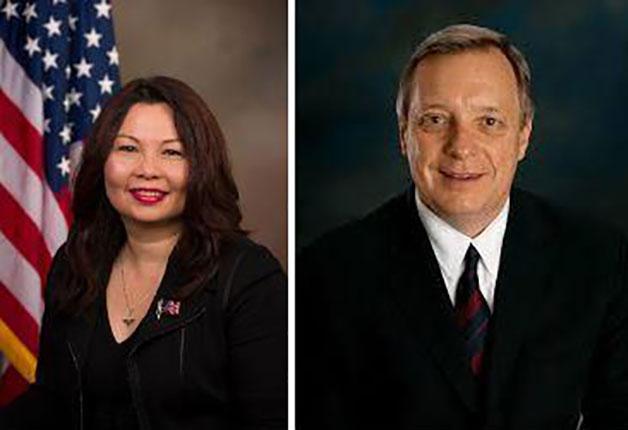
[WASHINGTON, D.C.] – U.S. Senator Tammy Duckworth (D-IL) this week introduced several bills intended to protect and support Veterans and service members—men and women who have proven they are willing lay down their lives defending America—from being deported or denied healthcare. Duckworth’s proposals, two of which are cosponsored by U.S. Senator Catherine Cortez Masto (D-NV), would prohibit the Administration from deporting Veterans, give legal permanent residents a path to citizenship through military service, establish naturalization offices at military training facilities, and bolster VA healthcare services for Veterans.
“Men and women willing to wear our uniform shouldn’t be deported by the same nation they risked their lives to defend,” Duckworth said. “These pieces of legislation will help Service members become citizens and help Veterans who have been deported return to this country, enabling them to live here with their families, and ensuring they have access to the life-saving VA care they have earned because of their tremendous sacrifices.”
Get The Latest News!
Don't miss our top stories and need-to-know news everyday in your inbox.
“These bills will help us honor our commitment to veterans and service members seeking U.S. citizenship,” said Cortez Masto.“Unfortunately, the programs that exist to help eligible noncitizen military service members complete their naturalization process are often under-resourced and inconsistent. If passed, these bills would allocate resources to help ensure that qualified military members in Nevada and across the country receive the guidance and support they need on their pathway to citizenship. I am proud to have co-sponsored this legislation to support the men and women who have sacrificed so much to keep our nation safe.”
While the U.S. Immigrants and Customs Enforcement (ICE) does not currently collect data on the military service of deportees, a 2016 American Civil Liberties Union (ACLU) study identified 239 non-citizen Veterans who have been deported from the United States in recent years – and some experts believe the actual number of deported Veterans is significantly higher. Making matters worse, President Trump’s recent executive order expanding the grounds for deportation from those who have been convicted of a criminal offense to those who authorities believe may have committed a chargeable criminal offense has led to a sharp increase in arrests and deportations, which could lead to more Veterans being deported.
While most deported Veterans would have been eligible for naturalization when they were in the military, the U.S. government in many cases failed to prioritize assisting non-citizen service members with completing the naturalization process. Because of this lack of follow-through, some Veterans who thought they had become citizens found out later that they were vulnerable to deportation because their paperwork had never been processed.
Once a Veteran is deported, they are usually unable to access the VA benefits they have earned and would receive if they were still living in the United States. Many have trouble accessing even basic medical care, which is particularly problematic because Veterans struggle with higher rates of post-traumatic stress disorder and physical health problems like chronic pain than the general population. Many deported Veterans have also been separated from their families and their children, who live in the United States. Veterans deported to Mexico or Central America also are vulnerable to threats from gangs and drug cartels because of their military experience.
The following Veteran and service member support bills were offered this week by Senator Duckworth:
- The Veterans Visa and Protection Act of 2017 would prohibit the deportation of Veterans who are not violent offenders, establish a visa program through which deported Veterans may enter the United States as legal permanent residents, enable legal permanent residents to become naturalized citizens through military service and extend military and Veterans benefits to those who would be eligible for those benefits if they were not deported.
- The Healthcare Opportunities for Patriots in Exile (HOPE) Act of 2017 would allow deported Veterans who committed non-violent crimes the opportunity to temporarily re-enter the United States to receive medical care from a VA facility for service-connected medical conditions.
- The Immigrant Veterans Eligibility Tracking System (I-VETS) Act of 2017 would identify non-citizens who are currently serving or who have served in the armed forces when they are applying for immigration benefits or when placed in immigration enforcement proceedings. The bill would also require the Department of Homeland Security (DHS) to annotate all immigration and naturalization records to reflect their service records. This information will enable DHS to “fast track” Veterans and servicemembers who are applying for naturalization, while also allowing officials to practice prosecutorial discretion, if appropriate, when adjudicating their cases. This legislation is co-sponsored by Senator Catherine Cortez Masto (D-NV).
- The Naturalization at Training Sites (NATS) Act of 2017 would establish a naturalization office at each initial military training site to identify and conduct outreach to non-citizen Servicemembers to ensure the government follows through on its promise to help them become American citizens. This legislation is co-sponsored by Senator Catherine Cortez Masto (D-NV).
More like this:

- Most Popular



- Top Stories

- Most Recent


- Sign In
- Home
- Video
- News
-
Weather
 Sponsored by Michael Ryan Exteriors - Roofing Professionals
 - Sports
- Obits
- Events
- Radio
- AP News
- Shop Local
- Classifieds
- Autos
- Real Estate
- Directory
Get the RiverBender App


Follow Us
Copyright © 2026 RiverBender.com All rights reserved.
primary