


Durbin Calls On CDC To Fund Efforts To Build Community Health Workforce To Tackle Health Disparities In Communities Of Color
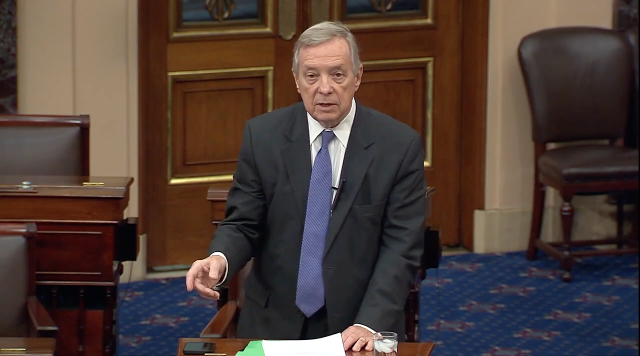
SPRINGFIELD – Following reports of alarming disparities among communities of color in COVID-19 mortality, U.S. Senate Democratic Whip Dick Durbin (D-IL) today pressed the Centers for Disease Control and Prevention (CDC) to support state and local efforts to bolster community workforce capacity for contact tracing and other outreach efforts in addressing this public health challenge. To succeed in combatting COVID-19, and lay the groundwork to address underlying social determinants of health, Durbin called on the CDC to immediately fund state and local public health efforts to train residents and local leaders to build a community health workforce that can better reach vulnerable populations.
“In communities such as the City of Chicago, the public health expertise and local organizational leadership exist to leverage efforts to address health disparities as part of the COVID-19 response. Sustained CDC support for local public health workforce capacity could empower our community organizations and institutions to best tackle the disproportionate impacts of the coronavirus pandemic, while establishing a framework to promote overall health equity,” Durbin wrote in a letter to CDC Director Robert Redfield.
Get The Latest News!
Don't miss our top stories and need-to-know news everyday in your inbox.
Public health experts estimate that more than 100,000 community-based health workers will be needed nationwide to conduct contact tracing to isolate and address patients with COVID-19, in order to reopen the economy. To reflect the importance of economic factors in health outcomes and to promote a local health workforce pipeline, this model for a community health workforce could work with hospitals, health clinics, and local organizations to prioritize recruitment from those who have lost their jobs due to COVID-19 or are otherwise disconnected from the workforce. Equipping a workforce to perform contact tracing, community outreach, connection to services, future vaccination work, and public health logistics and data activities can be done with proper training and management, through health departments and in partnership with local hospitals, health centers, and organizations, in relatively short order and without necessitating advanced health degrees.
Black Chicagoans are dying from the virus at nearly five times the rate of their white counterparts. In Illinois, black residents make up only 15 percent of the population, but are accounting for about 40 percent of COVID-19 deaths. And despite likely underreporting due to stigma, fear, and a lack of access, Hispanic populations represent a similarly disproportionate burden of COVID-19 cases.
Durbin has led efforts in Illinois to address health disparities through community engagement with the Chicago HEAL (Hospital Engagement, Action, and Leadership) Initiative. Together with 10 of the largest hospitals serving the Chicago area and the Illinois Health and Hospital Association (IHA), Durbin launched the Chicago HEAL Initiative to reduce violence and improve health by using the economic footprint, community engagement, and clinical expertise of hospitals to address neighborhood-level issues that impact health, including local hiring and procurement, job training and mentorship, housing, and mental health activities.
Earlier this month, Durbin lead the Democratic members of the Illinois Congressional Delegation in sending a letter to the U.S. Department of Health and Human Services (HHS) calling on Secretary Alex Azar to begin reporting nationwide demographic data of cases and deaths related to COVID-19 and to take action on the racial inequities in the health outcomes exacerbated by the pandemic. Durbin is also a cosponsor of the Equitable Data Collection and Disclosure Act, which would require HHS to publicly release demographic data on COVID-19 testing, treatment, and deaths.
More like this:


- Most Popular


- Top Stories



- Most Recent


- Sign In
- Home
- Video
- News
-
Weather
 Sponsored by Michael Ryan Exteriors - Roofing Professionals
 - Sports
- Obits
- Events
- Radio
- AP News
- Shop Local
- Classifieds
- Autos
- Real Estate
- Directory
Get the RiverBender App


Follow Us
Copyright © 2026 RiverBender.com All rights reserved.
primary