


Durbin, Duckworth urge CDC to take greater leadership role in mitigating Legionnaires' disease at IVH Quincy
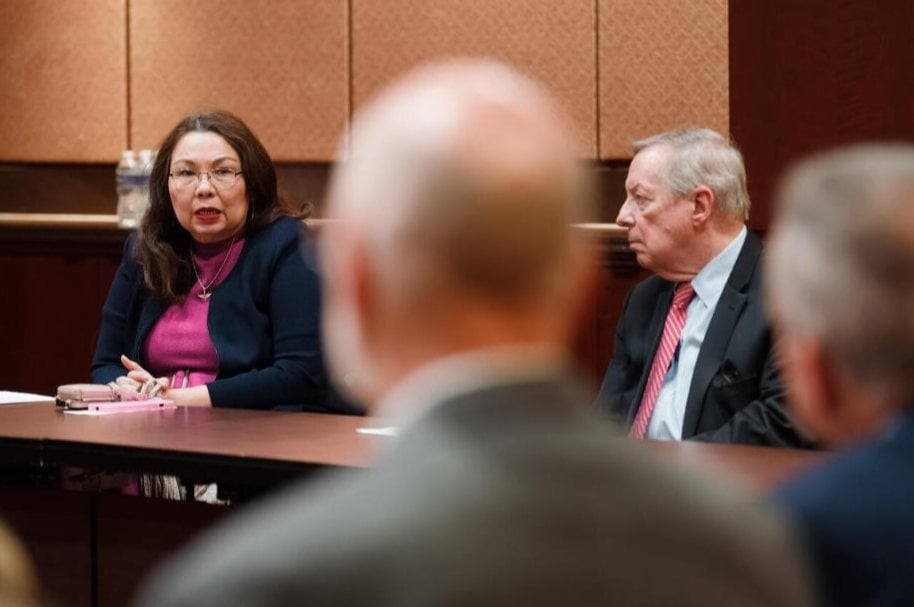
WASHINGTON – U.S. Senators Dick Durbin (D-IL) and Tammy Duckworth (D-IL) today pressed the Centers for Disease Control and Prevention (CDC) to take a greater leadership role in helping to address the public health crisis at Illinois Veterans’ Home (IVH) Quincy. Since 2015, more than 60 people have contracted Legionnaires’ disease at IVH Quincy and 13 people have died as a result. Just this week, three more laboratory-confirmed cases of Legionnaires’ disease were confirmed among IVH residents.
“Despite their assertions otherwise, it has become abundantly clear that Illinois’ current Administration has failed to adequately address this crisis in a timely fashion. As a result, the lives of veterans living at IVH Quincy—not to mention staff working at the facility and families visiting the facility—have either been put at risk, or lost,” the Senators wrote in a letter to Dr. Anne Schuchat, Acting Director at the Centers for Disease Control and Prevention. “Since the state of Illinois is apparently unwilling or incapable of solving this problem, we write today to request that the Centers for Disease Control and Prevention (CDC) take a greater leadership role in helping to address this public health crisis.”
Get The Latest News!
Don't miss our top stories and need-to-know news everyday in your inbox.
In their letter, Durbin and Duckworth applauded the CDC for its efforts with respect to IVH Quincy—specifically by providing the state of Illinois with access to the agency’s invaluable expertise and federal resources. Over the years, CDC experts have been deployed to IVH Quincy for on-the-ground consultation and senior CDC officials have testified at hearings on the outbreaks. Further, the CDC has—on numerous occasions over the past few years—provided the state with comprehensive recommendations regarding how the legionellosis epidemic at IVH Quincy could better be addressed. Durbin and Duckworth stated that, without the CDC’s vital involvement to date, they believe this crisis would be even worse.
Full text of their letter is available here and below:
February 15, 2018

Dear Dr. Schuchat:
As you are aware, the Illinois Veterans’ Home (IVH) Quincy has been dealing with multiple outbreaks of Legionnaires’ disease over the past three years. To date, more than 60 people have contracted Legionnaires’ disease at IVH Quincy and 13 people have died as a result. Just this week, we learned of three more laboratory-confirmed cases of Legionnaires’ disease among IVH residents. Since the state of Illinois is apparently unwilling or incapable of solving this problem, we write today to request that the Centers for Disease Control and Prevention (CDC) take a greater leadership role in helping to address this public health crisis.
Since 2015, the CDC has done an outstanding job providing the state of Illinois with access to the agency’s invaluable expertise and federal resources. CDC experts have been deployed to IVH Quincy for on-the-ground consultation and senior CDC officials have testified at hearings on the outbreaks. Further, the CDC has—on numerous occasions over the past few years—provided the state with comprehensive recommendations regarding how the legionellosis epidemic at IVH Quincy could better be addressed. We believe that, without the CDC’s vital involvement to date, this crisis would be even worse.
However, despite their assertions otherwise, it has become abundantly clear that Illinois’ current Administration has failed to adequately address this crisis in a timely fashion. As a result, the lives of veterans living at IVH Quincy—not to mention staff working at the facility and families visiting the facility—have either been put at risk, or lost. Therefore, we write today to request the following information as soon as possible:
- Is it possible for the CDC to take a more active role in the IVH Quincy response, or would the state of Illinois have to voluntarily request more CDC involvement?
- Over the years, the CDC has provided the state with numerous recommendations regarding how to respond to the Legionella bacteria outbreak at IVH Quincy. Has the state of Illinois implemented all of the CDC’s recommendations? If not, please provide a list of the CDC recommendations that the state has chosen not to implement to date.
- In the CDC’s expert opinion, what are the most important steps the state should be taking today to protect residents at IVH Quincy from Legionnaires’ disease?
- During this most recent 2017-2018 outbreak, has the state of Illinois updated the CDC on every case of confirmed Legionnaires’ disease at IVH Quincy within 12 hours of laboratory confirmation?
- Was the CDC invited by any state of Illinois official to participate in ?the development or assessment of the 2016 BRiC proposal for improvements at IVH Quincy commissioned by the Illinois Capital Development Board (CDB)? Further, was the CDC invited by any state of Illinois official to participate in the development or assessment of the updated 2018 BRiC proposal for improvements at IVH Quincy commissioned by the CDB?
- Has the CDC been invited by any state of Illinois official to participate in the Governor’s Water Management Task Force on IVH Quincy? If so, when did State officials make that request?
While we can appreciate how busy you must be right now in the midst of this terrible flu season, we would like to extend an invitation for you to visit IVH Quincy. We are sure the veterans who live there, and the staff who work there, would welcome the opportunity to sit down with you to share their experiences.
We would, once again, like to thank you—as well as all of the CDC experts and staff who have been involved in the IVH Quincy response—for your hard work and dedication to helping resolve this public health emergency. Thank you for your attention to this matter and please do not hesitate to contact us with any questions or follow-up.
More like this:



- Most Popular

- Top Stories



- Most Recent
- Sign In
- Home
- Video
- News
-
Weather
 Sponsored by Michael Ryan Exteriors - Roofing Professionals
 - Sports
- Obits
- Events
- Radio
- AP News
- Shop Local
- Classifieds
- Autos
- Real Estate
- Directory
Get the RiverBender App


Follow Us
Copyright © 2026 RiverBender.com All rights reserved.
primary