


Gov. Pritzker Proposes Principles to Build a More Equitable Criminal Justice System

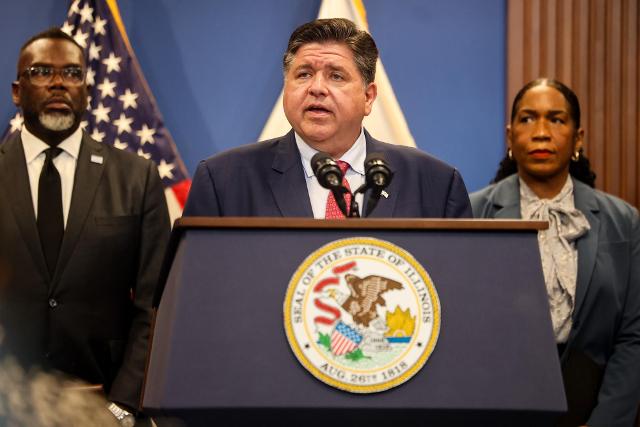
CHICAGO – Governor JB Pritzker today proposed seven guiding principles that will be foundational in the administration’s plans to take action, in partnership with the General Assembly, to reform and modernize the state’s criminal justice system. From ending cash bail to reducing recidivism and modernizing sentencing laws to increasing police accountability and training, these principles aim to keep all Illinois families safe and build opportunity in all of our communities.
Get The Latest News!
Don't miss our top stories and need-to-know news everyday in your inbox.
These principles build on the agenda outlined by Governor Pritzker and Lieutenant Governor Juliana Stratton in January of this year, at an event announcing the administration’s Justice, Equity, and Opportunity initiative. The governor commends the decades of tireless work by of the Illinois Legislative Black Caucus and organizations and advocates across the state to bring Illinois to this point, and the Governor is resolutely committed to working in partnership with these leaders, the General Assembly, and Attorney General Kwame Raoul to bring about meaningful reform. In addition to working with the Illinois Legislative Black Caucus to further build out a criminal justice reform agenda, the governor is also committed to working with the caucus on the additional pillars of their agenda: education and workforce development, economic access and opportunity, and health care and human services.
“We’re building toward an Illinois that works for everyone – and criminal justice reform is a key element of that holistic approach. Together we will shape a more equitable system of justice that makes our state stronger and safer and expands opportunities for all our residents to improve their lives,” said Governor JB Pritzker. “At the state level alone, we spend billions of dollars a year keeping too many people in an overcrowded prison system that has proven itself too expensive, too punitive and wholly ineffective at keeping Illinois families safe. As we move forward with the General Assembly to pass comprehensive criminal justice reform, it is my hope that the nation will look to Illinois as a leader in true equity and justice for generations to come.”
“As I've always said, we cannot truly have justice without equity and opportunity. These principles will guide us on a path of repairing the historic harm caused by our justice system, especially in Black and Brown communities,” said Lieutenant Governor Juliana Stratton. “Comprehensive justice reform will help to reverse the systemic cycles that tear apart families, lay barren communities, lead to overcrowded jails, put strains on criminal justice infrastructure, and burden taxpayers. Illinois is enacting change, and setting a standard, that illustrates how compassion in policy can positively impact our nation."
The governor’s principles focus on a holistic approach that addresses the structural flaws of a criminal justice system that disproportionately impacts people of color and often traps people in a cycle of incarceration and system-involvement.
The seven principles for an equitable criminal justice system are the following:
- End the use of the cash bail system and limit pretrial detention to only those who are a threat to public safety. The governor remains committed to ending a system that disproportionately forces low-income families and people of color into a disruptive cycle of unearned detention and instability. The cash bail system would be replaced by a risk assessment to determine the likelihood of a defendant’s appearance at trial and if there is a threat to public safety posed by a defendant’s pre-trial release.
- Modernize sentencing laws on theft and drug offenses and use a public health approach to address mental health and addiction. Illinois will decrease unnecessary admissions into prison, match modernized sentencing standards across the country, and limit criminal justice system involvement for non-violent offenders who need and would benefit from a public health intervention.
- Reduce excessive lengths of stay in prison by providing pathways for people to earn opportunities for rehabilitation. The state will increase access to sentence credit and time-limited supervised release while limiting penalty enhancements and short-term commitments that disproportionately trap low-income families and people of color in generational cycles of incarceration.
- Prioritize rehabilitation and reduce the risk of recidivism by increasing access to housing and healthcare for returning residents. The state is committed to expanding opportunities, supports, and services for people who are exiting the prison system so that they are set up to succeed upon return to their communities, and which will save taxpayers money by reducing the number of people trapped in a cycle of recidivism.
- Increase police accountability and transparency for police officers and police departments. Illinois will set the standard for the nation in professionalizing and setting statewide standards for police officers. We will advocate for licensing of police officers, strengthen the role of the State Police Merit Board, work alongside police departments to ensure compliance and proper use of body-worn cameras, create a state-level avenue to investigate systemic police misconduct, and remove barriers for civilians to report officer misconduct, like the signed affidavit requirement.
- Update and strengthen statewide standards for use of force by police officers. Illinois is committed to modernizing the legal standard for use of force and implementing common sense policies and trainings that are consistent with best practices and will improve police-community relations. This includes requiring police officers to apply first aid after using force, prohibiting no-knock search warrants, requiring the use of de-escalation techniques, and requiring officers to intervene and report when excessive force is used by another officer.
- Improve interactions with police by decriminalizing minor non-violent offenses, improving police response to crowd control, and increasing language and disability access. By decriminalizing minor non-violent offenses, creating policies and trainings for police response to non-violent crimes and protests, and increasing language and disability access for civilians, Illinois will establish a framework to improve community safety and trust.
“We will only see true, meaningful change within our criminal justice system when we as state leaders work together to eliminate the racism that has plagued it for centuries,” said State Senator Elgie Sims. “I commend the governor for his support of the Black Caucus’ efforts to bring justice and fairness to Black communities throughout the state. I look forward to working with him to pass legislation during the fall veto session.”
“Decades of tough on crime policies have done nothing to reduce gun violence, and are rooted in a history of racist ‘tough on crime’ safety policies,” said State Senator Robert Peters. “There is nothing prideful or righteous about clinging to failure. If we truly do want to win real safety and justice in our communities, then we must commit to real, tangible change. Half measures are not working, and we’ve seen that over the years and years of failed policy. It is now, in the midst of an economic, public health and systemic racism crisis, that we must remember the famous words of one of our country’s greatest leaders: ‘The only thing we have to fear is fear itself.’”
"Reforming our criminal justice system is a major step towards addressing systemic racism. In creating equity for black communities across Illinois it is paramount that we implement policies to eradicate mass incarceration, advance police reforms, and reduce violence. We commend the Governor and Lieutenant Governor for their steadfast dedication and commitment to criminal justice reform in Illinois," said State Representative Justin Slaughter.
The administration is building on its ongoing efforts to create a more just criminal justice system. In partnership with the General Assembly, the administration has established policies for discretionary parole for young adults facing long sentences and increased the amount of incentives available for educational and wellness programming through sentencing credits. Illinois has also banned private correctional centers and private immigration detention centers.
The governor also signed legislation that ensured that the 20,000 people detained pre-trial each year have an opportunity to participate in our democracy and can vote while in detention. Those efforts are in addition to offering first-time registration forms to interested eligible voters in custody, as well as nonpartisan educational sessions on the voting process, current events, and government institutions for those near the end of their incarceration.
Through the law legalizing cannabis, Governor Pritzker has already pardoned over 11,000 individuals for low-level cannabis offenses, and more are expected over the coming months. Through these pardons, thousands of families are no longer prohibited from having access to human services, financial aid for school, professional licensing, jobs, and housing.
More like this:



- Most Popular



- Top Stories



- Most Recent

- Sign In
- Home
- Video
- News
-
Weather
 Sponsored by Michael Ryan Exteriors - Roofing Professionals
 - Sports
- Obits
- Events
- Radio
- AP News
- Shop Local
- Classifieds
- Autos
- Real Estate
- Directory
Get the RiverBender App


Follow Us
Copyright © 2026 RiverBender.com All rights reserved.
primary